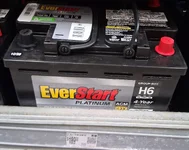
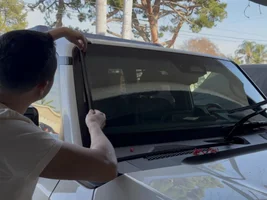
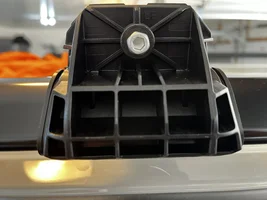
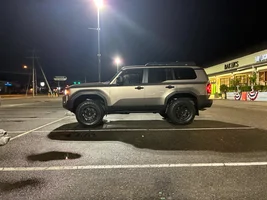
H6 battery is the replacement for the fit on the TLC ??

The battery mfgs with decades of experience will show they have proven their products to work with stock charging systems but many Internet based experts and influencers will talk about reasons why AGMs need special care and feeding.
Follow the money.

I’m no expert, but I did stay at a Holiday Inn Express last month.
 
Why are LC owners having early OE battery failures with old-school conventional lead acid batteries?
  • Simply batch of defective batteries?
  • Could the sense signal logic on the negative side of the battery be calibrated incorrectly in reading parameters?
  • Maybe the ECU is ‘safeguarding’ the DC hybrid battery from low voltage & selecting to not charge the 12v battery?
  • Maybe we need a different type of 12v battery - like a deep cycle profile vs a starting battery profile w/ high CCA?
The problems are not new nor specific to LC250 imo. The Prius community has been dealing with very similar issues for over 25 years. Track cars, exotics, and others that don't get driven regularly also have battery problems.
Maybe if some don't want to fork out the money for AGMs or lithium phosphate, they can try the EFB (Enhanced Flooded Battery) with more durability and lower CCA than other flooded SLAs, but less money than an AGM. Check out the Toyota TrueStart H6 EFB if you want one with an 84 month warranty from a dealer.
 
Welcome @MondoPrado.

It’s been a minute, but batteries (12V) won’t accept a charge when the temps drop like they do in the winter. Is there any way you can do some type of climate control in the garage?
Thanks for the reply Ultane. I've used a battery tender on my wife's Lexus 12 volt over the past few winters and it has done the job even with the garage getting down to 32 F. So I'm not too concerned about the 12 volt, it's the hybrid battery I'm wondering about. The dealer tells me that "it should be fine", but that's a very high dollar battery that I'd like to ensure stays healthy through the winter. Any suggestions for taking care of the hybrid battery is appreciated.
 
Agree the battery manufacturers probably have a thing or two figured out for conventional charging systems.

Thinking the issue is that we aren’t in Kansas anymore.

The new Toyota charging systems are not a constant charge rate like we have had around for years. Those were simple systems where engine turns an alternator, creating current sent through a voltage regulator, feeding a battery. Now we have a ECU controlling a variable rate charging system.

As LC hybrid owners we have a DC-DC battery system charging our 12v battery with no alternator. Ive read in several places that in READY mode, the DC-DC converter keeps the 12V battery charged from the hybrid battery, whether or not the engine is running. The engine will still kick on periodically if the hybrid battery needs replenishing, but it doesn't have to be running for the 12V to charge.

Why are LC owners having early OE battery failures with old-school conventional lead acid batteries?
  • Simply batch of defective batteries?
  • Could the sense signal logic on the negative side of the battery be calibrated incorrectly in reading parameters?
  • Maybe the ECU is ‘safeguarding’ the DC hybrid battery from low voltage & selecting to not charge the 12v battery?
  • Maybe we need a different type of 12v battery - like a deep cycle profile vs a starting battery profile w/ high CCA?

Struggling how to go forward w/ the questions. I don’t know if it is really an issue, or just our new LC paradigm.
That's the question I have as well. I've had my 2025 TLC for about 8 months and 14,000 miles with no issues on the 12v or hybrid batteries. This thread is concerning to me. Shall I be anticipating battery failures soon? What's the root cause?
 
Related, but not really related- I have been keeping an eye on my battery voltage since taking delivery last spring. I have been cautious with using accessory mode and leaving doors/hatch open for extended periods. I have been monitoring voltage via OBDII and an app on & off since bringing the Land Cruiser home, and typically see healthy battery voltage and reasonable charging voltages in ready mode (either side of 14V).

I recently installed my dash cam with parking mode enabled. Because of the smallish battery, I set low voltage cut offs on camera and interface to 12.3V, hoping that retains enough voltage to avoid a no-start situation and deep discharge. My cameras have been shutting off overnight in the garage likely from hitting that lower voltage cut off. I am seeing slightly higher charging voltage in ready mode and battery voltages still seem OK thus far. Time will tell.
 
Last edited:
Related, but nor really related- I have been keeping an eye on my battery voltage since taking delivery last spring. I have been cautious with using accessory mode and leaving doors/hatch open for extended periods. I have been monitoring voltage via OBDII and an app on & off since bringing the Land Cruiser home, and typically see healthy battery voltage and reasonable charging voltages in ready mode (either side of 14V).

I recently installed my dash cam with parking mode enabled. Because of the smallish battery, I set low voltage cut offs on camera and interface to 12.3V, hoping that retains enough voltage to avoid a no-start situation and deep discharge. My cameras have been shutting off overnight in the garage likely from hitting that lower voltage cut off. I am seeing slightly higher charging voltage in ready mode and battery voltages still seem OK thus far. Time will tell.
If I may, coming from a guy who has run dash cams for a very long time (12 years), and who has also murdered many batteries through complacency. I would bump that shutoff up to north of 12.5V. 12.3 is just too close to the point where you start causing irreversible issues. I have killed a battery, or four relying on the 12.3 cutoff from the biggest names in the industry (BlackVue, Thinkware), even though that value is well above spec on paper.

Your car, your show. And I am sure you are knowledgeable and competent based on previous posts. Just throwing out hard earned experience. Now I only run battery packs for park mode.
 
Thanks for the reply Ultane. I've used a battery tender on my wife's Lexus 12 volt over the past few winters and it has done the job even with the garage getting down to 32 F. So I'm not too concerned about the 12 volt, it's the hybrid battery I'm wondering about. The dealer tells me that "it should be fine", but that's a very high dollar battery that I'd like to ensure stays healthy through the winter. Any suggestions for taking care of the hybrid battery is appreciated.
I have no meaningful advise on the hybrid battery other than, it has a very generous factory warranty and unless you do something to nuke it, the dealer will fix/replace it for the next 10 years.........
 
That's the question I have as well. I've had my 2025 TLC for about 8 months and 14,000 miles with no issues on the 12v or hybrid batteries. This thread is concerning to me. Shall I be anticipating battery failures soon? What's the root cause?
There is a mixture of folks having issues and other that are trouble free. I have deduced that those that are daily drivers are relatively trouble free (12v battery wise) and those that sit or are being worked on (doors open etc) have issues with the 12v battery.
 
If I may, coming from a guy who has run dash cams for a very long time (12 years), and who has also murdered many batteries through complacency. I would bump that shutoff up to north of 12.5V. 12.3 is just too close to the point where you start causing irreversible issues. I have killed a battery, or four relying on the 12.3 cutoff from the biggest names in the industry (BlackVue, Thinkware), even though that value is well above spec on paper.

Your car, your show. And I am sure you are knowledgeable and competent based on previous posts. Just throwing out hard earned experience. Now I only run battery packs for park mode.

Yes, similar amount of dash cam experience here. I started with installing automotive electronics-mostly stereos, 2way radios, some alarms dating back to (dating myself) 1981.

I am torn between a battery upgrade and a back-up battery pack. I mostly need the parking mode when away from home/at work. Option B renders my Dongar Pro + as redundant, money wasted. I hear you though. Wife acceptance factor and cost of both options comes out to be similar.
I presumed you also had experience because you always bring value to the conversation. If it’s shutting off prematurely w/ a 12.3V low threshold it’s a wash. I’d bump it to 12.5 (may be 12.6 on Blackvue, I’m running a Thinkware currently and can’t recall) and pull that trigger when the wifey approves. I’m not sure where you’d slide a backup battery, but I’ve had luck with battery packs. The Blackboxmycar branded options are budget friendly and work well for me, but that depends on outside activity levels too.
 
I presumed you also had experience because you always bring value to the conversation. If it’s shutting off prematurely w/ a 12.3V low threshold it’s a wash. I’d bump it to 12.5 (may be 12.6 on Blackvue, I’m running a Thinkware currently and can’t recall) and pull that trigger when the wifey approves. I’m not sure where you’d slide a backup battery, but I’ve had luck with battery packs. The Blackboxmycar branded options are budget friendly and work well for me, but that depends on outside activity levels too.

Blackboxmycar are good people. I am about a half hour away from their Canadian headquarters, and have purchased multiple items over the years- I have considered both their Powercell 8 and BlackVue’s Power Magic version. Both are either side of $500 on the north side of the border.

An Odyssey Performance battery is a hair more, and I had great luck with the one I ran in my Jeep. I topped that off with an AGM charger as needed, and where the OEM battery wouldn’t allow a start at 12.2V the Odyssey would start without a flicker or slow crank as low as 11.3V. My Northstar AGM deep cycle was more stubborn in terms of rate of discharge and taking a full charge.

My school of thought is that the back up battery powering the cam doesn’t address shortcomings in the 12V battery side.
 
I think… that AGM’s require a certain charging profile to maintain it.

Some here put a pig tail on their AGM battery, and go to the trouble to periodically charge it with the correct AGM rated charger.

AGM’s are known to last 10 years.

My 2015 Ford Transit 350 twin turbo, has OEM dual AGM’s, and BOTH are still the original AGM’s. I’m guessing Ford took that into account when they designed and built the charging system for the beast. You could also buy the 2015 Transit set up with a regular flooded lead acid battery.

Many in the Adventure riding community (ADVRider.com) switched over to AGM’s for their motorcycles going back to 2007 (when I entered that realm), My 2007 BMW R1200GS Adventure has never had anything but AGM’s. I typically get 4-5 years of very reliable life out of them. I am assuming that is because the charging system is set up for the OEM ‘GEL’ (whatever that is) battery, And not an AGM. Then i replace them with an AGM from Batteries Plus Bulbs.

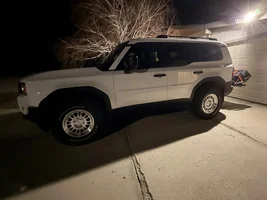
It's really no trouble at all to charge it with most chargers that have AGM charging ability. I just hang a cord out of the hatch and plug it in. I just close the hatch on the cord. No problems in a couple years.
 
It's really no trouble at all to charge it with most chargers that have AGM charging ability. I just hang a cord out of the hatch and plug it in. I just close the hatch on the cord. No problems in a couple years.
Fine and dandy. However, when spending 70+ K for a ride. Its really time for Toyota to step up...
 
Fine and dandy. However, when spending 70+ K for a ride. Its really time for Toyota to step up...

That would be nice.

It isn’t a problem unique to Toyota- I have had four relatively expensive non-Toyota vehicles purchased brand new with OEM batteries that pooped the bed early in their life, so the trend extends beyond just Toyota.

That isn’t to say weak batteries are acceptable, but rather than strap an identical replacement in I usually source my own superior to OEM battery.
 
Lipower has a solid-state option available in H6/Group 48, not sure I'd be an early adopter if I were in the market since this is a Chinese brand, also not sure if it would properly charge in the 250? Not even sure i trust it to be solid-state??

Hopefully Toyota will begin releasing their solid-state batteries next year, but IIRC they are targeting 2028 to be fully up and running with this line for incorporation into their vehicle lineup, not sure if you'd have to wait longer to purchase these from them or not at this early stage.
Saw this one @ walmart 10-3-26, has 48month warrentee... AGM $189
 

Attachments

  • H6 WM 189. 4 year.webp
    H6 WM 189. 4 year.webp
    197.3 KB · Views: 27
Hopefully Toyota will begin releasing their solid-state batteries next year, but IIRC they are targeting 2028 to be fully up and running with this line for incorporation into their vehicle lineup, not sure if you'd have to wait longer to purchase these from them or not at this early stage.
Porsche has been installing what looks like Chinese lithium ion phosphate 12v starting batteries for a few years already with mixed results. If their drivers manage to discharge the OEM Porsche 12v lithium ion phosphate batteries deeply enough, they can self-destuct and cost $2,000+ to replace. At that point some owners modify the charging system to accept an aftermarket lithium like Antigravity or install a relatively cheap and heavy AGM instead.
Almost guaranteed there will never be an OEM retrofit for changing the tech of any HV or starting battery's tech, Toyota will want to sell you a brand new vehicle and warranty instead. As with current Porsches there could be some interesting aftermarket options.
 
IMG_0027.webp

Well im trying this on on my 2027 due to a slow unkown discharge and trickle charging it once in a while, until all these gremblins are sorted out.
 
I feel I have to say for those not in the know... but these "super capacitor"devices are yet another phantom always present constant current draw on the battery, albeit small. I don't think permanently connecting them to the battery is an improvement, it will actually decrease the amount of time your truck can sit unused before the battery voltage drops to worrisome levels... Sure keep them onboard for if/when you need them but having them permanently attached I feel is actually a reliability downgrade... My comment does not apply to monitoring charge in/out devices, only to this style of "combo" monitoring/jumpstart device... Those capacitor based devices are awesome if properly designed but nothing is free and there is no real benefit to having them permanently attached. If/when your battery gets low, attach them, wait a suitable amount of time and then use them to "jump" the truck.
 
Back
Top Bottom