IIHS crash safety results for 2025-2026 MY LC250

Agreed and amazing that you made it out unscathed! Cars are definitely safer today but I wish they were even safer 😅. There is so much energy in a single vehicle 40mph collision and just think what would happen if there were two vehicles going 40mph and hitting head on. Basically it becomes a single vehicle 80mph collision. I don’t think any vehicle can keep their occupants safe at that speed. Anywho, newer vehicles manage collisions much better than older ones and is the main reason I prefer them to the older generation vehicles. If and when I ever get into a collision I want the best chance my family will be able to walk away afterwards.
 
Agreed and amazing that you made it out unscathed! Cars are definitely safer today but I wish they were even safer 😅. There is so much energy in a single vehicle 40mph collision and just think what would happen if there were two vehicles going 40mph and hitting head on. Basically it becomes a single vehicle 80mph collision. I don’t think any vehicle can keep their occupants safe at that speed. Anywho, newer vehicles manage collisions much better than older ones and is the main reason I prefer them to the older generation vehicles. If and when I ever get into a collision I want the best chance my family will be able to walk away afterwards.
This is a common misconception. Each car in a 40mph head on collision experiences forces as if hitting a wall at 40 mph.
 
Agreed and amazing that you made it out unscathed! Cars are definitely safer today but I wish they were even safer 😅. There is so much energy in a single vehicle 40mph collision and just think what would happen if there were two vehicles going 40mph and hitting head on. Basically it becomes a single vehicle 80mph collision. I don’t think any vehicle can keep their occupants safe at that speed. Anywho, newer vehicles manage collisions much better than older ones and is the main reason I prefer them to the older generation vehicles. If and when I ever get into a collision I want the best chance my family will be able to walk away afterwards.
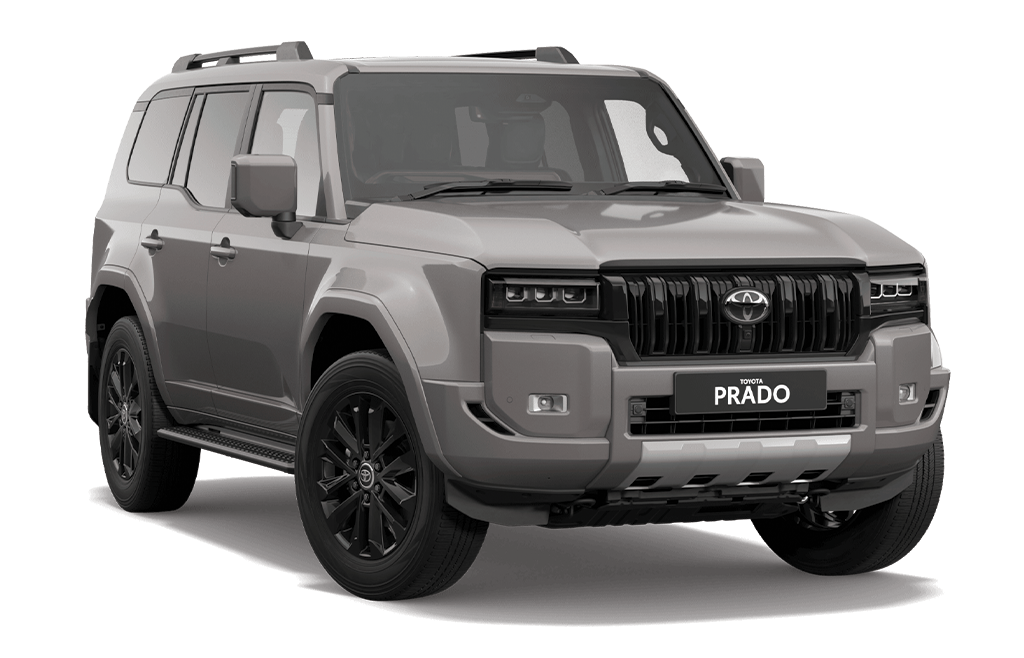
There are more modern crash test standards used in other countries (European Union, Australia, Korea, Japan, China) that simulate exactly this situation. Here is link to the Australian NCAP (new car assessment program) web site with Toyota Land Cruiser 250 results. Bear in mind that US crash worthiness standards are at least 10 years behind the rest of the civilized world. That's why the vast majority of IIHS Top Safety Picks are European, Japanese and Korean cars, and you rarely see a domestic brand on this list. For these cars, American crash tests (both NHTSA and IIHS) are "easy". There are only 2 Fords, 1 Lincoln, 1 Buick, 1 Rivian and 1 Tesla among IIHS Top Safety Picks, while KIA, Hyundai, Subaru, Mazda, ... dominate the list. Toyota also rarely makes the Top Safety Pick list because safety isn't a priority for Toyota and Toyota tends to sacrifice safety for the sake of cost savings (not to mention cheating on safety tests as the huge scandal in Japan a couple of years ago).


I’m too lazy to google search nowadays so I generated some heat and wasted energy and used ChatGPT to drum this up regarding the Australian crash rated offroad bumpers.

From ChatGPT:
It doesn’t automatically make the vehicle safer because crash safety is not about having the strongest front end; it is about the vehicle crumpling in a controlled way so the people inside slow down more gradually and the airbags fire at the right time. A heavy steel off-road bumper may protect the front of the vehicle from rocks, brush, low-speed hits, or animal strikes, but in a real road crash it can also make the front end stiffer and transfer more force into the frame and occupants. So when an Australian bumper is “crash rated,” the main claim is not “this makes your crash protection better.” The claim is: this bumper was engineered so it should not seriously interfere with the factory crumple zones, airbag timing, and crash sensors. In other words, it is more about not ruining the factory safety design than improving it.

So, I think basically the crash rating is to show that the specific product when paired to the specific vehicle it is fitted for has met the ADR/AS 4876 standard and is airbag-compatible for the specific vehicle.
 
This is a common misconception. Each car in a 40mph head on collision experiences forces as if hitting a wall at 40 mph.
Very interesting! I guess it also depends on the actual KE of each vehicle meaning that the smaller vehicle will likely experience greater forces. Amazing! I learned something =)!
 
There are more modern crash test standards used in other countries (European Union, Australia, Korea, Japan, China) that simulate exactly this situation. Here is link to the Australian NCAP (new car assessment program) web site with Toyota Land Cruiser 250 results. Bear in mind that US crash worthiness standards are at least 10 years behind the rest of the civilized world. That's why the vast majority of IIHS Top Safety Picks are European, Japanese and Korean cars, and you rarely see a domestic brand on this list. For these cars, American crash tests (both NHTSA and IIHS) are "easy". There are only 2 Fords, 1 Lincoln, 1 Buick, 1 Rivian and 1 Tesla among IIHS Top Safety Picks, while KIA, Hyundai, Subaru, Mazda, ... dominate the list. Toyota also rarely makes the Top Safety Pick list because safety isn't a priority for Toyota and Toyota tends to sacrifice safety for the sake of cost savings (not to mention cheating on safety tests as the huge scandal in Japan a couple of years ago).


Yea, I did see the ancap results when those were published a year or two ago. It is a bit of a mystery that Toyota can’t get the rear occupant seatbelt positioning correct but outside of that they did score very well in other metrics.
 
Agreed and amazing that you made it out unscathed! Cars are definitely safer today but I wish they were even safer 😅. There is so much energy in a single vehicle 40mph collision and just think what would happen if there were two vehicles going 40mph and hitting head on. Basically it becomes a single vehicle 80mph collision. I don’t think any vehicle can keep their occupants safe at that speed. Anywho, newer vehicles manage collisions much better than older ones and is the main reason I prefer them to the older generation vehicles. If and when I ever get into a collision I want the best chance my family will be able to walk away afterwards.
Back in the early 70’s, we were taught that our heads hit the windshield with the force of one ton, when the car comes to an abrupt stop.
 
Cool video! Love the engineering going into those bumpers. Kinda doubt anything of the sort is being over here stateside.

Yes, I absolutely doubt they do. Built in crumple zones and high speed collision, airbag deployment speeds of OE vehicles. Saves about $10-$15,000 in damage from the most minor accident on these newer vehicles (and will get you back home, not stranded hours from civilization). There is virtually nothing protecting a LC250 behind the grill. Hit a pronghorn or deer out here, it's essentially totalled out.
 
Yea, I did see the ancap results when those were published a year or two ago. It is a bit of a mystery that Toyota can’t get the rear occupant seatbelt positioning correct but outside of that they did score very well in other metrics.
It's not a mystery. Toyota is always reactive to new safety standards. The rear passenger evaluation was added to IIHS test relatively recently. IIHS warns manufacturers 2 years early about every new test so that they can prepare for it. Some manufacturers (Subaru, Volvo, the Koreans) take a proactive approach and make the appropriate upgrades ahead of the test implementation. Toyota doesn't. They wait until the new test is implemented and only make modifications if their vehicles score poorly in the new test. This saves them money as they dont have to run internal crash tests ahead of the IIHS evaluation - at the expense of your safety. The same happened when the small overlap was introduced about 10 years ago.
 
It's not a mystery. Toyota is always reactive to new safety standards. The rear passenger evaluation was added to IIHS test relatively recently. IIHS warns manufacturers 2 years early about every new test so that they can prepare for it. Some manufacturers (Subaru, Volvo, the Koreans) take a proactive approach and make the appropriate upgrades ahead of the test implementation. Toyota doesn't. They wait until the new test is implemented and only make modifications if their vehicles score poorly in the new test. This saves them money as they dont have to run internal crash tests ahead of the IIHS evaluation - at the expense of your safety. The same happened when the small overlap was introduced about 10 years ago.
Yea that definitely seems like a planned strategy on Toyota’s part. Quite unfortunate and a bit disappointing that the world’s largest automanufacturer considers its bottom line above its customers safety. Capitalism at its finest I guess. I am still very happy with the results from ANCAP and the IIHS though but on the flip side it would be great to see a mandated proactive approach to safety and making leaps in improvements and not steps.
 
Yea that definitely seems like a planned strategy on Toyota’s part. Quite unfortunate and a bit disappointing that the world’s largest automanufacturer considers its bottom line above its customers safety. Capitalism at its finest I guess. I am still very happy with the results from ANCAP and the IIHS though but on the flip side it would be great to see a mandated proactive approach to safety and making leaps in improvements and not steps.
Toyota NEVER leapfrogs competition or attempt disruptive innovation. Their business strategy has always been to make small incremental improvements (that's the essence of Kaizen). The ONLY exception has been when they developed the first Prius, when they genuinely developed a disruptive technology approach to combining ICE and electric motor with the eCVT transmission (but they were not the first to come up with a hybrid powertrain approach, they only took a very innovative approach on how to implement it).
 
Toyota NEVER leapfrogs competition or attempt disruptive innovation. Their business strategy has always been to make small incremental improvements (that's the essence of Kaizen). The ONLY exception has been when they developed the first Prius, when they genuinely developed a disruptive technology approach to combining ICE and electric motor with the eCVT transmission (but they were not the first to come up with a hybrid powertrain approach, they only took a very innovative approach on how to implement it).
Beige Toyota 😆
 
Back in the early 70’s, we were taught that our heads hit the windshield with the force of one ton, when the car comes to an abrupt stop.
EDIT:
Back in the early 70’s, we were taught that our heads hit the windshield with the force of one ton, when the car comes to an abrupt stop from 40 mph..
 
Back when I was in high school, I had the unfortunate experience of being a passenger in a vehicle that was hit. The driver of the vehicle I was in was making a legal left turn into the center divide lane. While pulling into the center divide the vehicle I was in was struck on the front driver’s side quarter panel by another vehicle driven by students who thought that the center divide lane was their private speeding lane. The driver, a jock, thought seatbelts weren’t necessary and collided with the windshield. Fortunately, everyone in the vehicle I was in was wearing seatbelts, and we were completely unharmed. The jock was taken to the hospital with blood all over his face. He was lucky to have survived that crash…
 
…Toyota also rarely makes the Top Safety Pick list because safety isn't a priority for Toyota and Toyota tends to sacrifice safety for the sake of cost savings (not to mention cheating on safety tests as the huge scandal in Japan a couple of years ago).

Calling BS on that statement-(1) safety isn’t a priority, (2) rarely makes Top Safety Pick. If someone really believes that about Toyotas why on earth would they buy a LC?
 
…Toyota also rarely makes the Top Safety Pick list because safety isn't a priority for Toyota and Toyota tends to sacrifice safety for the sake of cost savings (not to mention cheating on safety tests as the huge scandal in Japan a couple of years ago).

Calling BS on that statement-(1) safety isn’t a priority, (2) rarely makes Top Safety Pick. If someone really believes that about Toyotas why on earth would they buy a LC?

Compare the number of Toyotas on these lists vs. other brands.
In 2026 - 3 Toyotas, 1 Lexus vs. 8 Hyundais, 4 KIAs and 5 Genesis (Hyundai, KIA and Genesis are made by the same company), 8 Mazdas, ... etc.
Toyota/Lexus has way more models than Mazda, yet a small manufacturer like Mazda has twice as many Top Safety Picks. Hyundai/KIA/Genesis have 4 times as many Top Safety Picks. Tiny Subaru sells only 4 models (Crosstrek, Forester, Outback and Ascend) yet 3 (75%) of them made the Top Safety Pick.
Clearly shows which manufacturers treat safety as priority.

Does this mean that Toyotas are unsafe? No. They are about average safety, like most other mass produced cars. But safety is definitely not Toyota's priority.
Every engineering product is necessarily a compromise. If you would try to make a "perfect" car, it would be:
1) prohibitively expensive
2) it would take forever to engineer, so by the time it's introduced, it would already be obsolete.

Every manufacturer chooses their priorities:
BMW - driving experience
Mercedes and AUDI - innovation and latest tech
Hyundai/KIA - value-for-money
Subaru and Volvo - safety
Mazda - near-luxury design and above average performance for mid-tier price
Honda - above average performance for economy price
... and the list goes on

For Toyota, the priorities are profit and volume. Everything else is secondary to these two. Toyota has the highest profit margin among all mass auto manufacturers because that's what matters to Toyota management. Other manufacturers are willing to sacrifice a fractiom of their profits for the sake of safety or performance, but not Toyota. For Toyota, $$$ (¥¥¥) is what matters most, even if it comes at expense of driving experience (let's be honest, Toyotas are BORING) and safety.
 
Last edited:
Supporting Vendors View all →
Canvasback
Back
Top Bottom