Here is Kelly Blue Book defines "Diminished Value"...
Home Car Advice Diminished Value of a Car: Estimations After an Accident
Advice
Diminished Value of a Car: Estimations After an Accident
By
Russ Heaps 05/02/2025 8:00am
Quick Facts About Diminished Value Estimations of Your Car
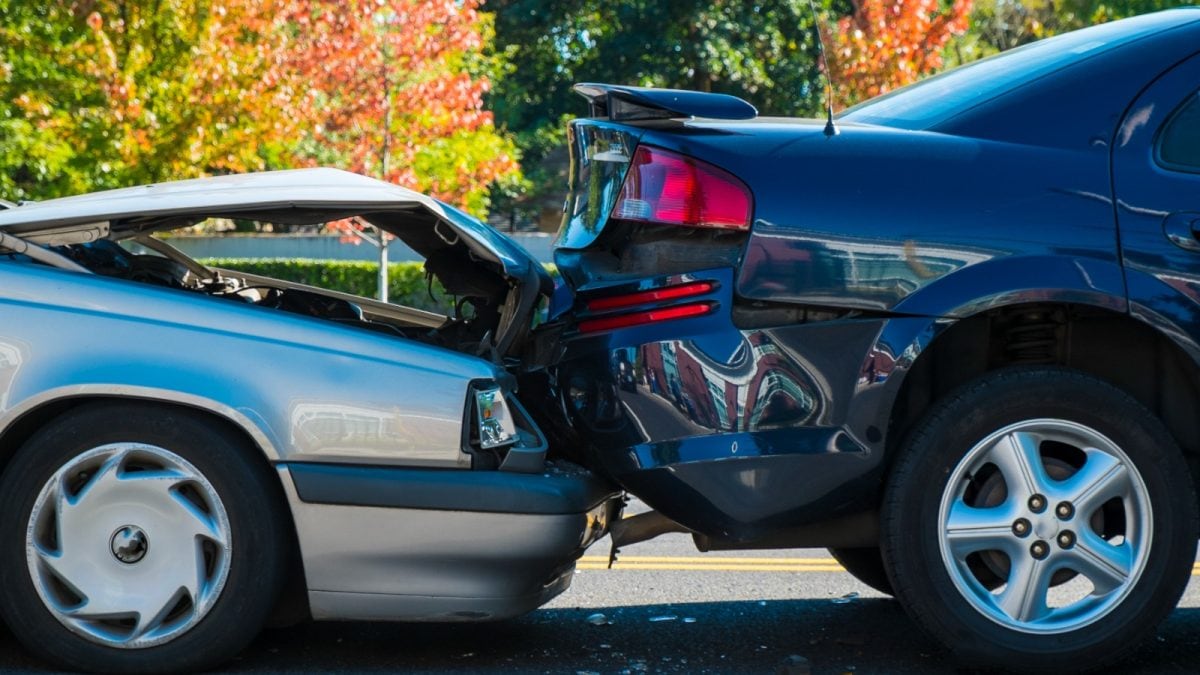
Every reported accident, big or small, reduces your car’s value in the marketplace, even if repairs return it to its pre-accident condition — and that reduction is in addition to the typical loss of value (depreciation) as your car ages. The extra loss of value might be significant or relatively minor, but it’s a fact of life. The automotive and insurance industries recognize diminished value after an accident to the point that every state has an established protocol for addressing the issue. Here’s what you need to know to protect yourself.
What Is the Diminished Value of a Car?
Diminished value is an insurance industry term for the lost value a car sustains from an accident in its history. Even if repairs fully restore a car to its pre-accident condition, the accident still appears on its vehicle history report, lowering its
Kelley Blue Book value. A car’s value matters when or if you decide to sell your vehicle.
RELATED:
Can I Sell My Car to a Dealership?
What Is a Diminished Value Claim?
In most states, a diminished value claim is filed against the at-fault driver’s insurance company to financially compensate the aggrieved driver for the diminished value loss attributable to an accident. Although a substandard repair job is grounds for a diminished value claim, it isn’t required. An accident appearing on a
vehicle history report, like AutoCheck or Carfax, will reduce a car’s market value.
PRO TIP: Although most states only allow a diminished value claim to be filed against the at-fault driver’s insurance company, some states permit you to file a claim against your own car insurance company if the other driver can’t be identified or doesn’t have sufficient insurance to cover the claim.
3 Types of Diminished Value
The insurance industry, state regulators, and courts recognize three types of diminished value.
- Inherent: If you file a diminished value claim, more than likely, it will be for inherent diminished value. This is the loss of value caused by any accident of record. Even if all accident damage is fully repaired and the car is restored to its pre-accident condition, it will lose some value simply because it’s been in an accident that appears on its vehicle history report.
- Repair-related: The second most common reason for a diminished value claim is based on the quality of the repair of accident damage. A botched repair affecting the appearance or operation of your vehicle reduces its value beyond the inherent diminished value. In other words, your vehicle will lose some value simply because it was in an accident; however, if the repairs fail to restore it to its pre-accident condition, the loss of value will be even greater. For example, if after a side-impact collision and the repair of the resulting damage, a door doesn’t close properly, it might be grounds for a repair-related diminished value claim.
- Immediate: This is a diminished value claim that is rarely made. It is based on the loss of value before the accident damage is repaired. Let’s imagine you are in an accident resulting in damage to your vehicle, and rather than waiting for the repair, you decide to use it as a trade-in toward another car. The immediate diminished value would be the difference between the market value before the accident and the actual value before any damage repairs.
RELATED: Vehicle History Report: Everything You Need to Know
When Can You File a Diminished Value Claim?
- Not your fault: If your car is damaged in an accident in which another driver is at fault, you might benefit from filing a diminished value claim.
- Hit-and-run: If your car is damaged by a hit-and-run driver, you may be able to file a diminished value claim under the uninsured driver coverage of your insurance.
- Uninsured at-fault driver: In the case of an accident caused by another driver who is either uninsured or underinsured, you may still be able to file a diminished value claim with your insurance provider.
When Not to File a Diminished Value Claim
- You were at fault: If you are at fault in an accident that damages your vehicle, you cannot file a diminished value claim.
- Leased vehicle: When the damaged vehicle is leased by the not-at-fault driver, the diminished value claims issue is complicated because the vehicle is legally owned by the leasing company. That is, the leasing company is the injured party and not the driver. When that is the case, the driver should contact the leasing company and let it work out the details.
- Michigan resident: Michigan is the only state that prohibits diminished value claims. Instead, you must pursue such claims through the courts.
How to Estimate Diminished Value
You can get a rough idea of the amount of a diminished value claim because the blueprint for calculating the amount of diminished value was outlined by a Georgia court in the case of Mabry v. State Farm in 2001. Found in Section C of the 17th paragraph of the finding, the 17c formula is the accepted standard for calculating diminished value. We’ve cut through the legal gobbledegook to simplify the process so you can get an idea of the size of your diminished value payout. It begins with knowing the market value of your car and its mileage at the time of the accident. Here are the steps to calculate the estimated amount of your claim.
- Determine the market value’s 10% cap: The 17c formula is applied to 10% of your car’s market value. Example: Let’s say you determined the market value was $25,000 before the accident. $25,000 x 0.10 = $2,500.
- Apply a damage multiplier: Using the 10% cap value, insurance companies multiply that number by a damage multiplier, which ranges from 0.00 to 1.0. The multiplier further refines the diminished value based on the damage to the car from the accident.
| Multiplier | Damage Level |
| 1.00 | Severe structural damage |
| 0.75 | Major damage to the structure and panels |
| 0.50 | Moderate damage to structure and panels |
| 0.25 | Minor damage to structure and panels |
| 0.00 | No structural damage or replaced panels |
Example: Using our 10% cap example in an accident with moderate damage: $2,500 x 0.05 = $1,250.
- Apply a mileage multiplier: Taking the number (product) from the damage multiplier equation, insurance companies multiply it by a mileage multiplier to arrive at the final diminished value. This is why you needed your car’s mileage at the time of the accident. Here’s a table with the mileage multipliers and their corresponding mileage ranges.
| Multiplier | Mileage Range |
| 1.00 | 0-19,999 miles |
| 0.80 | 20,000-39,999 miles |
| 0.60 | 40,000-59,999 miles |
| 0.40 | 60,000-79,999 miles |
| 0.20 | 80,000-99,999 miles |
| 0 | 100,000 miles or more |
Example: If our hypothetical car had 30,000 miles on the odometer, our mileage multiplier would be 0.80. Multiply the product of our damage multiplier equation by the mileage multiplier: $1,250 x 0.80 = $1,000. The at-fault driver’s insurance company should offer to settle a diminished value claim for approximately $1,000.
How to File a Diminished Value Claim
A diminished value claim is a process separate from filing the accident damage claim. In other words, an insurance company isn’t going to include diminished value in the damage repair settlement. Therefore, initiating a diminished value claim will involve some direct interaction with the at-fault driver’s insurance provider and a bit of effort on your part. Furthermore, it will likely take more time to settle a diminished value claim.
Here’s what to do:
- Determine the market value of your car had the accident not occurred. Using the information we provided above, you can arrive at a ballpark payout, as you already have the Kelley Blue Book value. However, if it’s been a while, check it again.
- Contact the at-fault driver’s insurance company to learn what its exact process is for filing a diminished value claim. This will vary from one insurer to the next. Moreover, each state has its own diminished claim regulations. In any event, you will need to obtain the info and any appropriate form from the insurance company.
- Complete the form and file the claim. If you have any photographic evidence of the damage, you may want to include it in the filing. If your estimated settlement is large enough, you might want to hire a certified vehicle appraiser to provide an appraisal after the damage is repaired.
Real World: What to Expect From a Diminished Value Claim
No matter how carefully you calculate a diminished value claim using the 17c formula, the insurance company may arrive at a significantly different amount.
For example, Kelley Blue Book advice editor Renee Valdes filed a diminished value claim with Liberty Mutual Insurance for an accident caused by one of its insured drivers. Here are the particulars at the time of the accident in 2024:
- Damaged vehicle: 2024 Hyundai Tucson SEL FWD
- Kelley Blue Book value range: $26,000-$28,600
- Mileage: 2,780 (1.00)
- Cost of damage repair: $2,008.88 or minor damage to structure and panels (0.25)
- Airbags: Did not deploy
Using this information, we can estimate the range of the settlement by making two calculations based on the high and low book value numbers.
10% cap of 26,000 is $2,600 x 0.25 = $650 x 1.00 = $650
10% cap of $28,600 is $2,860 x 0.25 = $715 x 1.00 = $715
Based on the results of these calculations, Renee expected a settlement between $650 and $715. Not according to Liberty Mutual, which offered $400. Liberty Mutual used a market value of $28,600. It’s unclear what calculations they employed to arrive at their offer. When Renee asked, she was told each claim is evaluated on its merits, and multiple factors are considered, including the severity of the damage. They called the $2,008.88 repair a cosmetic one.
RELATED: Actual Cash Value: How It Works for Car Insurance
Final Thoughts
If you’ve been in an accident caused by another driver, in any state but Michigan, you can make a diminished value claim with the other driver’s car insurance company. We recommend you take advantage of this opportunity. The newer your vehicle and the fewer miles on the odometer, the greater the likelihood that your claim will result in a payout. We think it’s worth the effort. If you calculate an estimate for the appropriate claim settlement and the insurance company doesn’t come close to it (or denies it entirely), your only recourse is going to small claims court or hiring an attorney. At that point, the difference may not be worth the time, trouble, or expense.
Advertisement
Get More From KBB.com
Simply choose the content you'd like to receive below and we'll send it straight to your inbox.
Newsletter
Get the latest news on the best cars, best deals, and more.
Russ Heaps Articles
Receive upcoming articles by this KBB.com expert.
Email Address
Sign Me Up
Advertisement