Gas cans on roof

I was just reading on here last night in one of the threads, that there is a 29 gallon gas tank for $1900. 500 miles on a tank. Supposedly easy to install. Very appealing. Slee Offroad offers if I recall right.
 
I was just reading on here last night in one of the threads, that there is a 29 gallon gas tank for $1900. 500 miles on a tank. Supposedly easy to install. Very appealing. Slee Offroad offers if I recall right.
It looks great, only quorum i have with it is that it's alumunim and sits just a few mm away from chassis rail. Crash worthiness is unknown.
 
Don't forget the low center of gravity with the tank where it is supposed to be.
More weight on the roof = more bad.
Fuel on the side moles, yeh that has to be real fun if something goes wrong.
They will probably just become airborne projectiles, same same water regarding damage and end results. Kinda scary now that i am thinking about it.
 
I have tried several different techniques to carry fuel. The best one is to bring along someone with an F-250 and make them carry your fuel. This reduces wind noise to zero, does not change your fuel consumption and there is no risk for a fire in your Land Cruiser. It is perfect.
 
What if you’re driving through a thunderstorm and lightning strikes the LC250 with gas cans on the roof? If they catch fire, would that be covered by insurance
You know what, you're right.

I'm just gonna fill up a trash bag and set it on the passenger floor. Maybe put a little suction cup hook on the door so it's suspended and won't leak out the top.

The scented Glad bags should cover up the fumes.
 
hmmmm just drove home 373 miles again on Monday...cuse me stopped at Costco at 360 miles...No problem. Did 80 in 70 zones and 75 in 65 zones....no range problems experienced.............still had 1.5-?+++gallons left + whatever secret handshake extra volume is left at zero range........Gauge indicated 21.7 mpg........(21.7x17.9 says 388 miles). Point i keep making is these tanks are NOT too small. 350 -400 mile range exceeds MANY vehicles, SUVs etc.......

When someone pulls a stock tank, I'd love to know what it really holds when filled 100% (for that emergency trip). Unlike our EV folks that get a relatively accurate % remaining number that roughly correlates to miles of range left, we are in the stone ages with gas tanks and REAL accurate gauges, etc. Many people here have driven x miles past zero range left.........anyone care to chime in how many miles they stretched it esp if testing and carrying fuel for the true out of gas test? If the zealots in the room that say she is 100% at first click are to be believed, meaning 17.9 gallons at 1st click (again prove it), and I have put 2.1 more gallons in with filling to the neck..........that would indicate in a pinch you probably have 20 gallons.......(prove me wrong). Anybody that has ever gassed a car at a track event or any other kind of manual fill knows you fill till you hear it coming up the neck and stop.........if you hear it in time.........I have NEVER had a track guy lose a charcoal canister....leaving it parked stuffed for a week or month, not a great idea. Fill and go, Nah.........never gonna happen.

One of you guys in this thread, I believe, installed the bigger tank. Do us all a favor and see how much the stock unit REALLY holds please! That could put this entire ongoing fuel shortage paranoia to rest.
 
The 29 gallon gas tank is made by FK Industries and sold through Slee. It seems really appealing to me and something I will consider in time. I am sure we will see more companies produce them in short time.
 
Long Range America makes this bad boy. @Sugarloafer80 could probably drive across the country with 42 gallons on board.

 
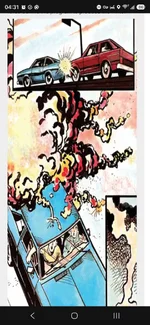
Okay, as an engineer i'm bound by ethics to introduce the younger people to the Ford Pinto. Read all about it (with illustrations and videos) below. A metal tank is far more likely to rupture (without bladder) than a polyethylene tank. I've watched fuel tank testing in person, so i know a bit about this. Please, if you're an unlucky person, reconsider non-race spec metal tanks.


Attachments

  • Screenshot_20260821_043152_Brave.webp
    Screenshot_20260821_043152_Brave.webp
    212.1 KB · Views: 47
Okay, as an engineer i'm bound by ethics to introduce the younger people to the Ford Pinto. Read all about it (with illustrations and videos) below. A metal tank is far more likely to rupture (without bladder) than a polyethylene tank. I've watched fuel tank testing in person, so i know a bit about this. Please, if you're an unlucky person, reconsider non-race spec metal tanks.

As an engineer as well, I endorse this statement in terms of tensile strengths and possible outcomes. It is also important to acknowledge that the 70's Ford Pinto tanks were made out of ferrous stamped steel, and the FK tank is a non-ferrous aluminum magnesium alloy (non sparking or spark resistant). Al alloy is also much more ductile than Fe, and more likely to bend than crack. Lastly, WRT the Ford Pinto fires, a major contributor was placement of the tanks (behind the rear axle). While the FK saddle tank is placed similarly to the Pinto, displacing the spare, the extended range replacement tank (29G) is advertised to not interfere with spare tire placement. This would indicate to me that it is far enough forward to mitigate that element. Although the spare is off-center and it could displace the exhaust or something similar in that area, I'm unsure.

Either way, like @MSINAL, metal tanks give me pause. While I think that it is the best possible version/placement of a metal tank, it is still a metal tank. I'd much prefer to wait and see how these offerings evolve and improve.

Another fun conversation to have in terms of corporate progress vs. consumer safety and governmental overreach, albeit only anecdotally related, is that of Chevrolet vs. Ralph Nader over the Corvair. Chevrolet came out on top of that one, but old Nader persisted against all USDM manufacturers and kind of became the spontaneous fire whistleblower. Then you can talk about GM sandbagging advertised HP on their vettes and the media exaggerating or faking fires... fun conspiracy element.
 
Last edited:
I have three immediate thoughts, and they are admittedly off the cuff. I can't even open the link for some reason, but there is a description embedded in the URL.

1) ROTOPAX and similar are thick molds to accommodate expansion and contraction due to temp changes when exposed to the sun and elements. A standard can will collapse and balloon, making strapping them a problem.
2) Liquids are deceptively heavy. Properly, and firmly securing is a must.
3) Friction. It's a problem for building up static electricity. They aren't going to explode on the roof going down the road, but if that strap is sliding and/or the jug is sliding a little, you'd have to bring them down to ground them anyway.

Again, there are holes in #3's logic, but that's my initial candid thoughts that would cause me to nerd out.
1787317894355.webp
 
As an engineer as well, I endorse this statement in terms of tensile strengths and possible outcomes. It is also important to acknowledge that the 70's Ford Pinto tanks were made out of ferrous stamped steel, and the FK tank is a non-ferrous aluminum magnesium alloy (non sparking or spark resistant). Al alloy is also much more ductile than Fe, and more likely to bend than crack. Lastly, WRT the Ford Pinto fires, a major contributor was placement of the tanks (behind the rear axle). While the FK saddle tank is placed similarly to the Pinto, displacing the spare, the extended range replacement tank (29G) is advertised to not interfere with spare tire placement. This would indicate to me that it is far enough forward to mitigate that element. Although the spare is off-center and it could displace the exhaust or something similar in that area, I'm unsure.

Either way, like @MSINAL, metal tanks give me pause. While I think that it is the best possible version/placement of a metal tank, it is still a metal tank. I'd much prefer to wait and see how these offerings evolve and improve.

Another fun conversation to have in terms of corporate progress vs. consumer safety and governmental overreach, albeit only anecdotally related, is that of Chevrolet vs. Ralph Nader over the Corvair. Chevrolet came out on top of that one, but old Nader persisted against all USDM manufacturers and kind of became the spontaneous fire whistleblower. Then you can talk about GM sandbagging advertised HP on their vettes and the media exaggerating or faking fires... fun conspiracy element.
What's really telling regarding Pinto situation is with a cheap piece of plastic (requested by engineers) between the rear diff fasteners and the tank, the majority of the low speed collisions wouldnt end in rupture. Iacocca deemed this too expensive ( $1). For <$20 per car they could have mitigated majority of all risks, but bamboozled nhtsa for years to avoid this instead. A human life was worth about $200k back then, this factored into cost benefit analysis, as it still does today.
 
And that's why I ask lol ... Going to be 2x that from Kentucky to Colorado ... Thanks for sharing.
Unless you are going to be really getting out there, I would not bother bringing an aux can.

Mounting Rotopax on a roof system or molle side panels on the rear windows is very common out here. Amazon is good for some things, but man, IDK about this use case. If it were me, I would spend the extra cash on a Rotopax if I were to mount on the roof, etc. I probably wouldn't go bigger than 3 gallons per tank either. The rotopax 3 gallon tank is around $99 so the savings from the amazon tank isn't really that great.

Wait to fill up until you get to the closest trailhead gas station.
Biggest thing to keep in mind is thermal expansion and atmospheric pressure.
@Mopper summarized it best if you do decide on bringing one. Wait to fill up just before you head out and transfer the fuel into your gas tank as soon as possible. Don't top off the aux tank, give ~10% of room for the tank to "breath" and burp the tank if your are climbing more than a couple thousand feet.

*One more thing to consider is the factory crossbars have nubs that prohibit you from moving the location on the rails unless you remove them. Or you might be able to install a molle panel on the crossmembers using the t-nuts and use that to mount the gas can on.

*edited for clarity
 
Last edited:
This might be really unpopular, but, here it goes.

Look, I drive a lot, in very remote places, aired down and in 4low. Fuel range is still not an issue for me. I really think many people are overthinking this. A single jerry can for emergencies, in very, very, rare cases, should be plenty. Spending thousands to add a bigger tank? I just don't think its that big of an issue. Alaska maybe? Outback Australia? Sure I get that.

Even in this thread, there are comments about carrying fuel they have never needed! You will run out of cheezy poofs, beef jerky and iced tea long before you run out of fuel and will need a gas station stop anyhoos.

The argument of "Peace of Mind"? I have peace of mind that I am not carrying around a sloshing volatile, explosive solvent on top of my car, in containers that need venting as I bounce around Death Valley.

If you are having and issue with range, the answer isn’t not always adding weight and wind resistance. I will echo what others have said too that filling them up should be done right before you leave pavement and as you top off the main tank.
 
Dont do it! You'll shoot your eye out kid!
Just wanted to add to the funny / crazy responses that slid off the rails long ago. The NATO cans are designed to be mounted outside the vehicle. Secure them properly and you are fine, nothing new or novel there. There are also good aftermarket (LFD Offroad) that have dual can systems for roof systems that secure it even more.
 
This might be really unpopular, but, here it goes.

Look, I drive a lot, in very remote places, aired down and in 4low. Fuel range is still not an issue for me. I really think many people are overthinking this. A single jerry can for emergencies, in very, very, rare cases, should be plenty. Spending thousands to add a bigger tank? I just don't think its that big of an issue. Alaska maybe? Outback Australia? Sure I get that.

Even in this thread, there are comments about carrying fuel they have never needed! You will run out of cheezy poofs, beef jerky and iced tea long before you run out of fuel and will need a gas station stop anyhoos.

The argument of "Peace of Mind"? I have peace of mind that I am not carrying around a sloshing volatile, explosive solvent on top of my car, in containers that need venting as I bounce around Death Valley.

If you are having and issue with range, the answer isn’t not always adding weight and wind resistance. I will echo what others have said too that filling them up should be done right before you leave pavement and as you top off the main tank.
This has been my exact thinking, and it's not even based on experience. I'm planning a DV trip soon...hopefully
Do you take a jerry can to DV with you? I feel like you can fill up prior to entrance and during mid trip.
 
This might be really unpopular, but, here it goes.

Look, I drive a lot, in very remote places, aired down and in 4low. Fuel range is still not an issue for me. I really think many people are overthinking this. A single jerry can for emergencies, in very, very, rare cases, should be plenty. Spending thousands to add a bigger tank? I just don't think its that big of an issue. Alaska maybe? Outback Australia? Sure I get that.

Even in this thread, there are comments about carrying fuel they have never needed! You will run out of cheezy poofs, beef jerky and iced tea long before you run out of fuel and will need a gas station stop anyhoos.

The argument of "Peace of Mind"? I have peace of mind that I am not carrying around a sloshing volatile, explosive solvent on top of my car, in containers that need venting as I bounce around Death Valley.

If you are having and issue with range, the answer isn’t not always adding weight and wind resistance. I will echo what others have said too that filling them up should be done right before you leave pavement and as you top off the main tank.
It sounds like some members here use the vehicle differently than you do.
 
The argument of "Peace of Mind"? I have peace of mind that I am not carrying around a sloshing volatile, explosive solvent on top of my car, in containers that need venting as I bounce around Death Valley.
^^^^^THIS^^^^^
 
Unless you are going to be really getting out there, I would not bother bringing an aux can.

Mounting Rotopax on a roof system or molle side panels on the rear windows is very common out here. Amazon is good for some things, but man, IDK about this use case. If it were me, I would spend the extra cash on a Rotopax if I were to mount on the roof, etc. I probably wouldn't go bigger than 3 gallons per tank either. The rotopax 3 gallon tank is around $99 so the savings from the amazon tank isn't really that great.

Wait to fill up until you get to the closest trailhead gas station.
Biggest thing to keep in mind is thermal expansion and atmospheric pressure.
@Mopper summarized it best if you do decide on bringing one. Wait to fill up just before you head out and transfer the fuel into your gas tank as soon as possible. Don't top off the aux tank, give ~10% of room for the tank to "breath" and burp the tank if your are climbing more than a couple thousand feet.
I'm not opposed to spending the money, but it always feels like a game of navigating the oVeRgLamPinG InDuStRiAl CoMplEX and understanding what's truly value-adding. Browsing the internet you get both ends -- "why waste your money Temu is fine" and "think of all the children you'll murder by not having the correct set up". I'm starting to lean towards proper cross bars (and properly mounted accessories) as I can think of other use cases.

I don't know what I was thinking with filling up when leaving home. Near the trail clearly makes sense.

This might be really unpopular, but, here it goes.

Look, I drive a lot, in very remote places, aired down and in 4low. Fuel range is still not an issue for me. I really think many people are overthinking this. A single jerry can for emergencies, in very, very, rare cases, should be plenty. Spending thousands to add a bigger tank? I just don't think its that big of an issue. Alaska maybe? Outback Australia? Sure I get that.

Even in this thread, there are comments about carrying fuel they have never needed! You will run out of cheezy poofs, beef jerky and iced tea long before you run out of fuel and will need a gas station stop anyhoos.

The argument of "Peace of Mind"? I have peace of mind that I am not carrying around a sloshing volatile, explosive solvent on top of my car, in containers that need venting as I bounce around Death Valley.

If you are having and issue with range, the answer isn’t not always adding weight and wind resistance. I will echo what others have said too that filling them up should be done right before you leave pavement and as you top off the main tank.
I'm not truly getting out there, I almost certainly do not need extra fuel. The problem is I don't know what I don't know. Maybe I want to crawl around the mountains for longer than estimated because I found a cool trail (this happened to me last trip). Maybe I get stuck and burn a lot of time trying to get out. Maybe I misjudge the weather and want to run the truck for heat or AC. Maybe I'm really bad at math.

I don't use my spare tire either and yet it's still attached, adding weight.
 
I'm not opposed to spending the money, but it always feels like a game of navigating the oVeRgLamPinG InDuStRiAl CoMplEX and understanding what's truly value-adding. Browsing the internet you get both ends -- "why waste your money Temu is fine" and "think of all the children you'll murder by not having the correct set up". I'm starting to lean towards proper cross bars (and properly mounted accessories) as I can think of other use cases.

I don't know what I was thinking with filling up when leaving home. Near the trail clearly makes sense.


I'm not truly getting out there, I almost certainly do not need extra fuel. The problem is I don't know what I don't know. Maybe I want to crawl around the mountains for longer than estimated because I found a cool trail (this happened to me last trip). Maybe I get stuck and burn a lot of time trying to get out. Maybe I misjudge the weather and want to run the truck for heat or AC. Maybe I'm really bad at math.

I don't use my spare tire either and yet it's still attached, adding weight.
All valid points! I feel the same
 
Back
Top Bottom