Land Cruiser 250 Maintenance Map - Input welcome

I am impressed, nice work! My only question is, and I am probably showing my ignorance, what about changing fluids for the center differential?
 
I am impressed, nice work! My only question is, and I am probably showing my ignorance, what about changing fluids for the center differential?
Great question! Center diff is enclosed within the transfer case, so that is cared for by the transfer case oil service.
 
Caution Flag. Throttle body cleaning may be a bit more involved DIY maintenance on a T24A engine than some are comfortable doing.

The T24A throttle body is located on the drivers side (US spec) where the cold charge pipe coming out of the intercooler connects to a curved plastic intake plenum, which attaches to the side draft throttle body. That plenum will need to be unbolted & removed to do this maintenance. You need the access to be able to see what you’re doing during the cleaning procedure.

Up front, I haven’t done throttle body maintenance on a T24A LC.

I did do a throttle body maintenance cleaning on our V35A Sequoia a couple of years ago to correct a slightly rough idle, & it cured the problem. The process I used is different than what the CarGuy’s video showed.

  • Source an APPROVED & labeled electronic throttle body cleaner
  • I left the battery connections attached
  • Disconnect charge pipe intake bellows/boot @ throttle body plenum
  • Unbolt & remove curved plastic throttle intake plenum
  • DO NOT SPRAY down the throttle body throat (throttle body is drive-by-wire controlled & has sensitive electronics directly attached)
  • Using synthetic rag soaked w/cleaner gently wipe on the closed throttle body plate face until clean
  • WITHOUT stepping on brake pedal, get a helper to push start button to get to ‘ignition on’ without engine running.
  • Helper steps full compression on gas pedal & holds to open throttle plate.
  • Using synthetic rag clean the carbon ring where throttle plate normally closes on throat
  • Using synthetic rag clean the backside of throttle plate while it is in open position
  • Helper releases gas pedal & turns vehicle ignition off
  • If really dirty may require removing throttle body & bench clean
  • Reinstall intake plenum, boot & charge pipe connections.
  • Make sure all vehicle accessories are off
  • Turn on ignition (Don’t Start) for 2 minutes without starting (synchs throttle body idle set)
  • Turn ignition off
  • Now start vehicle idling for 5 min to let ‘vehicle idle relearn procedure’ run
  • Turn on AC while idling for another 2-3 min
  • Go drive vehicle for 10 min

I think this maintenance may be a bit more challenging to do on a T24A than the V35A, & may require removing the throttle body if very dirty.

Suggest to proceed w/ caution.
For some it may be worth paying a dealer to clean.
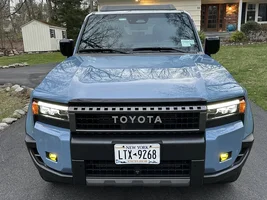
Just popped the hood and gave things a looksie. I agree. I suspect that you need to get under the car to remove the rest of the throttle body inlet bolts. That may be challenging without a lift and/or the removal of more parts.

A casual look and I couldn't even see the throttle body
 
I have done two black stones and each one was 10,000 miles apart and on the last one they were recommending I could go 12,000 miles.
IIRC, The Motor Oil Gerk did a video where he postulated that it wasn’t the oil going bad that destroyed engines. It was microscopic particulates in the oil, that could not be filtered, that destroyed the inner workings of the engines. For that reason, I’ll stay with more frequent oil changes.

Don’t quote me on ^this^. But I did stay at a Holiday Inn Express last week.

Maybe I should go find that video again.
 
Not interested at all in using an oil analysis in order to extend my LC OLF cycles. With our LC’s hard duty cycles I will not risk running oil longer. Every oil can shear & fail at some point. For the same cost of one Blackstone or SpeedDiagnotix premium oil evaluation I can change my own oil 3x & know I have fresh oil & new Toyota filter. My perspective is the oil changes are a better ROI.

I’m a fan of Blackstone & use them several times a year to determine health on a 40 y/o IO-360 Lycoming engine, & that analysis is used for extending engine life by knowing condition & what additives are recommended, not in extending the oil change timing.
Cant disagree with that point of view, this is why i change my own oil.
 
For those who are interested in BS Data
This is Toyota 0-w20 @ 3927 miles
IMG_4569.webp
 
As our guide has developed with the helpful input and corrections from our forum members, I have my own question about engine coolant. I cited respected sources like The Car Care Nut, recommending a 50K mile drain and fill as opposed to the Toyota recommended 100K.

I have now just crossed 50K and wonder what the consensus is on this? Has anyone actually done this at 50K, is it necessary?
I would go with what the Car Care Nut says
 
As our guide has developed with the helpful input and corrections from our forum members, I have my own question about engine coolant. I cited respected sources like The Car Care Nut, recommending a 50K mile drain and fill as opposed to the Toyota recommended 100K.

I have now just crossed 50K and wonder what the consensus is on this? Has anyone actually done this at 50K, is it necessary?
I look at coolant as more of an age related change...
I would have no issues with 10K miles on 5W-30, but everything I have seen suggests 0W-20 is losing it after 6-7k miles. Just my 2 cents
 
As our guide has developed with the helpful input and corrections from our forum members, I have my own question about engine coolant. I cited respected sources like The Car Care Nut, recommending a 50K mile drain and fill as opposed to the Toyota recommended 100K.

I have now just crossed 50K and wonder what the consensus is on this? Has anyone actually done this at 50K, is it necessary?
For a daily driver or frequently used vehicle IME it isn't needed. I use chemical test strips and test the freeze and boiling points and do a visual inspection. If those check out it stays in until 100k (still on original fluid on the Tundra) or until something major requiring fluid draining occurs. With modern engines and the materials used in them and there cooling systems along with OAT long life fluids being used, modern systems don't see the results of internal corrosion that occurred before these changes were made.

Both my Tundra and Volvo are at or over 150k and I've seen deep into the cooling passages of both without a fluid change prior to 100k (took over the recommended 5 year/150k interval to get to that mileage) and they are sparkling clean inside and still tested fine. My Tundra still tests good at 14 years & 150k, at this rate the hoses will be dried out and brittle requiring replacement before the coolant is no good.

Unlike days of old with copper core radiators, cast-iron, steel, brass and aluminum components in some cases throughout the cooling system while running traditional Ethylene glycol which results in internal corrosion even when regularly changed. Modern engines mostly use OAT or HOAT and aluminum, plastic and rubber throughout, it's pretty easy to limit or eliminate corrosion when no dissimilar metals are present provided the fluid is the correct chemistry.

Plastic couplers are the achillea's heel in these systems but even those tend to last 150k or a little more until they give up the ghost, which is about how long you can expect the rubber hoses to last as well. I'll probably need to look at replacing the hoses, belts, plastic couplers and coolant soon though to avoid a leak on the Tundra.
 
Our other vehicle is a 2018 Tesla model 3. We have 90k miles on it. Our sole scheduled maintenance was the 50k mile service. Tesla mobile service drove to our house in the Santa Cruz Mountains and did the servicing in our driveway. Total cost was $140. It would have been more, but I declined the cabin air filter and windshield wipers, because I had just changed them myself.
 
Back
Top Bottom