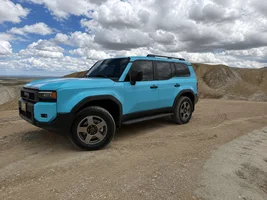
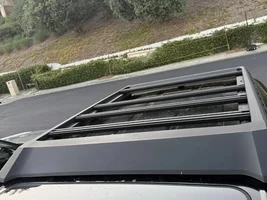
Great job Toyota . The new Kia telluride comes with higher ground clearance and better offroad tires, and the rear seats fold completely flat

Not trying to snap back or anything, but I could ask you...Don't you have a transmission to replace on your brand new Land Cruiser 250?


This guys said when he he took his into the dealer for a transmission replacement there was another 250 also waiting for a transmission replacement-
Super loud horn-like noise when fully stopped and when starting up. 2024 LC250

Over $30,000 cost for transmission/torque converter replacement-
https://www.landcruiserforum.com/threads/horrible-noise-when-vehicle-is-stopped.7525/

Just 2600 miles in and needs a new transmission, torque converter and hybrid power unit-
Most Disappointing Vehicle Ive Owned

Another-
Failed transmission with only 25k miles on 2024 First Edition.

And another-
Shudder at low RPM

Or...don't you have a whole ass engine to replace on your new 250?

Cylinder Wall Scoring and misfires

The hybrid that can't...


https://www.landcruiserforum.com/threads/hearing-a-rattle-noise-at-low-gear-acceleration.724/page-8#post-72360
Nope, so far so good here. My only issue is squeaky brakes, and they don't bother me enough to let a dealership touch my truck.

But as you well know, I was really just asking, don't you have something better to do? and noting that while a great truck, the "flagship Cruiser" has plenty of it's own issues (I could list more).
But we know you're just trolling. Like pretending you don't know the 250, 4R, and Taco share a lot of parts. Everyone knows that. You're not shocking anyone with your revelations.
I didn't realize that. Wow. Looking like the 250 also shares an engine with the 4Runner as well.

Icon's Tacoma upper control arms show that they also fit the 250! I guess that makes sense.

ICON 2024-2025 Toyota Tacoma/2024-2025 Toyota Land Cruiser 250 Series/2024-2025 Lexus GX550/2025 Toyota 4Runner, Front, Billet Upper Control Arms w/ Delta Joint Pro - Icon Vehicle Dynamics
 
But we know you're just trolling. Like pretending you don't know the 250, 4R, and Taco share a lot of parts. Everyone knows that. You're not shocking anyone with your revelations.

Ok, I’m sorry..I guess? I wasn’t aware of this. If true, this would be the first time that I know of where an American market Land Cruiser has shared engines and suspension parts with the Tacoma and the 4Runner.
 
It comes down to this…. Toyota’s have a great resell value… look at all the high mileage older Toyotas for sale! One inch? Really? Now, tell you buddies you drive a Kia and see their faces… I personally like my LC.. I see what everyone is saying about the gas mileage, rear cargo area not being flat, small engine… but I don’t care!
If you don’t look back at your vehicle when you walk away… sell it! Get something you think about and enjoy driving and let others buy a Kia or some other South Korean car!
 
Germans have had serious automotive language issues for years now. They don't even realize a Coupe has 2 doors................nuff said there.Any of those things being called a station wagon flies in the face of 50 years of Ford , Chevy, Ols, Buick, BMW, Audi, Mercedes station wagons. That's like calling POTUS a nice guy.................sarcasm intended.
 
It comes down to this…. Toyota’s have a great resell value… look at all the high mileage older Toyotas for sale! One inch? Really? Now, tell you buddies you drive a Kia and see their faces… I personally like my LC.. I see what everyone is saying about the gas mileage, rear cargo area not being flat, small engine… but I don’t care!
If you don’t look back at your vehicle when you walk away… sell it! Get something you think about and enjoy driving and let others buy a Kia or some other South Korean car!

Are you saying the Telluride owners are not the envy of the entire country club?

(I’m not a member, so can’t say for sure) 🤣
 
It comes down to this…. Toyota’s have a great resell value… look at all the high mileage older Toyotas for sale! One inch? Really? Now, tell you buddies you drive a Kia and see their faces… I personally like my LC.. I see what everyone is saying about the gas mileage, rear cargo area not being flat, small engine… but I don’t care!
If you don’t look back at your vehicle when you walk away… sell it! Get something you think about and enjoy driving and let others buy a Kia or some other South Korean car!
So during the week I purposely go out through the garage daily just to look at my LC before I head out
 
My friend, what are your thoughts on the 2025 Tacoma having more towing capacity than your Land Cruiser 250 Prado?

What is the "heavy duty cooling" you're speaking of specifically? Can you send me a link? Also, I wasn't aware that the front ends are different on the 200 series from market to market. Can you share your research?

Also, what are the "global features" that the 250 has that other US Land Cruisers don't have?
Appreciate the questions — happy to clarify.


On the Tacoma vs. LC250 towing:


Toyota rates those platforms very differently because they’re built for different missions. The Tacoma’s max tow number is with a long-bed, leaf-spring, rear-drive configuration designed specifically to post a competitive spec sheet in the midsize truck segment. The LC250 is a full-time 4WD, coil-spring SUV with a shorter wheelbase and a global tuning priority around stability, payload limits, and off-road durability. Toyota has always underrun tow ratings on the global Prado platform for longevity and heat-load margins. The number doesn’t mean the Tacoma is a more capable tow vehicle in real-world conditions, only that Toyota certifies it differently under SAE J2807.


Heavy-duty cooling on global 200s:


Non-US 200 Series (particularly the 1VD-FTV diesel V8 markets and the Middle East GX.R / GXR spec) got materially upgraded heat-management hardware. Examples include a higher-capacity radiator, secondary transmission coolers on certain trims, higher-flow oil coolers, heavier-duty viscous fan couplings, and in some markets larger-core intercoolers. These weren’t added for marketing — they were required for the global duty cycles Toyota engineers around: desert fleets, mining, UN convoy work, and heavy-load/high-heat towing.

The US 3UR-FE gas units didn’t get any of that as they were not expected to see hard use.


Front-end differences on the 200:


Yes — there are multiple market differences. The Middle East and Australian 200s were designed to be steel-bumper-compatible out of the box, with different crash structures, apron stampings, and reinforcement points that accommodate ARB, TJM, and OEM-approved steel bumpers without triggering airbag faults. The US crash-beam and sensor layout were tuned for our regulatory environment and don’t accept those bumpers without re-engineering. Anyone who has built a 200 in Australia vs. the US has dealt with these differences firsthand.


Rear locker and global hardware:


Nearly all markets outside the US offered a factory rear differential lock on the 200 from day one (Australia, Middle East, EU, South Africa, etc.). The US uniquely skipped this. . Same with certain tow packages and HD alternators that were standard elsewhere.


What the LC250 gives the US that we never got before:


The biggest shift is that the US is finally receiving the global Land Cruiser Prado — not a region-specific derivative. That means:


• Full-time 4WD with available center and rear diff lock and disconnects and quite literally every electronic off road aide Toyota makes.


• Global frame, global suspension geometry, and shared global accessory mounting points


• Designed around steel-bumper and recovery-point compatibility


• Shared cooling package engineering across global markets rather than a US-specific detune. The global 2.4powertrain.

The short version: the US version of the 200 was a great truck — but it was built to satisfy a very different buyer and regulatory schema than the global spec. Basically the softest and least capable spec sold.

The 250 is the opposite: the US finally gets the same global chassis, hardware mounting points, accessory ecosystem, and global tuning that the rest of the world gets. Maybe even the most capable version with the additional hybrid power. Sadly not the larger gas tank or diesel though.

If you want, I can link some parts diagrams and service bulletins that show the differences — but none of this is controversial in the 200/70/Prado community.
 
Last edited:
Appreciate the questions — happy to clarify.


On the Tacoma vs. LC250 towing:


Toyota rates those platforms very differently because they’re built for different missions. The Tacoma’s max tow number is with a long-bed, leaf-spring, rear-drive configuration designed specifically to post a competitive spec sheet in the midsize truck segment. The LC250 is a full-time 4WD, coil-spring SUV with a shorter wheelbase and a global tuning priority around stability, payload limits, and off-road durability. Toyota has always underrun tow ratings on the global Prado platform for longevity and heat-load margins. The number doesn’t mean the Tacoma is a more capable tow vehicle in real-world conditions, only that Toyota certifies it differently under SAE J2807.


Heavy-duty cooling on global 200s:


Non-US 200 Series (particularly the 1VD-FTV diesel V8 markets and the Middle East GX.R / GXR spec) got materially upgraded heat-management hardware. Examples include a higher-capacity radiator, secondary transmission coolers on certain trims, higher-flow oil coolers, heavier-duty viscous fan couplings, and in some markets larger-core intercoolers. These weren’t added for marketing — they were required for the global duty cycles Toyota engineers around: desert fleets, mining, UN convoy work, and heavy-load/high-heat towing.

The US 3UR-FE gas units didn’t get any of that as they were not expected to see hard use.


Front-end differences on the 200:


Yes — there are multiple market differences. The Middle East and Australian 200s were designed to be steel-bumper-compatible out of the box, with different crash structures, apron stampings, and reinforcement points that accommodate ARB, TJM, and OEM-approved steel bumpers without triggering airbag faults. The US crash-beam and sensor layout were tuned for our regulatory environment and don’t accept those bumpers without re-engineering. Anyone who has built a 200 in Australia vs. the US has dealt with these differences firsthand.


Rear locker and global hardware:


Nearly all markets outside the US offered a factory rear differential lock on the 200 from day one (Australia, Middle East, EU, South Africa, etc.). The US uniquely skipped this. . Same with certain tow packages and HD alternators that were standard elsewhere.


What the LC250 gives the US that we never got before:


The biggest shift is that the US is finally receiving the global Land Cruiser Prado — not a region-specific derivative. That means:


• Full-time 4WD with center diff lock (vs. the US-only part-time systems on older 150s)


• Global frame, global suspension geometry, and shared global accessory mounting points


• Designed around steel-bumper and recovery-point compatibility (already confirmed in the Australian and Japanese parts diagrams)


• Shared cooling package engineering across global markets rather than a US-specific detune. The global 2.4powertrain.

The short version: the US version of the 200 was a great truck — but it was built to satisfy a very different buyer and regulatory schema than the global spec. Basically the softest and least capable spec sold..

The 250 is the opposite: the US finally gets the same global chassis, hardware mounting points, accessory ecosystem, and global tuning that the rest of the world gets. Maybe even the most capable version with the additional hybrid power. Sadly not the larger gas tank or diesel though.

If you want, I can link some parts diagrams and service bulletins that show the differences — but none of this is controversial in the 200/70/Prado community.
Us spec 200 series don’t have rear lockers ? Ouch
 
Us spec 200 series don’t have rear lockers ? Ouch
No, the U.S.-spec 200 Series never got a factory rear locker. Toyota gave us a lockable center diff and told A-TRAC to do the rest. That wasn’t an accident. It fit the whole U.S. strategy for the 200: sell the luxury lounge version here and send the heavy-duty, expedition-grade hardware (diesel V8, front and rear lockers, big cooling, steel-bumper front ends, etc.) to the markets that they knew would demanded it.


Globally, buyers bought the 200 because they needed a truck that could cross deserts, haul loads, and survive mining sites. Toyota assumed U.S. buyers mostly wanted something comfortable for school runs and Whole Foods parking lots. So they spec’d it accordingly. With the 250, they finally reversed that thinking, and surprise—sales exploded.


But a few U.S. 200 owners still insist they bought the “flagship” or “most capable” version. That’s…debatable. The 200 is a phenomenal platform, but the U.S. trim was the most expensive and the least capable relative to what other markets got. Most people drawn to Land Cruisers aren’t in it for the woodgrain, massaging leather, or 20-speaker sound system. Yet some folks fixate on how “solid” the door sounds when it closes. Go slam the door on a 70 Series or an H1. It sounds like dropping a frying pan down a stairwell. Doesn’t stop either one from walking all over rough terrain.

In other words: door thunks don’t bring you home from the bush, and the U.S. 200 wasn’t the spec built for people who actually cared. Was that a bad sales move on Toyota’s part? I would say sales might say yes. Should they bring the 1958 version of a 300 series here, oh god yes.
 
Appreciate the questions — happy to clarify.


On the Tacoma vs. LC250 towing:


Toyota rates those platforms very differently because they’re built for different missions. The Tacoma’s max tow number is with a long-bed, leaf-spring, rear-drive configuration designed specifically to post a competitive spec sheet in the midsize truck segment. The LC250 is a full-time 4WD, coil-spring SUV with a shorter wheelbase and a global tuning priority around stability, payload limits, and off-road durability. Toyota has always underrun tow ratings on the global Prado platform for longevity and heat-load margins. The number doesn’t mean the Tacoma is a more capable tow vehicle in real-world conditions, only that Toyota certifies it differently under SAE J2807.


Heavy-duty cooling on global 200s:


Non-US 200 Series (particularly the 1VD-FTV diesel V8 markets and the Middle East GX.R / GXR spec) got materially upgraded heat-management hardware. Examples include a higher-capacity radiator, secondary transmission coolers on certain trims, higher-flow oil coolers, heavier-duty viscous fan couplings, and in some markets larger-core intercoolers. These weren’t added for marketing — they were required for the global duty cycles Toyota engineers around: desert fleets, mining, UN convoy work, and heavy-load/high-heat towing.

The US 3UR-FE gas units didn’t get any of that as they were not expected to see hard use.


Front-end differences on the 200:


Yes — there are multiple market differences. The Middle East and Australian 200s were designed to be steel-bumper-compatible out of the box, with different crash structures, apron stampings, and reinforcement points that accommodate ARB, TJM, and OEM-approved steel bumpers without triggering airbag faults. The US crash-beam and sensor layout were tuned for our regulatory environment and don’t accept those bumpers without re-engineering. Anyone who has built a 200 in Australia vs. the US has dealt with these differences firsthand.


Rear locker and global hardware:


Nearly all markets outside the US offered a factory rear differential lock on the 200 from day one (Australia, Middle East, EU, South Africa, etc.). The US uniquely skipped this. . Same with certain tow packages and HD alternators that were standard elsewhere.


What the LC250 gives the US that we never got before:


The biggest shift is that the US is finally receiving the global Land Cruiser Prado — not a region-specific derivative. That means:


• Full-time 4WD with available center and rear diff lock and disconnects and quite literally every electronic off road aide Toyota makes.


• Global frame, global suspension geometry, and shared global accessory mounting points


• Designed around steel-bumper and recovery-point compatibility


• Shared cooling package engineering across global markets rather than a US-specific detune. The global 2.4powertrain.

The short version: the US version of the 200 was a great truck — but it was built to satisfy a very different buyer and regulatory schema than the global spec. Basically the softest and least capable spec sold.

The 250 is the opposite: the US finally gets the same global chassis, hardware mounting points, accessory ecosystem, and global tuning that the rest of the world gets. Maybe even the most capable version with the additional hybrid power. Sadly not the larger gas tank or diesel though.

If you want, I can link some parts diagrams and service bulletins that show the differences — but none of this is controversial in the 200/70/Prado community.
Small correction, hybrid 2.4powertrain is only offered in North America market. But you are right that non-hybrid version is a global platform. Toyota also offers hybrid 2.4powertrain in GX550h in Asia.
 
Small correction, hybrid 2.4powertrain is only offered in North America market. But you are right that non-hybrid version is a global platform. Toyota also offers hybrid 2.4powertrain in GX550h in Asia.


Exactly correct. The whole J250 powertrain is essentially the vey similar worldwide. Toyota built the platform around only two engines globally—the T24A petrol and the 1GD diesel and the only real variation is whether a given market gets those engines with or without hybrid pack which is not that big of a change in this set up. Everything else in the drivetrain is shared across regions: the same 8-speed Direct Shift automatic, the same full-time 4WD system with a lockable center diff, the same optional rear locker, the same transfer case, and the same traction and off road electronics. Once you factor out T24A or 1GD the powertrain is fundamentally identical everywhere, with the engine being just one component of a global, uniform drivetrain. And crucially, Toyota tuned that entire drivetrain around the same priorities worldwide—high low-end torque, predictable power delivery, and consistent off-highway capability regardless of market.
 
Only 3 countries got the 2.4T hybrid actually, canada, US and China. Chinese version got gasoline particulate filter though, shaves off about 0.5 second 0-60.
IMG_1725.webp
 
Heavy-duty cooling on global 200s:


Non-US 200 Series (particularly the 1VD-FTV diesel V8 markets and the Middle East GX.R / GXR spec) got materially upgraded heat-management hardware. Examples include a higher-capacity radiator, secondary transmission coolers on certain trims, higher-flow oil coolers, heavier-duty viscous fan couplings, and in some markets larger-core intercoolers. These weren’t added for marketing — they were required for the global duty cycles Toyota engineers around: desert fleets, mining, UN convoy work, and heavy-load/high-heat towing.
This is facinating @Winchester44 , however, I can't seem to find any of the part numbers for these components. You would think they would be easy to find, especially the high capacity radiator. Maybe I'm looking in the wrong place?

Also, post some links that document these differences. I'd like to read more into this.
 
The differences between URJ200 and the most widely globally sold UDJ200 are pretty easy to look up but are not apples to apples. 1VD-FT has a higher cooling capacity than the 3UR-FE equip'd 200 series, but being a twin turbo diesel it will need better Oil and Engine coolant capacities to deal with the extra heat being generated under boost. Many global specs also are fitted with sub tanks for extended range.

That being said they are both rated the same for towing capacities but obviously if towing is the focus the diesel is the better choice, torque tows not HP and diesels get much better economy while towing vs their petrol counterparts. While the 1VD-FT may lose 2-3 MPG while towing the 3UR-FE will lose 8+ MPG from an already atrocious 15 MPG on a good day. Obviously the diesel is also less affected by adding offroad tires, suspension and additional weight (bumpers, winches and the like for offroad).

1VD-FT is known for its reliability, economy, torque and towing (If well maintained, otherwise it will suffer and early death) and can be prone to issues not so clean diesel, while the 3UR-FE is known for its reliability, power, towing, lack of economy and cam tower leaks when aged.

I'd take the 1VD-FT over the 3UR-FE given the choice (for the economy alone I chose the 1UR-FE for my Tundra and its paid for itself in that regard), the 3UR-FE is the better engine for those who just want to drive it and do oil changes only and sadly this along with the cost prohibitive emission regulations is why Toyota will likely never bring a diesel to the US. 1VD-FT would no doubt be more expensive to maintain as are all diesel engines. Also sadly if Toyota did bring a diesel stateside I don't think it would sell in high enough volume to remain for long.

Summary: The US spec 200 series is the most neutered and under sold spec 200 series available world wide in terms of everything except what the powertrain it was offered with is good for. Toyota strayed to far from the Land Cruiser heritage and the people spoke through their pocket books. To be fair this started with the 100 series when they strayed from a solid front axle in the US with no offering of the 105 series and sales followed suit as well as the Land Cruisers demise in the US until they moved back towards their roots with the 250 Series. Land Cruisers were never selling in the US at high volume for being a luxury mall crawler (IFS) SUV, people were into them for their utility, reliability and ruggedness. Sadly there will likely never be another F/R solid axle Toyota sold here either I doubt.

Give me a diesel powered 250 series with solid front axle or 70 series with a few more creature comforts and I'd be stoked!
 
This is facinating @Winchester44 , however, I can't seem to find any of the part numbers for these components. You would think they would be easy to find, especially the high capacity radiator. Maybe I'm looking in the wrong place?

Also, post some links that document these differences. I'd like to read more into this.

Why the 1VD-FTV Cooling and Heat-Management System Is Unusually Heavy-Duty


Most modern diesel pickups (F-250 Duramax, PowerStroke, Ram Cummins, even global diesels like the Ranger/HiLux/Fortuner) are designed around:


  • Variable climate conditions (mixed US/Euro/Asian markets)
  • Moderate to heavy towing
  • Shorter service intervals
  • Mostly paved use
  • Large frontal area for airflow

By contrast, the 1VD-FTV V8 diesel was built for continuous load at high temperatures, often with:


  • Ambient temps above 45–50°C (113–122°F)
  • Low-speed, long-duration climbs
  • Deep sand, which eliminates natural airflow
  • Heavy payload and towing simultaneously
  • Dust-restricted airflow conditions
  • Markets where failure is not acceptable (Outback, Middle East, Sub-Saharan Africa)

This use case demanded an entire category of cooling hardware normally found on commercial-grade equipment, not consumer trucks.


1. The Diesel Itself Produces More Heat Than a Typical Pickup Diesel


The 1VD-FTV:

  • Uses two turbochargers
  • Runs very high sustained cylinder pressure
  • Has massive EGR cooling load (two coolers depending on spec)
  • Is designed to deliver sustained 700–900°C turbine inlet temperature continuously
  • Must maintain performance at altitude + high heat + high load simultaneously

Even before external cooling hardware is considered, the engine’s thermal load is much higher than a single-turbo I-6 (Cummins) or a moderate-boost V8 (Duramax)

Thus Toyota had to build cooling around that reality.


2. Oversized, High-Capacity Radiator (16400-51040)


The diesel radiator is not just “larger”—it has:


  • Higher fin density
  • Thicker core volume
  • Stronger tank construction
  • More aggressive coolant paths

Toyota designed it to reject hours of continuous thermal load in high ambient temps, not 10–20 minute highway towing bursts.


Most “normal” trucks rely on:

  • Big frontal area
  • Higher airflow at speed
  • Shorter duty cycles


The Land Cruiser cannot rely on speed or airflow because it is expected to survive 4-mph sand climbs in 118°F.


3. Aggressive Cooling Fan + Clutch (Fan 16361-50110)


The diesel fan moves significantly more air than the URJ200 gas fan. Its pitch is designed for:


  • High airflow at low RPM
  • High engagement rate in heat
  • Maximum draw in low-speed desert running

American trucks often rely on electric fans or viscous fans tuned for quieter, more fuel-efficient operation. Toyota tuned the VDJ fan the other way: cool first, efficiency second.


4. Intercooler System (17900-51020) With Thermal Reserve Capacity


The 1VD uses a massive top-mount air-to-air intercooler large enough for medium-duty commercial diesels. It is designed to:

  • Avoid heat-soak during sustained boost
  • Maintain charge-air temps even when forward airflow is minimal
  • Avoid derating in high-altitude/hot conditions


Many diesel pickups will heat soak after prolonged low-speed boost or hill climbs.

The 1VD intercooler is sized to not heat soak, even in desert convoy conditions.


5. Coolant-Fed EGR Coolers (25680-5101x Family)


Most diesels have some EGR cooling. The 1VD has:
  • Large-capacity, coolant-fed heat exchangers
  • Designed to handle much higher recirculation volume
  • Adds significant thermal load to engine coolant system

Toyota compensated with:

  • Oversized main radiator
  • Higher flow water pump
  • Heavy-duty coolant system pressure management

This is not common on consumer trucks. It is more similar to industrial diesel emissions systems.


6. Turbo Heat Management Typically Seen in Commercial Machinery


Twin turbos create massive under-hood heat. Toyota mitigated this with:


  • Dedicated oil + coolant turbo feed and return circuits
  • Extensive heat shielding
  • Controlled airflow baffles
  • Engine layout optimized for thermal separation

The system is designed to avoid:

  • Oil coking
  • Bearing overheat
  • Heat soak in low airflow conditions

Again—this is more like a commercial vehicle spec than a half-ton truck.


7. Market-Specific Hot-Country and Heavy-Tow Upgrade


Places like Australia, UAE, Oman, Saudi Arabia, and Namibia received additional cooling upgrades on top of the already heavy-duty diesel system:


  • Heavy-duty ATF cooler ducts (32917-60090)
  • Heavy-duty ATF cooler plumbing (32943-60350 / 60351)
  • Enhanced shrouding to force airflow through the radiator stack
  • Optional auxiliary ATF coolers for 3.5-ton towing in desert heat
  • Hot Country packages with insulation and airflow guides
  • Special dust-sealing + heat deflection in underbody components
  • Fleet or dealer-installed cooling kits for:
    • Mining
    • Humanitarian organizations
    • Defense forces

The US market never saw any of this because the 200 here is treated more as a luxury SUV than a commercial-grade desert vehicle.

8. Designed to Run at High Load Without Derating

Most modern diesels derate when:
  • Coolant temp is too high
  • Charge air temps rise
  • EGTs exceed thresholds

Toyota tuned the 1VD to avoid derating, even in extreme heat, because:
  • Losing power in loose sand = getting stuck
  • Losing power in convoy = dangerous
  • Losing power in remote terrain = life-threatening

This is one of the major differences between a Land Cruiser diesel and a consumer pickup diesel.

Summing It Up

A normal diesel in a normal truck is designed for:
  • Mixed climates
  • Mixed speeds
  • Occasional heavy towing
  • High airflow availability

The 1VD-FTV in the VDJ/UDJ200 is designed for:
  • Constant high load
  • World’s hottest climates
  • Low-speed desert mobility
  • Heavy towing in soft sand
  • Long-duration heat rejection without vehicle speed
And Toyota reinforced it with:
  • Radiator 16400-51040
  • Fan 16361-50110
  • Intercooler 17900-51020
  • EGR coolers 25680-51011/20/21
  • Oil cooler 15710-51020
  • Hot-country ATF ducts 32917-60090
  • Heavy-duty ATF hoses 32943-6035x

This is why the VDJ200 is often described as massively overbuilt compared to typical modern diesel pickups.
 
Back
Top Bottom