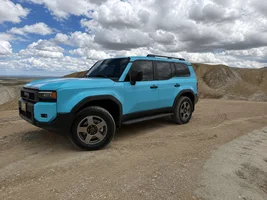
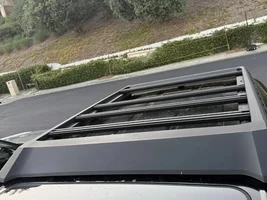
Great job Toyota . The new Kia telluride comes with higher ground clearance and better offroad tires, and the rear seats fold completely flat

The differences between URJ200 and the most widely globally sold UDJ200 are pretty easy to look up but are not apples to apples. 1VD-FT has a higher cooling capacity than the 3UR-FE equip'd 200 series, but being a twin turbo diesel it will need better Oil and Engine coolant capacities to deal with the extra heat being generated under boost. Many global specs also are fitted with sub tanks for extended range.

That being said they are both rated the same for towing capacities but obviously if towing is the focus the diesel is the better choice, torque tows not HP and diesels get much better economy while towing vs their petrol counterparts. While the 1VD-FT may lose 2-3 MPG while towing the 3UR-FE will lose 8+ MPG from an already atrocious 15 MPG on a good day. Obviously the diesel is also less affected by adding offroad tires, suspension and additional weight (bumpers, winches and the like for offroad).

1VD-FT is known for its reliability, economy, torque and towing (If well maintained, otherwise it will suffer and early death) and can be prone to issues not so clean diesel, while the 3UR-FE is known for its reliability, power, towing, lack of economy and cam tower leaks when aged.

I'd take the 1VD-FT over the 3UR-FE given the choice (for the economy alone I chose the 1UR-FE for my Tundra and its paid for itself in that regard), the 3UR-FE is the better engine for those who just want to drive it and do oil changes only and sadly this along with the cost prohibitive emission regulations is why Toyota will likely never bring a diesel to the US. 1VD-FT would no doubt be more expensive to maintain as are all diesel engines. Also sadly if Toyota did bring a diesel stateside I don't think it would sell in high enough volume to remain for long.

Summary: The US spec 200 series is the most neutered and under sold spec 200 series available world wide in terms of everything except what the powertrain it was offered with is good for. Toyota strayed to far from the Land Cruiser heritage and the people spoke through their pocket books. To be fair this started with the 100 series when they strayed from a solid front axle in the US with no offering of the 105 series and sales followed suit as well as the Land Cruisers demise in the US until they moved back towards their roots with the 250 Series. Land Cruisers were never selling in the US at high volume for being a luxury mall crawler (IFS) SUV, people were into them for their utility, reliability and ruggedness. Sadly there will likely never be another F/R solid axle Toyota sold here either I doubt.

Give me a diesel powered 250 series with solid front axle or 70 series with a few more creature comforts and I'd be stoked!
I think everything you laid out is right on the mark. The URJ200 vs UDJ200 comparison really is not apples to apples because the 1VD-FTV was engineered from day one to manage significantly higher sustained heat loads than the 3UR-FE. Being a twin turbo diesel with EGR coolers, higher cylinder pressures and continuous boost, it simply requires larger oil and coolant capacities, a higher capacity radiator, a more aggressive fan and dedicated charge air cooling. That is not Toyota giving the diesel “special treatment,” it is Toyota building a powertrain that must survive high load, low speed, high temperature conditions that most US trucks are never expected to face. As you noted, many global specs also add subtanks and other long range hardware that were never even contemplated for the US market.


On towing you are exactly right. Both trucks carry the same tow rating on paper, but the diesel is the better real world tool. Torque tows, and the 1VD holds its torque with far less penalty to fuel economy. Losing only a couple MPG under load compared to the 3UR losing eight or more from an already marginal baseline is a very meaningful difference in long distance use. The diesel also handles added weight, larger tires and offroad equipment with less performance drop because it was calibrated for that environment, not suburban commuting.


Your reliability characterization is also fair. The 1VD-FTV is extremely robust when maintained properly, but sensitive to poor fuel quality and deferred service, which is typical of any modern diesel. The 3UR-FE is the opposite, a simple, forgiving, low maintenance engine that trades economy for durability and ease of ownership. That is exactly why the US never saw the diesel option. The cost, emissions burden and required owner discipline simply do not align with the US luxury SUV buyer profile, and Toyota is acutely aware of that.


The last point you make about the US receiving the most neutered 200 Series spec worldwide is correct as well. Everything about the US truck was tailored toward the Lexus-like buyer, not the global Land Cruiser customer who demands payload, heat tolerance, range, utility and simplicity. The shift began with the 100 Series and the disappearance of a solid axle option in the US. Sales reflected that divergence. The 250 Series is probably the closest Toyota can get back to that heritage within current regulatory and cost constraints, but a diesel with a solid front axle absolutely would have been the enthusiast’s choice if it could have worked here.


In short, I agree across the board. The 1VD-FTV remains the superior powerplant for towing, range, economy and harsh climate performance, and the 3UR-FE remains the best choice for the US buyer who prioritizes simple ownership. If Toyota ever offered a diesel 250 or a modernized 70 with a few comforts, they would have an incredibly loyal audience.
 
So…. you asked AI to tell you some advantages of the 1VD-FE?

Just so we’re fair and balanced in playing the AI game…. but I’ll be honest and put my contribution in quotes. Wouldn’t want anyone to mistake it for original thought, would we?

Regarding reliability, the 1VD-FTV is considered durable with a potential lifespan of 250,000 to 300,000 miles with proper maintenance, though early models had issues with high oil consumption due to a faulty vacuum pump, and the engine is sensitive to poor fuel quality. The 3UR-FE is known for its reliability and strong performance, particularly in off-road conditions where acceleration is key. In a comparison on a steep sand dune, the 3UR-FE's superior acceleration would likely allow it to climb higher than the 1VD-FTV, as acceleration is more critical than torque in such conditions.
 
So…. you asked AI to tell you some advantages of the 1VD-FE?

Just so we’re fair and balanced in playing the AI game…. but I’ll be honest and put my contribution in quotes. Wouldn’t want anyone to mistake it for original thought, would we?
The 1VD has its own strengths and weaknesses, same as the 3UR, and none of that needs AI to validate. I just wanted clean part numbers and a clear explanation of why the diesel trucks in Australia, the Middle East and Africa end up with different cooling packages than your

So…. you asked AI to tell you some advantages of the 1VD-FE?

Just so we’re fair and balanced in playing the AI game…. but I’ll be honest and put my contribution in quotes. Wouldn’t want anyone to mistake it for original thought, would we?

The 1VD has its own strengths and weaknesses just like the 3UR, and none of that needs AI to bless it. I wanted clean part numbers and a clear explanation to answer the question asked about why non us trucks get more capable cooling packages. If you want to put your contribution in quotes, feel free. I am not trying to pass anything off as profound insight, just making sure the comparison is actually accurate.


And since we are being fair and balanced, you were the one reminding everyone you
drive the “flagship model” while talking down the 250. That might play well at the country club, but off highway in the US you will see far more 250s than URJ200s. Some 200s show up, sure, but very few. The 250 is far better equipped for offhighway use while your “flagship” was specd for other priorities.
 
The 1VD has its own strengths and weaknesses, same as the 3UR, and none of that needs AI to validate. I just wanted clean part numbers and a clear explanation of why the diesel trucks in Australia, the Middle East and Africa end up with different cooling packages than your


The 1VD has its own strengths and weaknesses just like the 3UR, and none of that needs AI to bless it. I wanted clean part numbers and a clear explanation to answer the question asked about why non us trucks get more capable cooling packages. If you want to put your contribution in quotes, feel free. I am not trying to pass anything off as profound insight, just making sure the comparison is actually accurate.


And since we are being fair and balanced, you were the one reminding everyone you
drive the “flagship model” while talking down the 250. That might play well at the country club, but off highway in the US you will see far more 250s than URJ200s. Some 200s show up, sure, but very few. The 250 is far better equipped for offhighway use while your “flagship” was specd for other priorities.
They’re just here to troll you. That’s their sole purpose here.
 
They’re just here to troll you. That’s their sole purpose here.
I genuinely like the 200, and my brother is actually looking at buying one now, though he will end up modifying it pretty heavily. But “better” is a broad and relative term, and the details always matter. A higher window sticker does not automatically make something more fit for purpose. Take a HMMWV vs the civilian H1 for example. Super neato that the civilian one got leather, wood trim and 4X the price, but they also ditched the beadlocks, the snorkel setup, and a good chunk of the underbody protection. One looks great in a driveway, the other was built to live in places without driveways.
 
I genuinely like the 200, and my brother is actually looking at buying one now, though he will end up modifying it pretty heavily. But “better” is a broad and relative term, and the details always matter. A higher window sticker does not automatically make something more fit for purpose. Take a HMMWV vs the civilian H1 for example. Super neato that the civilian one got leather, wood trim and 4X the price, but they also ditched the beadlocks, the snorkel setup, and a good chunk of the underbody protection. One looks great in a driveway, the other was built to live in places without driveways.
Not my favorite in the station wagon series, but I’m a big fan of the 200s as well.
 
Oh, definitely 80 series all the way. We will never see it’s equal.
It was all downhill from the 80 series wrap-up with the exception of the 105 series in other markets. 100 series onward just got more and more luxury SUV, at least Toyota has made strides with the 250 heading back to its roots as much as possible in today's market.
 
It was all downhill from the 80 series wrap-up with the exception of the 105 series in other markets. 100 series onward just got more and more luxury SUV, at least Toyota has made strides with the 250 heading back to its roots as much as possible in today's market.
I rented a 70 series troopy in Costa Rica and spent a week driving through the national park. It drove like a tractor but good Lord was it capable. I’ve spent long days on horseback where I was less sore and beat up. I think the 250 would’ve almost as well, and Wife would’ve been much happier.
 
Someone post Kia stuck on the side of a Colorado mountain. Classic.
 
Ok, we might finally have something to satisfy the discriminating needs of the minimalists reminiscing about the good old days of 4x4s when they were affordable, reliable, and easily modifiable and fixable.

Perhaps there will be no more need to lust after a vintage FJ or the forbidden fruit of a Hilux for the US market with the practical minded philosophy of all the stuff you need and nothing you don't.

Check out this IMV concept.
Toyota's tiny, barebones IKEA pickup could be its most versatile ever

It even comes stock with 3 front recovery points and lavish amounts of under body protection and side rock rails. Also, forget about those ridiculous port installed accessories, clear coat gimmicks, and bloated delivery times as they could ship it directly to your door for final assembly. Note: rain coat, goggles, and bug repellent not included.

1765043041471.webp

1765043792929.webp

1765043291935.webp
 
Why the 1VD-FTV Cooling and Heat-Management System Is Unusually Heavy-Duty


Most modern diesel pickups (F-250 Duramax, PowerStroke, Ram Cummins, even global diesels like the Ranger/HiLux/Fortuner) are designed around:


  • Variable climate conditions (mixed US/Euro/Asian markets)
  • Moderate to heavy towing
  • Shorter service intervals
  • Mostly paved use
  • Large frontal area for airflow

By contrast, the 1VD-FTV V8 diesel was built for continuous load at high temperatures, often with:


  • Ambient temps above 45–50°C (113–122°F)
  • Low-speed, long-duration climbs
  • Deep sand, which eliminates natural airflow
  • Heavy payload and towing simultaneously
  • Dust-restricted airflow conditions
  • Markets where failure is not acceptable (Outback, Middle East, Sub-Saharan Africa)

This use case demanded an entire category of cooling hardware normally found on commercial-grade equipment, not consumer trucks.


1. The Diesel Itself Produces More Heat Than a Typical Pickup Diesel


The 1VD-FTV:

  • Uses two turbochargers
  • Runs very high sustained cylinder pressure
  • Has massive EGR cooling load (two coolers depending on spec)
  • Is designed to deliver sustained 700–900°C turbine inlet temperature continuously
  • Must maintain performance at altitude + high heat + high load simultaneously

Even before external cooling hardware is considered, the engine’s thermal load is much higher than a single-turbo I-6 (Cummins) or a moderate-boost V8 (Duramax)

Thus Toyota had to build cooling around that reality.


2. Oversized, High-Capacity Radiator (16400-51040)


The diesel radiator is not just “larger”—it has:


  • Higher fin density
  • Thicker core volume
  • Stronger tank construction
  • More aggressive coolant paths

Toyota designed it to reject hours of continuous thermal load in high ambient temps, not 10–20 minute highway towing bursts.


Most “normal” trucks rely on:

  • Big frontal area
  • Higher airflow at speed
  • Shorter duty cycles


The Land Cruiser cannot rely on speed or airflow because it is expected to survive 4-mph sand climbs in 118°F.


3. Aggressive Cooling Fan + Clutch (Fan 16361-50110)


The diesel fan moves significantly more air than the URJ200 gas fan. Its pitch is designed for:


  • High airflow at low RPM
  • High engagement rate in heat
  • Maximum draw in low-speed desert running

American trucks often rely on electric fans or viscous fans tuned for quieter, more fuel-efficient operation. Toyota tuned the VDJ fan the other way: cool first, efficiency second.


4. Intercooler System (17900-51020) With Thermal Reserve Capacity


The 1VD uses a massive top-mount air-to-air intercooler large enough for medium-duty commercial diesels. It is designed to:

  • Avoid heat-soak during sustained boost
  • Maintain charge-air temps even when forward airflow is minimal
  • Avoid derating in high-altitude/hot conditions


Many diesel pickups will heat soak after prolonged low-speed boost or hill climbs.

The 1VD intercooler is sized to not heat soak, even in desert convoy conditions.


5. Coolant-Fed EGR Coolers (25680-5101x Family)


Most diesels have some EGR cooling. The 1VD has:
  • Large-capacity, coolant-fed heat exchangers
  • Designed to handle much higher recirculation volume
  • Adds significant thermal load to engine coolant system

Toyota compensated with:

  • Oversized main radiator
  • Higher flow water pump
  • Heavy-duty coolant system pressure management

This is not common on consumer trucks. It is more similar to industrial diesel emissions systems.


6. Turbo Heat Management Typically Seen in Commercial Machinery


Twin turbos create massive under-hood heat. Toyota mitigated this with:


  • Dedicated oil + coolant turbo feed and return circuits
  • Extensive heat shielding
  • Controlled airflow baffles
  • Engine layout optimized for thermal separation

The system is designed to avoid:

  • Oil coking
  • Bearing overheat
  • Heat soak in low airflow conditions

Again—this is more like a commercial vehicle spec than a half-ton truck.


7. Market-Specific Hot-Country and Heavy-Tow Upgrade


Places like Australia, UAE, Oman, Saudi Arabia, and Namibia received additional cooling upgrades on top of the already heavy-duty diesel system:


  • Heavy-duty ATF cooler ducts (32917-60090)
  • Heavy-duty ATF cooler plumbing (32943-60350 / 60351)
  • Enhanced shrouding to force airflow through the radiator stack
  • Optional auxiliary ATF coolers for 3.5-ton towing in desert heat
  • Hot Country packages with insulation and airflow guides
  • Special dust-sealing + heat deflection in underbody components
  • Fleet or dealer-installed cooling kits for:
    • Mining
    • Humanitarian organizations
    • Defense forces

The US market never saw any of this because the 200 here is treated more as a luxury SUV than a commercial-grade desert vehicle.

8. Designed to Run at High Load Without Derating

Most modern diesels derate when:
  • Coolant temp is too high
  • Charge air temps rise
  • EGTs exceed thresholds

Toyota tuned the 1VD to avoid derating, even in extreme heat, because:
  • Losing power in loose sand = getting stuck
  • Losing power in convoy = dangerous
  • Losing power in remote terrain = life-threatening

This is one of the major differences between a Land Cruiser diesel and a consumer pickup diesel.

Summing It Up

A normal diesel in a normal truck is designed for:
  • Mixed climates
  • Mixed speeds
  • Occasional heavy towing
  • High airflow availability

The 1VD-FTV in the VDJ/UDJ200 is designed for:
  • Constant high load
  • World’s hottest climates
  • Low-speed desert mobility
  • Heavy towing in soft sand
  • Long-duration heat rejection without vehicle speed
And Toyota reinforced it with:
  • Radiator 16400-51040
  • Fan 16361-50110
  • Intercooler 17900-51020
  • EGR coolers 25680-51011/20/21
  • Oil cooler 15710-51020
  • Hot-country ATF ducts 32917-60090
  • Heavy-duty ATF hoses 32943-6035x

This is why the VDJ200 is often described as massively overbuilt compared to typical modern diesel pickups.
Please stop using AI in your posts. Your logic is laughable. You are arguing Diesel vs Gasoline, not whether the US received a neutered 200 or not. There were 4 gas engines offered in the 200 and offered in those countries you mentioned. The 1GR, 1UR, 2UZ and 3UR. The US received the most robust and powerful of the gas engines.... and it came standard with the "dual" transmission coolers.

The GCC even had a "factory" 200 with a supercharged 3UR with the same cooling system as the US 200's. This was the most powerful "Land Cruiser" until the V6TT Hybrid came along.

All those extra bells and whistles the US received were also available in Australia as the Sahara trim and the Middle East as the VX-R trim. And they were more expensive in Australia than the US.

Let's talk neutered. Of the US Trio (4Runner, LC250, GX550), you chose the most neutered. Smallest differentials, smallest axles, weakest CV's, laughable stock tires, lowest towing capacity, no dedicated AT cooler.

You said the 250 is superior to the 4R because it is Full Time 4wd. Even the LC250 Torsen is the neutered version. (6 pinion vs 8 pinion on the GX).
 
Ok, we might finally have something to satisfy the discriminating needs of the minimalists reminiscing about the good old days of 4x4s when they were affordable, reliable, and easily modifiable and fixable.

Perhaps there will be no more need to lust after a vintage FJ or the forbidden fruit of a Hilux for the US market with the practical minded philosophy of all the stuff you need and nothing you don't.

Check out this IMV concept.
Toyota's tiny, barebones IKEA pickup could be its most versatile ever

It even comes stock with 3 front recovery points and lavish amounts of under body protection and side rock rails. Also, forget about those ridiculous port installed accessories, clear coat gimmicks, and bloated delivery times as they could ship it directly to your door for final assembly. Note: rain coat, goggles, and bug repellent not included.

View attachment 54535
View attachment 54537
View attachment 54536
What's the ground clearance on that thing?? Looks better than a Kia Telluride.
 
Please stop using AI in your posts. Your logic is laughable. You are arguing Diesel vs Gasoline, not whether the US received a neutered 200 or not. There were 4 gas engines offered in the 200 and offered in those countries you mentioned. The 1GR, 1UR, 2UZ and 3UR. The US received the most robust and powerful of the gas engines.... and it came standard with the "dual" transmission coolers.

The GCC even had a "factory" 200 with a supercharged 3UR with the same cooling system as the US 200's. This was the most powerful "Land Cruiser" until the V6TT Hybrid came along.

All those extra bells and whistles the US received were also available in Australia as the Sahara trim and the Middle East as the VX-R trim. And they were more expensive in Australia than the US.

Let's talk neutered. Of the US Trio (4Runner, LC250, GX550), you chose the most neutered. Smallest differentials, smallest axles, weakest CV's, laughable stock tires, lowest towing capacity, no dedicated AT cooler.

You said the 250 is superior to the 4R because it is Full Time 4wd. Even the LC250 Torsen is the neutered version. (6 pinion vs 8 pinion on the GX).
This is exactly where your argument turns on itself. You keep pointing to the most expensive trims, the biggest horsepower numbers or the heaviest hardware as if that somehow equals the most capable Land Cruiser. It doesn’t. Your own highlight of the supercharged Lexus 3UR being being the most powerful ever says it all. Huge power and a huge price tag, yet it is one of the least appropriate engines ever put in a Land Cruiser. Great for bragging rights at the dunes I guess and terrible for everything the platform was designed for.

The same story is playing out with the V35 twin turbo. Tons of power on paper, but already showing the kind of real-world failures that make it a poor match for a vehicle whose whole identity is built on durability. That is why the rest of the world overwhelmingly sticks with diesels, and why the hybrid four is the closest the US has gotten to a proper Land Cruiser powertrain in many years. It delivers torque where you need it and durability of a very well proven motor. You probably think it sound like a tractor motor. Good! Tractors are for people that work for a living and need dependability.


Again, 200 is a great platform. However, no buying the most expensive, highest-horsepower version does not mean you bought the most capable Land Cruiser ever made. It means you bought the one Toyota accidentally built for people who never actually wanted a Land Cruiser in the first place. If country club bragging rights are your priority, more power to you. Per chance have you heard of Ranger Rover? They tell me it’s best four by four by far….
 
Last edited:
Read again your statement:
The 200 is an incredible platform. Too bad the US version was the neutered one.
Your definition of "neutered" is off. Most would think neutered in the truck world as emasculated. Like they took the turbo off and then sold it in the US.

The 3UR is a very unstressed motor. It makes big power by large displacement. Only rated at 67 hp per liter. Versus the T24A @ 116 hp per liter. Which engine do you think is less stressed and will last longer?

My point about the supercharger, Toyota was willing to slap on a supercharger with no internal engine changes and release it into a part of the world you consider extreme conditions. That's saying quite a lot for the stock, naturally aspirated 3UR. The cooling system must be more than adequate, don't you think? How is that neutered?

You're saying the T24A has a torque curve that resembles a diesel therefore it is the greatest Land Cruiser motor to date? If it walks like a duck and quacks like a duck? I have news for you...
 
Last edited:
Your own highlight of the supercharged Lexus 3UR being being the most powerful ever says it all. Huge power and a huge price tag, yet it is one of the least appropriate engines ever put in a Land Cruiser. Great for bragging rights at the dunes I guess and terrible for everything the platform was designed for.
In that last sentence, what are the things you’re referring to when you say it is “terrible for everything the platform was designed for.”?
 
Read again your statement:

Your definition of "neutered" is off. Most would think neutered in the truck world as emasculated. Like they took the turbo off and then sold it in the US.

The 3UR is a very unstressed motor. It makes big power by large displacement. Only rated at 67 hp per liter. Versus the T24A @ 116 hp per liter. Which engine do you think is less stressed and will last longer?

My point about the supercharger, Toyota was willing to slap on a supercharger with no internal engine changes and release it into a part of the world you consider extreme conditions. That's saying quite a lot for the stock, naturally aspirated 3UR. The cooling system must be more than adequate, don't you think? How is that neutered?

You're saying the T24A has a torque curve that resembles a diesel therefore it is the greatest Land Cruiser motor to date? If it walks like a duck and quacks like a duck? I have news for you...

You don't need to preach to me about diesels. I have owned several diesels and my work truck is a Heavy Duty Diesel (75,000 lb GVWR).
Oh wow. You’re right, my mistake. Clearly Toyota and the rest of the world have had it wrong. Decades of diesels the world over, from the Outback to the Kalahari and from NGOs to militaries, all got it backwards. The better answer clearly was a supercharged gas V8 and now a high-output twin-turbo running premium.


Range, heat management, sustained load and fuel logistics all must come secondary to horsepower in a utility vehicle.


The hybrid four isn’t Toyota trying to preserve Land Cruiser fundamentals under Byzantine regulations. It’s just more of Toyota once again getting it wrong.

Thanks for clearing that up for the rest of us.
 
Back
Top Bottom