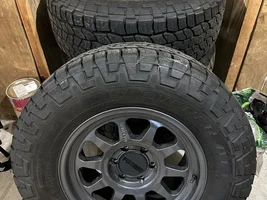
V35A-FTS V6TT teardown by Dave (Dave's Auto Center)

I am not supporting or cherry picking here. I am reading different manuals from around that world as suggested by a few sites to BROADEN my view. My view on this issues has changed as I have looked deeper into it. No doubt, Toyota has millions of vehicles successfully running 0W-20. BUT,,,,,,would we potentially agree that the pairing of the T24 in a Land cruiser is the most heavily taxed version of that motor to date? Does any Toyota vehicle as big or bigger than the LC use it? 4Runner is slightly smaller......

In reverse I must ask you Bad1975, do you think the tolerances for the European and Australian markets are lower, thus allowing a broader choice of oils???? If Toyota is so confident about 0W-20, why even mention the other oils in those manuals. Why not use the exact same dialogue as that found in the US manual. Again it is all about tolerances for you....are these other countries receiving motors with looser tolerances? I don't think so and my research has suggested same motors. Wpage made a statement that axtually probably caries more weight than "weight", fuel and in this case, detergent levels........all inter related.

I will try to back away from this now. I did not want to hijack this thread, but unfortunately I did. Sorry. That engine teardown, contaminants aside, looked pretty damn clean IMHO. Maybe the oil used didn't hurt, I sure don't think it helped...bring it full circle, why did GM bump the weight up to 40wt on the L87? Answer: because it does help.....

My plan is to drop my 0W-20 in a few weeks, send it out . Will be ~7000-7500 miles so pretty well broken in. I will use 5W-30 and have that tested in good time. I will let the numbers tell me. Will it be MOG methodology? No. But an hour drain time gets us close enough for horseshoes.
A few other vehicles are within 500 lbs curb weight, at least on paper, but they all have less output despite having the same engine. Grand highlander hybrid max/TX 500h for example. It would seem the LC is the heaviest vehicle and also highest output.
 
4Runner didn't have a Turbo I4 producing 275-ish HP out of only 2.4L (or 144-cubic inches). This engine is far more stressed from just a general design standpoint, producing nearly 2HP/per CI (which would be like a supercharged SBC making 700 HP). An early-2000's 5.3 LS could also last 250,000 - 300,000 miles with minimal maintenance, but we are talking well over double the displacement producing 285HP. Once you add forced induction, the older maintenance habits with NA engines is out the window. I would absolutely follow the advice from everyone BUT Toyota, and change at 5,000-miles regardless if you're off-roading or not, at least until the warranty is over, then move to a 5W-30 or similar if you want a more extended maintenance interval.

It's really unfortunate that Toyota has ruined its reputation with the Tundra. I don't even know how they're legally being sold right now.
"My supercharged '02 did OK as well", he mumbled defensively.

To the point, I stand corrected. Here's why

While the top statement is true, I don't have that 4R anymore and it could have locked up 6 months after I sold it (btw, greatest old 4R ever for running around at altitude). Assuming Toyota is full of it on a 10K initial change and doing a little additional analysis, it appears that using an old-school engine break-in approach (baby it for 500, drive it normally avoiding extremes for 500, drive it hard for 500; change the oil at 1K and again at 5K) will help insure longer engine life. When subsequent changes should be done is less clear but there is plenty of evidence that less mileage is better. From an oil degradation/hard particle accumulation perspective, every 5K miles keeps the oil far closer to optimal than 8K or 10K. Diving down the AI rabbit hole-

IMG_5619.webp

This may be where Toyota comes up with the 10K interval? >2.0 is the critical value.

IMG_5620.webp


IMG_5621.webp

IMG_5622.webp

Comparing a 10K interval to a 5K interval-
IMG_5623.webp

IMG_5624.webp

IMG_5625.webp

IMG_5626.webp


I spent years building disc drives and there's a lot of ways for them to fail. One of the most reliable ways to get them to fail was the presence of hard particles (iron). I personally think that any time FE wear metal measurement rises into the cautionary range, it's time. Given the minimal cost, 5K looks like cheap insurance. Further changes to initial viscosity of oil used are above pay grade for this post
 
Last edited:
Some light reading on the complexity of selecting the proper viscosity.

https://www.k1technologies.com/k1-blog/bearing-clearance-and-oil-viscosity-explained/

The short of the read here is the tighter the clearance the more abuse the engine can handle and the lower the viscosity must be. It also speaks to lower viscosity having advantages other than fuel economy.

Safe to say none hear have relevant expertise to go against any OEM engineered specification.
Yeah thinner oil will lubricate engines with tighter tolerances better than a thicker, as a thicker oil will not be able to flow into and/or form surface film if metal-to-metal clearance is small. Especially for fast motion parts like turbo bearings. So overall, it will cause more wear.

The idea of thicker oil protecting better comes from the actions of certain US manufacturers that recommended thicker oil when they experienced similar issues to Toyota V35A. People wrongly speculated that had they recommended thicker oil from the beginning, the issues would have not arised. In reality, they only recommended thicker oil because the tolerances increased due wear, and this was a cheap band aid solution to mask the wear and push the eventual engine failure to outside the warranty period.
 
Thanks to all for improving my Oil IQ with your thoughtful discussion.

I see the clear value in changing my oil at 5K intervals. The question I'm left with is what is the best brand of 0W-20 oil to use at my oil changes. The Motor Oil Geek's video had an interesting table indicating that oil viscosity break-down differs significantly between brands:

Oil Shear.webp


If I'm interpreting this correctly, Kirkland Oil seems to outperform Valvoline. What do our forum Oil Barons think is the preferred brand? 😉
 
Thanks to all for improving my Oil IQ with your thoughtful discussion.

I see the clear value in changing my oil at 5K intervals. The question I'm left with is what is the best brand of 0W-20 oil to use at my oil changes. The Motor Oil Geek's video had an interesting table indicating that oil viscosity break-down differs significantly between brands:

View attachment 70182

If I'm interpreting this correctly, Kirkland Oil seems to outperform Valvoline. What do our forum Oil Barons think is the preferred brand? 😉
Don’t think you can really go wrong in your choice if using the correct oil requirements & changing every 3-5K miles. Industry has turned 10K interval as okay, and it might be for some in optimal conditions/use, but may not be for the real world.
 
I'm going to stick with the hybrid designated Mobile 1 oil that I have been using, until the two oil changes of oil that I already have are used up. Then I will switch to Toyota branded 0W-20, simply because it has more, a lot more, molybdenum than the Mobile 1 does.

The parts counter at the dealer that I purchased Miss Daisy from said that they did not sell Toyota branded oil, only Mobile 1. Needless to say, I don't do business with them any more (for several reasons).
 
Last edited:
"My supercharged '02 did OK as well", he mumbled defensively.

To the point, I stand corrected. Here's why

While the top statement is true, I don't have that 4R anymore and it could have locked up 6 months after I sold it (btw, greatest old 4R ever for running around at altitude). Assuming Toyota is full of it on a 10K initial change and doing a little additional analysis, it appears that using an old-school engine break-in approach (baby it for 500, drive it normally avoiding extremes for 500, drive it hard for 500; change the oil at 1K and again at 5K) will help insure longer engine life. When subsequent changes should be done is less clear but there is plenty of evidence that less mileage is better. From an oil degradation/hard particle accumulation perspective, every 5K miles keeps the oil far closer to optimal than 8K or 10K. Diving down the AI rabbit hole-

View attachment 70142
This may be where Toyota comes up with the 10K interval? >2.0 is the critical value.

View attachment 70143

View attachment 70144
View attachment 70145
Comparing a 10K interval to a 5K interval-
View attachment 70146
View attachment 70147
View attachment 70148
View attachment 70149

I spent years building disc drives and there's a lot of ways for them to fail. One of the most reliable ways to get them to fail was the presence of hard particles (iron). I personally think that any time FE wear metal measurement rises into the cautionary range, it's time. Given the minimal cost, 5K looks like cheap insurance. Further changes to initial viscosity of oil used are above pay grade for this post
Brilliant sir. Now let's assume the additional cost over 30000 miles is $250. Over that gold standard it is $2500. This is just for engine oil. If we add in shoeter intervals for all the other fluids over a 300K lifespan, I bet it is $4-5000. Asa an aside then, is it worth $4-5000 to get an extra 50k ??? add an extra set of tires and it is easily well over $5000. How much is vehicle worth at that point..did you burn money on AC, tranny etc......suspension, etc. If you love the vehicle go for it, but there comes a point where you hit diminishing returns. Now that my coffee has been digested , back to the charts.

Those curves show 0W-20 definitely is not remotely up to a 10K change interval. In fact, I dare say, it is a bad thing.
I'd love to see the same data with 5W-30........I am not a betting man, but I feel pretty confident saying it would blow the 0W-20 out of the water....Relating this back to V35, if they had a contamination issue, the break in oil change would DEFINITELY removed a lot of junk early, just as the break in change oil is supposed to do and did for dang near 100years. A more robust oil would almost definitely have proved extra protection as well. I see little out there to alter that viewpoint. I see tolerances being used as the enemy again 30wt.......yet I see few if any videos, evaluations or serious articles validating it....and I have looked so as not to be accused of cherry picking......and I am not talking dumping diesel oil or 50wt in a 20 wt motor......

These are very god discussions as multiple different viewpoints get shown. It is OK to defend your position as I have done a but at the same time I have read every word other wrote and gleaned knowledge from the different perspectives. About the best thread on this forum in some time....or any forum.

Toyota wants to be viewed as a defender of the environment. It sells cars and trucks. The Prius is viewed for better or worse as THE poster child for environmentally friendly vehicles. Keep as many people as possible steered to the most environmentally friendly and mileage improving oil usage helps that. On the back end, it will be telling if it causes average motor life expectancy to drop from the old 250-300000+miles zone back too 150-200K. Time will tell.
His charts reflect what my brain was adding up. 5K changes with 20wt or 7500+/- changes with 30wt.....frankly I bet the 30wt is as good at 10k as the 20wt was at that 6k inflection point.If my test results support that, I am good with my annual oil change again.......
 
Here comes the AI dump-

1. Its background thinking -
The user wants a comparison of 5W-30 vs 0W-20 oil, presumably in context of the LC250 and the broader conversation about oil wear, protection, the Tundra/Volvo quote (Volvo ran 0W-30, Tundra ran 0W-20). This is a general technical comparison question. Given the established context (LC250, turbo engine, overlanding, manufacturer spec 0W-20 but Saudi-spec allows up to 10W30), I should give a substantive comparison of 5W-30 vs 0W-20: viscosity characteristics, cold-start protection, high-temp film strength, fuel economy, manufacturer warranty/spec considerations, and relevance to the LC250 turbo engine and overlanding use case (sustained load, towing, high temps).​
Let me structure:​
1. What the numbers mean (cold-flow rating vs hot viscosity)​
2. Practical differences: cold start protection (0W flows better at low temp than 5W), high-temp/high-load film strength (30-weight maintains thicker film at operating temp than 20-weight, better for sustained high heat/boost/towing)​
3. Trade-offs: fuel economy (0W-20 slightly better), wear protection under extreme conditions (5W-30 better, particularly given the V35A Tundra failure pattern discussed — oil film collapse under sustained high boost was cited as a theory)​
4. Relevance to LC250 specifically: factory spec is 0W-20 in US, but Saudi/other markets allow up to 5W-30 or 10W-30 (mentioned earlier). For turbo engines doing overlanding/towing duty, many enthusiasts move to 5W-30 if manufacturer approves it for severe duty, specifically because of the film-strength benefit at operating temp.​
5. Caveat: this is general lubrication engineering, not LC250-specific data either.​
I don’t think I need to search since this is foundational tribology/lubrication knowledge that’s stable and not something that changes. I can answer directly without search.​

2. The discussion-
A direct comparison, since this ties right back to the failure-mechanism discussion and the Volvo/Tundra quote.​
What the numbers actually mean:​
• First number (0W / 5W) = cold-flow rating, tested at sub-zero temps. Lower number = flows easier when cold.​
• Second number (20 / 30) = hot viscosity at 100°C (normal operating temp). Higher number = thicker oil film at operating temp.​
1782051749595.webp
Why this matters for your truck specifically: the Tundra theory we discussed — oil film thinning under sustained high-boost thermal load during towing/high-altitude operation — is precisely the scenario where a 30-weight’s thicker hot-film margin would help most, and precisely the scenario your overlanding/towing use case puts you in more than a daily commuter. The fact that Toyota’s own non-US manuals already approve up to 10W-30 for this same engine family tells you 5W-30 isn’t outside engineering tolerance — it’s a market-specific spec choice, not a hard mechanical limit.

The trade-off is real, though: you’d be giving up a small amount of cold-flow speed and fuel economy for that thermal margin. If you’re not doing sustained high-load towing at altitude, 0W-20 is probably fine and matches what Toyota validated for US-market T24A-FTS testing. 5W-30 is a defensible upgrade, not a deviation from sound engineering.​
 
Here comes the AI dump-

1. Its background thinking -
The user wants a comparison of 5W-30 vs 0W-20 oil, presumably in context of the LC250 and the broader conversation about oil wear, protection, the Tundra/Volvo quote (Volvo ran 0W-30, Tundra ran 0W-20). This is a general technical comparison question. Given the established context (LC250, turbo engine, overlanding, manufacturer spec 0W-20 but Saudi-spec allows up to 10W30), I should give a substantive comparison of 5W-30 vs 0W-20: viscosity characteristics, cold-start protection, high-temp film strength, fuel economy, manufacturer warranty/spec considerations, and relevance to the LC250 turbo engine and overlanding use case (sustained load, towing, high temps).​
Let me structure:​
1. What the numbers mean (cold-flow rating vs hot viscosity)​
2. Practical differences: cold start protection (0W flows better at low temp than 5W), high-temp/high-load film strength (30-weight maintains thicker film at operating temp than 20-weight, better for sustained high heat/boost/towing)​
3. Trade-offs: fuel economy (0W-20 slightly better), wear protection under extreme conditions (5W-30 better, particularly given the V35A Tundra failure pattern discussed — oil film collapse under sustained high boost was cited as a theory)​
4. Relevance to LC250 specifically: factory spec is 0W-20 in US, but Saudi/other markets allow up to 5W-30 or 10W-30 (mentioned earlier). For turbo engines doing overlanding/towing duty, many enthusiasts move to 5W-30 if manufacturer approves it for severe duty, specifically because of the film-strength benefit at operating temp.​
5. Caveat: this is general lubrication engineering, not LC250-specific data either.​
I don’t think I need to search since this is foundational tribology/lubrication knowledge that’s stable and not something that changes. I can answer directly without search.​

2. The discussion-
A direct comparison, since this ties right back to the failure-mechanism discussion and the Volvo/Tundra quote.​
What the numbers actually mean:​
• First number (0W / 5W) = cold-flow rating, tested at sub-zero temps. Lower number = flows easier when cold.​
• Second number (20 / 30) = hot viscosity at 100°C (normal operating temp). Higher number = thicker oil film at operating temp.​
Why this matters for your truck specifically: the Tundra theory we discussed — oil film thinning under sustained high-boost thermal load during towing/high-altitude operation — is precisely the scenario where a 30-weight’s thicker hot-film margin would help most, and precisely the scenario your overlanding/towing use case puts you in more than a daily commuter. The fact that Toyota’s own non-US manuals already approve up to 10W-30 for this same engine family tells you 5W-30 isn’t outside engineering tolerance — it’s a market-specific spec choice, not a hard mechanical limit.

The trade-off is real, though: you’d be giving up a small amount of cold-flow speed and fuel economy for that thermal margin. If you’re not doing sustained high-load towing at altitude, 0W-20 is probably fine and matches what Toyota validated for US-market T24A-FTS testing. 5W-30 is a defensible upgrade, not a deviation from sound engineering.​
I don’t mean to be combative but pasting AI-generated content is unhelpful.
 
Lol, no sir it is not. I don’t defend anyone I don’t know and I am a very discerning individual. I’ve never seen a second of Blue Bear’s referenced channel so I have zero opinion 😂 . What I do know is that Dave has almost 4 decades experience as a master mechanic, and is widely regarded as an authoritative expert outside of youtube. I’ll take his opinion on that particular teardown to the bank. His shop in Utah (I think) was recommended to me way back in 2007 when I had exceeded 800hp on a procharged 2004 terminator and suffered failure from a shoddy top end rebuild in Jacksonville, FL.

With all of that said, I limit my engine teardown screen time to just 45min - 1hr/day. Maybe I’ll visit that other channel tomorrow!
Not sure if you've heard of the NoNonsenseKnowHow guy on Youtube. He is pretty fun to watch too. Basically a bunch of will it start videos.

 
Happy 4rth everybody. I would potentially chose a 0W-30 at some point in time, but as a garaged vehicle didn't feel the advantages of 0W would matter enough to take me away from my NAPA 5W-3o, a sleeper favorite of MOGs
 
Finally, coming full circle on this thread. In the end, getting hung up on oil "viscosity" is far less relevant than the HTHS value which I predict, over time, will come to the forefront. For all folks out their discussing tolerances, weights, longevity etc...it is the HTHS that gives the greatest prediction of an oils ultimate ability to protect over time. For those talking about flow and turbo lubrication, traditionally all turbos kill oil faster because of HTHS, the ultimate weakness of 20 weight oils across the board. Prime reason why both my Alfa motors, one being derived directly from Ferrari which makes some of the highest output motors ever, run 5w-40!! On track the 280hp/306tq 4C now uses upwards of 15w-50..... for track use, my 3GRFE had 10W-60 listed!!! Same motor as found in a CAMRY BTW..that runs 0w-20.....hmmmmm and in Lotus trim uses 5w-40 as standard oil. The tolerances BS just doesn't hold water in my eyes. I don't hypnotize easily either.
 
Last edited:
I'll just put this here, pretty large sample size which shows the exact opposite for engine wear vs. viscosity. 12:26 if you don't want to watch the whole thing.

 
At 12:26, he is talking about data below 10000 miles. 100% agree. I may be overkill, but it is data Mopper presented that concerns me. Again, HTHS!!! Most 0W-20 gives up. Pay more attention to that number. It should be on every bottle, that little extra is better. IMHO, more important than the viscosity number. Lots of overlap between the best 0W-20s and average 0W-30s ......pulling oil because it is dead doesn't impress me. Changing oil that did its job up to its last day and had room to extend if needed does.
 
If Toyota was smart, and in this case GM too, reinstitute the 1000 mile break in oil change protocol. NO downside. The companies should do it for free. A lot cheaper than replacing 10,000s of motors. Basic prevention, something this dentistry has proven effective for 100 years, long before medicine opened their eyes.
(Trying to tie it all in with the V35 scenario). YVMV (your viscosity may vary)
 
Last edited:
"end of the day" result for me is new Toyota filter and Toyota 0-20 being used 3 days out, at about 15k miles... the cash will substitute for the lubricant smarts I don't have. Certainly during warranty anyway!
 
I Do Cars has posted two more videos about the V35. He tore down another on with a spun main bearing, then Toyota sent him a letter. So, he did a deeper dive into the teardown to decide if the claims that Toyota makes in their letter would explain the teardown (unlikely).


Here's the in depth response to Toyota's letter.

 
If Toyota was smart, and in this case GM too, reinstitute the 1000 mile break in oil change protocol. NO downside. The companies should do it for free. A lot cheaper than replacing 10,000s of motors. Basic prevention, something this dentistry has proven effective for 100 years, long before medicine opened their eyes.
(Trying to tie it all in with the V35 scenario). YVMV (your viscosity may vary)
Agreed that no downside to doing a 1000 mile break in oil change. But, that won't fix a manufacturing or design defect. Have you seen the latest from The Motor Oil Geek?

 
Yes, I watched it yesterday and was fascinated that a lot of this may come down to trannies allowing motors to run at such low rpms that they can't lubricate properly. If oil isn't being circulated, doesn't matter what it is!
That and the non coated parts (to save pennies of course)...........seems the industry is a bit embarrassed........every little bit of insurance helps based on how far the engineers are being pushed thus I stand by my decision....Stribeck curve stuff is pretty cool along with HTHS ........
 
Supporting Vendors View all →
Air Down Gear
Back
Top Bottom