Honest LC250 review that goes into more technical details & why Toyota missed the mark on LC250

My point is, those motorsports can choose any engine they want but few choose a diesel. You don't have to drive 10/10 to appreciate a petrol V8 or TTV6. I'm in CA and we have all types of terrain, sand dunes, deserts, rocks.... larger rocks, mountains, snow. Contrary to what you think, the turbo diesel is not the ideal engine for everything off road. But it does overlanding and towing especially well.

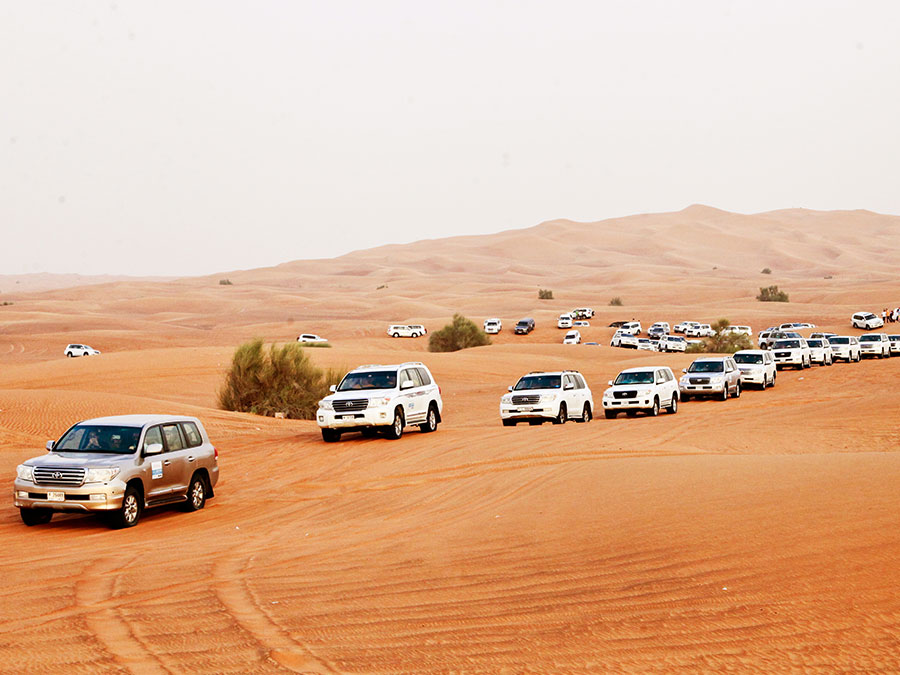
As far as gas vs diesel, you are claiming the vast majority of LC's sold outside the US are diesel, right? What is vast majority to you.... 85% or more? Toyota doesn't reveal those numbers but you can get a ballpark estimate by searching used car ads. The Middle East region dominates worldwide sales of Land Cruisers for the past few decades.
View attachment 45873

Search www.dubicars.com or any other major used car listings. Search all Land Cruisers, filter Petrol and then filter Diesel. Out of 1831 Land Cruisers, it shows 32% diesel and 68% Petrol. Japan and Latin America favor petrol about the same. Just those estimates alone say you won't nearly achieve "vast majority." What are your figures?

Do you know what outsells the LC300 in the UAE by a huge margin? The Nissan Patrol. And the Patrol ONLY comes in Gas/Petrol. No diesel option for at least 15 years. Check those facts.

View attachment 45893


I've already said the tripod is fine for stock vehicles. This thread is not about stock vehicles. The amount of axial motion is non-issue as the double offset CV does fine. You can measure, it's not much. Angularity is the issue with extended length shocks and it doesn't matter how strong the CV, if you reach the angularity limits, it'll break.

Keep the Lexus-Mall jokes coming. They are hilarious, every time.
the mall crawler comments are valid because the lc is better than gx OT in every objective measure :
Smaller rear diff
One inch less ground clearance
15 percent less crawl ratio
No kdss to disconnect the rear
Simple passive vs variable Avs shocks
More street oriented tires vs Toyo open country aT3
1 inch narrower fender flares to keep those offroad tires fling rocks everywhere
No built in air compressor
No integrated auxiliary switches
No headlight washers
2 less proper skid plates
Smaller front and rear brakes
Less trunk space
2 less gears
2 less cylinders
1 less turbo- although gx might as well have 0 since the engine is so understressed that the boost never comes on below 40% throttle
50% less towing capacity
50% less cargo loading capacity

And some other small differences
1 less engine cover
1 less year warranty
2 less hood struts
3 less gallons gas tank
2 years less waiting list
17k less kbb value for similar msrp ( base OT ) vs LCFE

Clearly sometimes less is more and that’s were the lc wins hands down compared to its twin brother
 
Last edited:
My point is, those motorsports can choose any engine they want but few choose a diesel. You don't have to drive 10/10 to appreciate a petrol V8 or TTV6. I'm in CA and we have all types of terrain, sand dunes, deserts, rocks.... larger rocks, mountains, snow. Contrary to what you think, the turbo diesel is not the ideal engine for everything off road. But it does overlanding and towing especially well.

As far as gas vs diesel, you are claiming the vast majority of LC's sold outside the US are diesel, right? What is vast majority to you.... 85% or more? Toyota doesn't reveal those numbers but you can get a ballpark estimate by searching used car ads. The Middle East region dominates worldwide sales of Land Cruisers for the past few decades.
View attachment 45873

Search www.dubicars.com or any other major used car listings. Search all Land Cruisers, filter Petrol and then filter Diesel. Out of 1831 Land Cruisers, it shows 32% diesel and 68% Petrol. Japan and Latin America favor petrol about the same. Just those estimates alone say you won't nearly achieve "vast majority." What are your figures?

Do you know what outsells the LC300 in the UAE by a huge margin? The Nissan Patrol. And the Patrol ONLY comes in Gas/Petrol. No diesel option for at least 15 years. Check those facts.

View attachment 45893
UAE is about the least representative example you could use if the conversation is about real off-highway use. That market is skewed by cheap subsidized petrol, cultural preference for big V8s, and city-based luxury demand. It tells you more about mall parking lots in Dubai than it does about how Land Cruisers are actually used in the field.


Now let’s look at where these trucks actually earn their reputation:


  • Australia – Land Cruisers are the backbone of mining, agriculture, outback travel, and towing. The 70-Series, 200, and now 300 are overwhelmingly diesel (95%+ share). No farmer or mining fleet is buying a petrol V8 to haul loads 600 miles across the bush.
  • Africa – NGO fleets, safari operators, militaries, and aid agencies all spec diesels because of torque, fuel economy, and the ability to run on lower-quality fuel. A petrol-only Land Cruiser wouldn’t last in half of Sub-Saharan Africa.
  • Asia (outside Japan) – From Central Asia to Southeast Asia, the diesel 70s and 200s are the dominant workhorses. These trucks aren’t toys; they’re lifelines in terrain where petrol availability is limited and torque matters more than horsepower.
  • Europe – Diesels dominate Land Cruiser sales because of both fuel economics and practical usage. Even with strict emissions laws, Toyota’s diesels continue to sell strongly for towing and expedition use.
  • South America – Rural fleets and oilfield operators spec diesels for the same reasons: longevity, torque, and efficiency.


This is where Land Cruisers are actually being pushed off-highway day after day. Not dunes outside Dubai, not a rock course in California, but real-world expedition, work, and survival use. And in those environments, diesels are the default choice.


Motorsport examples like trophy trucks or KOH rigs are fun to watch, but they’re irrelevant to the global off-road market. They represent a rounding error in total 4x4 usage. The serious side of off-road worldwide is defined by reliability, range, and load-carrying ability, not by 10/10ths race performance.


So when you zoom out to the countries and sectors where Land Cruisers are actually used as intended, diesel doesn’t just have a presence — it’s the standard.
 
the mall crawler comments are valid because the lc is better than gx OT in every objective measure :
Smaller rear diff
One inch less ground clearance
15 percent less crawl ratio
No kdss to disconnect the rear
Simple passive vs variable Avs shocks
More street oriented tires vs Toyo open country aT3
1 inch narrower fender flares to keep those offroad tires fling rocks everywhere
No built in air compressor
No integrated auxiliary switches
No headlight washers
2 less proper skid plates
Smaller front and rear brakes
Less trunk space
2 less gears
2 less cylinders
1 less turbo- although gx might as well have 0 since the engine is so understressed that the boost never comes on below 40% throttle
50% less towing capacity
50% less cargo loading capacity

And some other small differences
1 less engine cover
1 less year warranty
2 less hood struts
3 less gallons gas tank
2 years less waiting list
10k less kbb value for similar msrp

Clearly sometimes less is more and that’s were the lc wins hands down compared to its twin brother

250 Rebuttal:

"But the LC250 looks better and if I hyper-mile it, I can get a few extra miles per gallon. Plus it has that legendary Land Cruiser name. If I bought a Lexus, people would tease me about mall crawling it.

I want a "burly" pseudo diesel... even though it sounds nothing like nor can it tow like one."
------------

Electric vehicles are very sensitive to towing extra weight, wind resistance and drivetrain resistance (i.e. large differential and Rzeppa CV's, AT/MT tires, lifting, roof racks, suspension lifts, etc). Battery range would reduce to half or less. Versus a true diesel which is less impacted by such factors.

So I can see why they chose these high efficiency parts. I'm not exactly sure on the effect but it is somewhere in between ICE and fully electric.

A dedicated off-road vehicle without larger knobby tires, lift, roof rack, etc is like cutting the balls off a bull. I believe they call that a steer.
 
Talking about the gas variant . Why did Toyota put the v6 in the flagship ? They should have put the superior 4cyl setup
The gas V6 is only available in the upper end luxury trims in most countries.
 
UAE is about the least representative example you could use if the conversation is about real off-highway use. That market is skewed by cheap subsidized petrol, cultural preference for big V8s, and city-based luxury demand. It tells you more about mall parking lots in Dubai than it does about how Land Cruisers are actually used in the field.


Now let’s look at where these trucks actually earn their reputation:


  • Australia – Land Cruisers are the backbone of mining, agriculture, outback travel, and towing. The 70-Series, 200, and now 300 are overwhelmingly diesel (95%+ share). No farmer or mining fleet is buying a petrol V8 to haul loads 600 miles across the bush.
  • Africa – NGO fleets, safari operators, militaries, and aid agencies all spec diesels because of torque, fuel economy, and the ability to run on lower-quality fuel. A petrol-only Land Cruiser wouldn’t last in half of Sub-Saharan Africa.
  • Asia (outside Japan) – From Central Asia to Southeast Asia, the diesel 70s and 200s are the dominant workhorses. These trucks aren’t toys; they’re lifelines in terrain where petrol availability is limited and torque matters more than horsepower.
  • Europe – Diesels dominate Land Cruiser sales because of both fuel economics and practical usage. Even with strict emissions laws, Toyota’s diesels continue to sell strongly for towing and expedition use.
  • South America – Rural fleets and oilfield operators spec diesels for the same reasons: longevity, torque, and efficiency.


This is where Land Cruisers are actually being pushed off-highway day after day. Not dunes outside Dubai, not a rock course in California, but real-world expedition, work, and survival use. And in those environments, diesels are the default choice.


Motorsport examples like trophy trucks or KOH rigs are fun to watch, but they’re irrelevant to the global off-road market. They represent a rounding error in total 4x4 usage. The serious side of off-road worldwide is defined by reliability, range, and load-carrying ability, not by 10/10ths race performance.


So when you zoom out to the countries and sectors where Land Cruisers are actually used as intended, diesel doesn’t just have a presence — it’s the standard.
Don't backtrack. You said the vast majority of Land Cruiser are diesel. I said no. The Middle East (including the UAE) dominates the market. They have a choice of diesel or petrol. So does Japan and South America... and others. But the vast majority of those regions choose gas. It doesn't matter if they are subsidized. That is the choice. Regulation is a factor too. Diesels aren't welcome in big cities like Tokyo.

I've visited most of the countries you mentioned multiple times. You've asked me my wheeling experience and I've told you. What is your wheeling experience? Have you been to these regions and wheeled there?

And now you are bringing in agriculture, mining, military and industrial usage. Is that what this is about. How many 250's here are being used for that purpose?
 
Last edited:
Don't backtrack. You said the vast majority of Land Cruiser are diesel. I said no. The Middle East (including the UAE) dominates the market. They have a choice of diesel or petrol. So does Japan and South America... and others. But the vast majority of those regions choose gas. It doesn't matter if they are subsidized. That is the choice. Regulation is a factor too. Diesels aren't welcome in big cities like Tokyo.

I've visited most of the countries you mentioned multiple times. You've asked me my wheeling experience and I've told you. What is your wheeling experience? Have you been to these regions and wheeled there?

And now you are bringing in agriculture, mining, military and industrial usage. Is that what this is about. How many 250's here are being used for that purpose?
You just answered your own question. Yes — this is about agriculture, mining, military, industrial, NGO, and remote-use fleets, because that’s where Land Cruisers earned their reputation and why they’re still sold in 170 countries. The LC nameplate isn’t famous because a handful of people in Dubai or LA wanted a petrol V8 for the dunes — it’s famous because for 70 years it’s been the backbone vehicle when the terrain is unforgiving and failure isn’t an option.


And to your jab about the 250: no, the LC250 isn’t primarily sold into mining or military fleets. That role belongs to the 70 series, which is almost entirely diesel. The 250/Prado is the “light duty” Cruiser — family fleets, expeditions, NGOs, government agencies, and long-haul overlanders — and in those markets (Australia, Africa, Europe, Asia) it’s still mostly diesel. The petrol/hybrid 250s are for the U.S., Japan, and a handful of urban markets.

So when you step back and add it up:


  • LC70 (workhorse) = almost entirely diesel.
  • LC250/Prado (mid-size global volume seller) = ~70% diesel.
  • LC300 (flagship) = ~50% diesel, heavily petrol in the Urban Gulf but diesel in rural Australia, Africa, etc. makes up less than 30% of total sales.

Weighted together, about 70% of all Land Cruisers sold globally are diesel.


And the logic extends well beyond Toyota: militaries, aid agencies, and remote operators don’t spec petrol 4x4s because when your life depends on making it back, you choose diesel. That’s why military Land Rovers, G-Wagons, Humvees, JLTVs, Pinzgauers, Unimogs, IVECO LMVs — the entire global fleet of serious off-highway defense fleets all run diesel.


So no, this isn’t just about mall-parking a 250. It’s about what the Land Cruiser actually represents globally a platform built for environments where capability and survival matter more than cheap petrol and travel anecdotes.
 
You just answered your own question. Yes — this is about agriculture, mining, military, industrial, NGO, and remote-use fleets, because that’s where Land Cruisers earned their reputation and why they’re still sold in 170 countries. The LC nameplate isn’t famous because a handful of people in Dubai or LA wanted a petrol V8 for the dunes — it’s famous because for 70 years it’s been the backbone vehicle when the terrain is unforgiving and failure isn’t an option.

And to your jab about the 250: no, the LC250 isn’t primarily sold into mining or military fleets. That role belongs to the 70 series, which is almost entirely diesel. The 250/Prado is the “light duty” Cruiser — family fleets, expeditions, NGOs, government agencies, and long-haul overlanders — and in those markets (Australia, Africa, Europe, Asia) it’s still mostly diesel. The petrol/hybrid 250s are for the U.S., Japan, and a handful of urban markets.
Reread what you just wrote. The LC70 does ALL of that... but the LC250 does NONE of that. That's why everyone picks on the 250. The 250 is a good vehicle but it does not carry on the nameplate. Personally, I don't care about the nameplate nor the aesthetics of the vehicle (well, within reason). I care about the internals. Purpose built never goes out of style.

All those diesel numbers, you're just making them up. So I will ignore.
 
Posts so far in this thread: 398
Minds changed: 0
View attachment 45898
I love a good argument. I completely respect anybody who can support their statements and would love for somebody here to come out of the woodwork and give a good argument. I am open-minded and would love to concede. But nobody has done so far. Their arguments are vehicle appearance and fuel mileage. Is this the SUV version of a Prius forum?

What is worse is the guy that has nothing to add to this thread yet can't help but click on it, over and over just to complain. You don't even have to use the ignore feature. Just don't click on the thread.

Don't forget to vote: Which vehicle looks better?
 
Last edited:
A. It was as an observation, not a complaint, silly Gen-X meme notwithstanding. However, yadda, yadda, in the eye of the beholder, yadda, yadda, whatever, some things are open to interpretation. I concede and lay myself prostrate before the forum if it helps heal the world.
B. Correct, a good argument can be educational - exposure to new ideas, learning new facts, how to act the humble winner or the gracious loser for instance. On the other hand a debate where each side simply declares their own opinions as fact and the other side's facts as opinion isn't an argument, it just pointless verbal pugilism to see who gets the last word - or who's Mom comes down to the basement and says it's time to get off the computer and go to bed - whichever comes first, right?
C. I concur, the ignore feature is a powerful if underused tool and at times an appropriate response. I'd argue so is not getting bullied off a thread over a picayune argument that has very little real world consequence and regardless, why would I deny myself the entertainment of such fare?
 
Some minds are like concrete all mixed up and permanently set. Not my quote.

Just agree to disagree and let this thread die.

Useable and controllable low end torque with a broad torque plateau is and always has been the focus Land Cruisers. From the BJ25 days to current with the majority of the power trains having had a small displacement six cylinder engines of petrol and diesel varieties which the the majority develop more torque than horsepower much like a diesel and are low revving engines by design. Of the entire Land Cruiser series the diesels far outweighs the petrol engine and is the sought after variant for true off-road and functional use world wide.

The US is the outlier here but the diesels are still highly sought after in the US, not many looking to import a petrol of any series into the US other than the SA mostly crap resto mod 40 series. Most are looking for the diesels sold in other markets to import.

The enemy of drive train component failures is wheel slip followed by instant traction that locks the wheel up. Toyota rightly focuses on low end torque to improve reliability of the drive train. The twin turbo isn’t for off road application, neither vehicle is designed to run dunes, washes and sand whoops at speed and you have screw loose if you think so.

In my view:

GX550 has been designed with a focus to luxury and towing of which it does a good job for both for its size and platform. Less articulation, worse approach and departure angles are indicators of the focus to on road performance. You can argue EKDSS was for off-road performance but I doubt that is why Lexus/Toyota decided it was for Lexus only, rather it was a compromise to add some off-road capability while also improving on road performance and luxury feel.

Fender flares, I highly doubt either vehicles flares were designed around anything other than design language and aesthetics, since neither poke in OEM configuration it’s a moot point.

LC250 has been designed with a focus to the multi-use (all a rounder) semi luxury 4WD vehicle. As well as getting Toyota back to its Land Cruiser roots from its wild departure into a big luxury class SUV that was still off road capable but people wouldn’t buy them because they strayed too far from what they always were. Toyota has even stated as such during the reveal done the LCHM launch event. Did the Lexus have a similar launch event and multiple trails test events, serious question here?

There is no Lexus HM and no massive world wide reputation for their capability, reliability, off road prowess and timeless looks. That is not what Lexus is known for nor will it likely ever be, it’s a luxury brand of Toyota, same as Crown. That’s not a dig against Lexus or their owners, just shows that isn’t the focus of the brand or the typical owner rather a .01% of outliers.

Are they both capable off-road, sure! How many GX550s do you think will venture off a gravel road or even to a gravel road vs the LC250? Will likely trend up as it ages but very few today and modify suspension with EKDSS is much more expensive as you can’t just unplug it all and call it a day, you could do portals for $$$ and gain allot of clearance while significantly widening track width and reducing its tight trailability.

The typical Lexus owner isn’t buying one to go off-road and certainly not for extreme off roading and anyone who buys either for towing alone or off-roading alone has a screw loose IMO or money be damned is no concern to them which is still just crazy IMO.

Gas mileage is a moot point if you drive both the same the Lexus can’t come close the Toyotas MPG so the larger tank doesn’t really matter. I have a 3” lift, AT tires, bumper with winch and lights, sliders and full skids and still get 21-23 MPG mixed use without trying in the 250 series.

10 speed transmission is focused for on road use as evidenced by the 3 over drive gears vs 2 in the Yota, is 1st gear lower, sure and you can argue it’s for off-road, but I’d venture to say it’s due to Turbo lag and lack of hybrid to compensate for it and more focused to improve towing performance. The reduced crawl ratio is likely a side benefit and wasn’t the reasoning or focus behind it.

Ground clearance, not sure why the Lexus has more other than to trump the Land Cruiser? It compromises on road and towing performance while improving off road clearance and just doesn’t make sense considering approach and departure angles are worse also reduces luxury as it’s harder to enter and exit while raising the load floor.

Tire choice between the two also doesn’t make sense except maybe from a load capacity stance but I’m sure there are E-Load tires that aren’t of the AT variant available (although likely highly unsightly) and the OEM tires available on both vary widely based upon region purchased in. This is moot point to me.

Larger rear diff, great for towing and capacity, reduces ground clearance is heavier and as I said before if your worried about breaking a third member off road you have misplaced conceptions on the strength of other drive train components that are much more likely to grenade first. Often when utilizing poor judgement or lack of experience that got one into the often times perceived need hit it hard or spin your way out of it.

If you’re getting into any situation like that in either vehicle you should have a winch if you plan to get it home in one piece. One time maybe fine but how many times can you push it until the inevitable CV or Prop shaft failure?

All mostly my point of view of each with the information that is available for both, I don’t hate on either. To each their own, hope all purchased what for their use case is the the best for them. What I can’t understand is why one buys both? Do they see positives and negatives in both, undecided on both, status, just don’t care about money or something else?

I’m quite positive the Lexus wouldn’t exist if it weren’t for the Land Cruiser though so there is that. The Lexus is based on the Land Cruiser not the other way round, so for you GX550 lovers that have only disdain for the 250 please remember that tidbit!

Maybe the length of this post will end the thread😁

That’s it for me, I’ll continue to read the ongoing commentary though it’s somewhat entertaining!
 
Reread what you just wrote. The LC70 does ALL of that... but the LC250 does NONE of that. That's why everyone picks on the 250. The 250 is a good vehicle but it does not carry on the nameplate. Personally, I don't care about the nameplate nor the aesthetics of the vehicle (well, within reason). I care about the internals. Purpose built never goes out of style.

All those diesel numbers, you're just making them up. So I will ignore.
You’re missing the point. The LC70 is purpose-built for a very narrow market segment: military, mining, agriculture, NGO use in remote terrain. The LC250 is built for a much broader global market where regulations, safety, and efficiency demands are different. Just because it doesn’t carry forward the LC70’s leaf-spring, live-axle simplicity doesn’t mean it’s not built with purpose. Its “purpose” is to balance capability with modern global requirements. That’s why Toyota is selling it alongside the LC70 rather than replacing it.


On the engine point, I’m not making numbers up. Look at what militaries and heavy-use fleets actually spec: Hilux diesels, LC70 diesels, Prado diesels, G-Wagon diesels, even Defender diesels. When your life, your team, or your operation depends on it, diesel’s low-end torque and reliability win. If the twin-turbo V6 were the superior global off-road choice, Toyota would be specifying it worldwide. They’re not.


And the Prado/LC250 isn’t some mall crawler. They’re in regular use by the United Nations, rural police forces, up-armored rural VIP transport, utility and construction workers, and a host of other demanding off-highway applications. These are real-world, high-stakes deployments that prove the platform is more than capable.

The LC250 doesn’t “replace” the 70. It was never supposed to. But to dismiss it as “not carrying the nameplate”legacy ignores that Toyota continues to dominate markets that demand both durability and capability.
 
Slight aside, but in many parts of the world, diesel is a potentially lower quality, higher efficiency fuel. Even with Land Rover, I learned years ago they tune their vehicles to ~65% to allow for lower fuel quality than we have in the USA whther it be gas or diesel. You can run #2 fuel oil in a diesel if that is what is available...........I had 1 diesel and learned about its winter relative inefficiency....the time of the year I did most of my driving............it seems the US got into Diesel big time 10-15yrs ago and is stepping away these days except for the truck market. They taxed the crap out of it to take away much of its advantages. Cuse the aside.
LC250 will have more capability than I will ever need, even living on the side of a mountain. Mine will deal with snowdrifts, ICE!, general nastiness, dirt/spring mud, etc. I look forward to playing with the Sway bar Disconnect on the washboards to see how it works from what i have read.
I have a suspicion, based on the success of LC250, that there may be another Land Cruiser variant in the near future. Easy enough esp if the Lexus variant sales don't live up to expectations and Toyota marketing learns that the price was a deterrent. There is the smaller one coming in 2026........let's see how it all shakes out.
 
Some minds are like concrete all mixed up and permanently set. Not my quote.

Just agree to disagree and let this thread die.

Useable and controllable low end torque with a broad torque plateau is and always has been the focus Land Cruisers. From the BJ25 days to current with the majority of the power trains having had a small displacement six cylinder engines of petrol and diesel varieties which the the majority develop more torque than horsepower much like a diesel and are low revving engines by design. Of the entire Land Cruiser series the diesels far outweighs the petrol engine and is the sought after variant for true off-road and functional use world wide.

The US is the outlier here but the diesels are still highly sought after in the US, not many looking to import a petrol of any series into the US other than the SA mostly crap resto mod 40 series. Most are looking for the diesels sold in other markets to import.

The enemy of drive train component failures is wheel slip followed by instant traction that locks the wheel up. Toyota rightly focuses on low end torque to improve reliability of the drive train. The twin turbo isn’t for off road application, neither vehicle is designed to run dunes, washes and sand whoops at speed and you have screw loose if you think so.

In my view:

GX550 has been designed with a focus to luxury and towing of which it does a good job for both for its size and platform. Less articulation, worse approach and departure angles are indicators of the focus to on road performance. You can argue EKDSS was for off-road performance but I doubt that is why Lexus/Toyota decided it was for Lexus only, rather it was a compromise to add some off-road capability while also improving on road performance and luxury feel.
Approach and departure angles are worst in 2024. Not sure how much they have changed for 25 with one inch lift
Fender flares, I highly doubt either vehicles flares were designed around anything other than design language and aesthetics, since neither poke in OEM configuration it’s a moot point.
If you are off-roading the lc bigger tires are inevitable . That’s where the wider flares come in
LC250 has been designed with a focus to the multi-use (all a rounder) semi luxury 4WD vehicle. As well as getting Toyota back to its Land Cruiser roots from its wild departure into a big luxury class SUV that was still off road capable but people wouldn’t buy them because they strayed too far from what they always were. Toyota has even stated as such during the reveal done the LCHM launch event. Did the Lexus have a similar launch event and multiple trails test events, serious question here?

There is no Lexus HM and no massive world wide reputation for their capability, reliability, off road prowess and timeless looks. That is not what Lexus is known for nor will it likely ever be, it’s a luxury brand of Toyota, same as Crown. That’s not a dig against Lexus or their owners, just shows that isn’t the focus of the brand or the typical owner rather a .01% of outliers.

Are they both capable off-road, sure! How many GX550s do you think will venture off a gravel road or even to a gravel road vs the LC250? Will likely trend up as it ages but very few today and modify suspension with EKDSS is much more expensive as you can’t just unplug it all and call it a day, you could do portals for $$$ and gain allot of clearance while significantly widening track width and reducing its tight trailability.
Lots of examples of gx Ots putting king shocks etc . The kdss doesn’t need to be removed. There are extensions to solve the issue. I however wouldn’t lift due to loss of avs and I find the 1 inch to be plenty for my use case and being able to get 35s on factory suspension
The typical Lexus owner isn’t buying one to go off-road and certainly not for extreme off roading and anyone who buys either for towing alone or off-roading alone has a screw loose IMO or money be damned is no concern to them which is still just crazy IMO.
They are the same money +/5k . Lots of overlap between ot, premium, premium plus and lc premium
Gas mileage is a moot point if you drive both the same the Lexus can’t come close the Toyotas MPG so the larger tank doesn’t really matter. I have a 3” lift, AT tires, bumper with winch and lights, sliders and full skids and still get 21-23 MPG mixed use without trying in the 250 series.
MT and C&D have them at same 21mpg in their hwy test. So not moot at all
10 speed transmission is focused for on road use as evidenced by the 3 over drive gears vs 2 in the Yota, is 1st gear lower, sure and you can argue it’s for off-road, but I’d venture to say it’s due to Turbo lag and lack of hybrid to compensate for it and more focused to improve towing performance. The reduced crawl ratio is likely a side benefit and wasn’t the reasoning or focus behind it.
Ground clearance, not sure why the Lexus has more other than to trump the Land Cruiser? It compromises on road and towing performance while improving off road clearance and just doesn’t make sense considering approach and departure angles are worse also reduces luxury as it’s harder to enter and exit while raising the load floor.

Tire choice between the two also doesn’t make sense except maybe from a load capacity stance but I’m sure there are E-Load tires that aren’t of the AT variant available (although likely highly unsightly) and the OEM tires available on both vary widely based upon region purchased in. This is moot point to me.
How is this a moot point? The tires that come on lc in the us market are absolutely unacceptable that’s why majority end up in trash as was the case with yours
Larger rear diff, great for towing and capacity, reduces ground clearance is heavier and as I said before if your worried about breaking a third member off road you have misplaced conceptions on the strength of other drive train components that are much more likely to grenade first. Often when utilizing poor judgement or lack of experience that got one into the often times perceived need hit it hard or spin your way out of it.

If you’re getting into any situation like that in either vehicle you should have a winch if you plan to get it home in one piece. One time maybe fine but how many times can you push it until the inevitable CV or Prop shaft failure?

All mostly my point of view of each with the information that is available for both, I don’t hate on either. To each their own, hope all purchased what for their use case is the the best for them. What I can’t understand is why one buys both? Do they see positives and negatives in both, undecided on both, status, just don’t care about money or something else?

I’m quite positive the Lexus wouldn’t exist if it weren’t for the Land Cruiser though so there is that. The Lexus is based on the Land Cruiser not the other way round, so for you GX550 lovers that have only disdain for the 250 please remember that tidbit!

Maybe the length of this post will end the thread😁

That’s it for me, I’ll continue to read the ongoing commentary though it’s somewhat entertaining!
Given that you pick and chose which points you were going to comment on I suggest you agree with the rest including gx having more braking power , auxiliary switches, built in air compressor , 40 percent more payload, adjustable shocks, rear sway disconnect , and proper skid plates
 
For those who need a visual. I assigned a generous diesel % to each region. Notice Europe, Africa and Oceania combined are less than Middle East Sales in 2018. M.E. Sales have been strong for the past 20+ years. Not sure on Asia, too many countries. The answer is 50% of Land Cruiser are diesel, Not "vast majority."
1756060813677.jpg

1756132675319.png
 
10 speed transmission is focused for on road use as evidenced by the 3 over drive gears vs 2 in the Yota, is 1st gear lower,
Yes, 1st gear is lower and 10th gear is taller. The # of overdrive gears doesn't translate to "road" use, it just has more choices. It's actually a better set-up than all the previous 5&6 speeds because a low first transmission gear means the R&P is higher (3.3:1 vs 4.1:1), which means more teeth contact because the pinion gear is larger.

neither vehicle is designed to run dunes, washes and sand whoops at speed and you have screw loose if you think so.
Tell that to the people in Dubai and CA. Certainly not designed specifically for dunes but often used on dunes.

7.jpg

 
Yes, 1st gear is lower and 10th gear is taller. The # of overdrive gears doesn't translate to "road" use, it just has more choices. It's actually a better set-up than all the previous 5&6 speeds because a low first transmission gear means the R&P is higher (3.3:1 vs 4.1:1), which means more teeth contact because the pinion gear is larger.


Tell that to the people in Dubai and CA. Certainly not designed specifically for dunes but often used on dunes.

7.jpg


Sheep looking for their shepard??
 
You win. Clearly your data shows there are at least as many petrol Land Cruisers made as diesels.

1756144576095.webp

That's pretty crazy Toyota sold all those LC250's in 2023! They didn't even come out yet! :ROFLMAO:

You put a lot of work into that. Go back and edit it.
 
Last edited:
curious to hear from truckeee and the other t dude why they didn’t get the LX or 200 series if they “real Land Cruiser” purist
 
Reread what you just wrote. The LC70 does ALL of that... but the LC250 does NONE of that. That's why everyone picks on the 250. The 250 is a good vehicle but it does not carry on the nameplate. Personally, I don't care about the nameplate nor the aesthetics of the vehicle (well, within reason). I care about the internals. Purpose built never goes out of style.

All those diesel numbers, you're just making them up. So I will ignore.
You are one of the most ignorant, naive, obnoxious posters on this site. And you're wrong. Repeatedly.
 
Supporting Vendors View all →
Canvasback
Back
Top Bottom