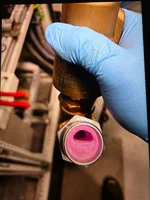
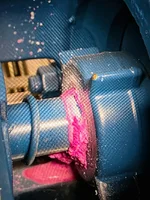
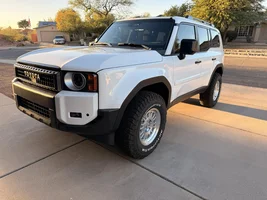
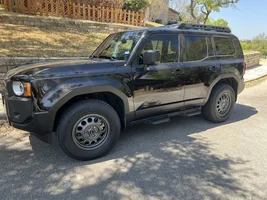
So sorry for the late update here. The leak of course stopped the second I put the dye in the coolant; so despite checking with a blue light through several oil changes with all skids off I saw nothing -- and of course the overfill tank stayed at level.
Thanks to AI and that member comment about a service bulletin I pulled it up (see below). This description describes my problem, scarily, to a T!. Looks like there is debris by the water pump weep hole that eventually clears itself. And that seems to be what mine has done. Toyota won't replace unless it remains active (and likely several dealer visits later). Well, I'm glad didn't bring it to some dumb dealer to lose the car for a week and find out the same thing I saw (and only cost me like a half quart of coolant). Love these forums, so hopefully this saves someone a stealership visit. Cheers
AI:
Yes — I found the Toyota bulletin that appears to be the one you heard about: T-SB-0103-20 Rev1, “Water Pump Leak Inspection and Diagnostic Tips.” Toyota revised it on June 19, 2024, specifically adding the 2024 Land Cruiser to its applicability. It’s important that this is a broader Toyota diagnostic bulletin rather than a Land-Cruiser-specific recall or defect campaign. The source of the leak it describes is the engine water pump’s mechanical shaft seal and weep/drain hole. Toyota explains that a small amount of coolant normally reaches the mechanical seal to cool and lubricate it. More significantly, debris can temporarily get between the mating ring and seal ring, opening a tiny gap; coolant then bypasses the seal, enters the pump’s drain/catch pocket, and exits through the weep hole. Toyota explicitly says this condition can be temporary and disappear once the debris breaks up or works its way out of the seal. So your experience — a genuine slow coolant loss that eventually just stopped — actually fits the mechanism Toyota describes remarkably well. Adding UV dye almost certainly didn’t repair anything; the timing was probably coincidental.
Toyota distinguishes between dry residue from a past leak and an active wet leak. If there is dried coolant around the water pump but a dry paper towel stays dry when pressed against it, Toyota says the leak was temporary and the pump does not need replacement. If the area is wet with fresh coolant, the pump should be replaced; low reservoir level plus an actively leaking pump is also grounds for replacement. So if I were looking at your truck, I’d concentrate the UV inspection on the water pump/weep-hole area, particularly from underneath with the skid plates removed, looking for old fluorescent residue even though it is no longer wet. I’d also photograph whatever you find: Toyota’s bulletin says warranty leak repairs require photographic documentation of the active leak, which unfortunately makes an intermittent leak harder to warranty after it has stopped. If you want, I can also dig up the 2024 Land Cruiser water-pump diagram and show you exactly where the weep hole/pump sits on the T24A-FTS engine, so you know precisely where to point the UV light.