I have read, watched and learned to crack the mileage code: overall opinions

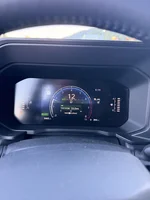
Got this today with city driving on normal mode.
1000014657.webp
 
Yeah, it is a fascinating vehicle and I dont blame people's frustration.

However, if you are willing to put in the time to learn it, the vehicle is capable of cruising almost indefinitely at 30 MPG at 62 MPH and 1,500 RPMs and up to 60 MPG for signifiant distances on all electric at 30 MPH.

On the other hand, you can just put it in sport mode, have some fun, and get about 18 MPG.

Over time, I suspect as the battery technology gets better we can expect bigger capacity which will eventually replace the turbo and eliminate much of the need to consciously manage battery behavior while driving.

In the meantime, an official driving guide would be useful for not only optimizing max gas mileage but also best practices for the wide array of overlapping offroad features. ITRAC/MDS/Crawl Control/Modes/Lockers/Low range etc.

Perhaps half the fun is figuring it all out? :)
Yes! a concise driving guide with your methods AND pictorials for various scenarios when different driving support systems come into play (ie, lockers, etc) would be useful. I had one in my FJ for times when a relative was driving and needed a reference.
 
Going downhill non issue you don't burn fuel...I believe. There is an art to gentle braking that helps charge v heavy braking that just sheds heat.
That was true for my 5th Gen 4Runner, but it is absolutely untrue with the LC250. In order to get any engine braking whatsoever around here, you need to downshift multiple times, at which point the MPG graphic goes from the 60+ (max) down to 20-30 mpg, depending on the hill (I was surprised, first time I observed this). And, it's probably not even worth worrying about wasting brake pads, as the engine braking is positively anemic. Not looking forward to towing our larger trailer just for this reason alone.
 
Everyone drives different drives. Here's a few things that make for worse fuel economy that you simply have no control over and no fuel-up techniques or cruise control options are going to magic-wand-wave fix your fuel economy.

short drive duration
lots of stops and starts
high speeds
uphill
wind
cold weather

(short drive duration is bold and on the top as it is the absolute number one killer for my personal MPG - i average 16-17 generally, although I have had extended periods of 22+ on long road trips on 2-lane country highways)
You forgot ALTITUDE, and I'd put it pretty medium-high on the list.
 
I wasn't talking about engine braking. I was talking about using the actual brake pedal.
 
I follow the manual for fueling. If you overfill the tank, once the fuel gets to ambient temperature and expands, it can push fuel into the vent system. Summer temps can make this worse.
It is not overfilling but sheep be sheep.
 
It is not overfilling but sheep be sheep.
Dismissing those with an opinion different opinion than yours as โ€œsheepโ€ is so intellectually lame dude. Reminds me when you showed up to this forum before you owned a Land Cruiser and called us all idiots because you thought that the brake squeal issue was just us not understanding how to bed in brakes.
 
Not dismissing. Correcting. I take the SAE standards seriously........lame to think otherwise. Prove me wrong by looking them up yourself and correcting about what I read.
 
Not dismissing. Correcting. I take the SAE standards seriously........lame to think otherwise. Prove me wrong by looking them up yourself and correcting about what I read.
Still intellectually weak by not directly addressing my point. When someone makes their case on why they disagree with you (with a rational reason provided which you may disagree with) and your response is to call them a sheep, you lose all credibility. Feel free to continue to resort to immature ad hominems instead of addressing the merit of your opponents position, it tracks with your reputation.

Edit: If you wanted to be helpful instead of demeaning, you could just provide the specific SAE standard youโ€™re referring to that specifies the number of pump shutoffs to use when refueling. That would allow members to read the standard themselves and decide whether they want to follow it or defer to the manufacturerโ€™s instructions.

As it stands, youโ€™re asking others to prove the negative, that such a standard does not exist. Providing the reference would be far more helpful than shifting the burden of proof away from the person making the claim.
 
Last edited:
We get what we get MPG wise and not worried about it. Our Tundra got 12 Mpg no
Matter what so being 4 to 7 MPG above that depending on conditions, weather etc. we have absolutely no complaints. Love our Land Cruiser and itโ€™s supposedly small fuel tank.
 
Last edited:
We get what we get MPG wise and not worried about it. Our Tundra got 12 Mpg no
Matter what so being 4 to 7 MPG above that depending on conditions, weather etc. we have absolutely no complaints. Love our Land Cruiser and itโ€™s supposedly small fuel tank.

That is pretty much it- our Land Cruiser uses less fuel than the Rubicon we drove for nine years did, and yields more distance per fill also. A win in my book, not to mention being superior in pretty much every respect on-road.
 
Still intellectually weak by not directly addressing my point. When someone makes their case on why they disagree with you (with a rational reason provided which you may disagree with) and your response is to call them a sheep, you lose all credibility. Feel free to continue to resort to immature ad hominems instead of addressing the merit of your opponents position, it tracks with your reputation.

Edit: If you wanted to be helpful instead of demeaning, you could just provide the specific SAE standard youโ€™re referring to that specifies the number of pump shutoffs to use when refueling. That would allow members to read the standard themselves and decide whether they want to follow it or defer to the manufacturerโ€™s instructions.

As it stands, youโ€™re asking others to prove the negative, that such a standard does not exist. Providing the reference would be far more helpful than shifting the burden of proof away from the person making the claim.
I wanted to see you, the philosopher, actually make an effort instead of your current approach.

AI Overview


SAE standards for gas tank filling focus on vehicle/nozzle interface and safety, with
SAE J398 defining filling conditions for passenger cars (fill rate, spitback, spillage) and SAE J1140 covering filler pipe dimensions and opening design for compatibility, ensuring safe fueling rates (like 20 GPM for diesel) and preventing vapor release/spillage through features like secure caps and specific pipe angles. These standards aim to ensure consistent, safe, and efficient fueling across different vehicles and pumps, especially concerning vapor recovery regulations.

Key SAE Standards & Concepts:

  • SAE J398 (Fuel Tank Filling Conditions): Defines test procedures for evaluating how vehicles accept fuel, including fill rates (e.g., 10 GPM for modern gasoline cars), spillage, and nozzle shut-off performance, to ensure compatibility with pump nozzles.
  • SAE J1140 (Filler Pipes and Openings): Specifies design requirements for the vehicle's filler pipe and opening to allow for proper nozzle insertion, handle clearance, and vapor recovery, applying to gasoline, diesel, and marine uses.
  • SAE J2601 & J2799: These relate to hydrogen fueling protocols for fuel cell vehicles (FCEVs), not gasoline, but illustrate SAE's role in defining standardized fueling interfaces and communication (tank temp/pressure) for safety.
Key Specifications & Goals:

  • Fill Rate: Vehicles must accept fuel at specified rates (e.g., 10 GPM for 2015+ gasoline cars) without premature pump shutoff.
  • Spillage & Spitback Prevention: Fill pipes are designed with angles and caps (screw or bayonet type) to minimize fuel loss during fueling and crashes, often guided by EPA regulations (40 CFR Part 86).
  • Vapor Recovery: Standards ensure compatibility with vapor recovery systems to reduce emissions, a key part of EPA rules.
  • Safety: Includes tests for tank strength (e.g., drop tests in 49 CFR 393.67 for trucks) and secure caps to prevent leaks.
In essence, SAE specs for filling a gas tank are about making the vehicle's fuel system (filler pipe, tank) and the pump nozzle work together safely and effectively, meeting government regulations for emission control and spill prevention.


1768058098140.webp


Hope that is enough info for you to move past the land of OPINION!!!


First you claimed:
BTW, stumbled into it the other day but for all the folks giving me crap about the way I fill my tank, I suggest you look up the SAE protocol.....which is exactly what I do...............and have done for my entire life. Few directions online follow the SAE standard, no surprise.
Basically fill till shutoff clicks and after a brief wait, fill at low level till it clicks again. Our tank with high fill rate pumps (and yes they can vary greatly)can shut off 1-3 gallons early...I have seen this range. So look up the standard before you give me more grief.
You didnโ€™t stumble on any SAE protocol that validates your suggested filling technique that conflicts with the manual. When I called you out for calling the users here who follow the manualโ€™s directions โ€œsheepโ€ for not following your imagined SAE standards, this is the best you could come up with:
I wanted to see you, the philosopher, actually make an effort instead of your current approach.

AI Overview


SAE standards for gas tank filling focus on vehicle/nozzle interface and safety, with
SAE J398 defining filling conditions for passenger cars (fill rate, spitback, spillage) and SAE J1140 covering filler pipe dimensions and opening design for compatibility, ensuring safe fueling rates (like 20 GPM for diesel) and preventing vapor release/spillage through features like secure caps and specific pipe angles. These standards aim to ensure consistent, safe, and efficient fueling across different vehicles and pumps, especially concerning vapor recovery regulations.

Key SAE Standards & Concepts:

  • SAE J398 (Fuel Tank Filling Conditions): Defines test procedures for evaluating how vehicles accept fuel, including fill rates (e.g., 10 GPM for modern gasoline cars), spillage, and nozzle shut-off performance, to ensure compatibility with pump nozzles.
  • SAE J1140 (Filler Pipes and Openings): Specifies design requirements for the vehicle's filler pipe and opening to allow for proper nozzle insertion, handle clearance, and vapor recovery, applying to gasoline, diesel, and marine uses.
  • SAE J2601 & J2799: These relate to hydrogen fueling protocols for fuel cell vehicles (FCEVs), not gasoline, but illustrate SAE's role in defining standardized fueling interfaces and communication (tank temp/pressure) for safety.
Key Specifications & Goals:

  • Fill Rate: Vehicles must accept fuel at specified rates (e.g., 10 GPM for 2015+ gasoline cars) without premature pump shutoff.
  • Spillage & Spitback Prevention: Fill pipes are designed with angles and caps (screw or bayonet type) to minimize fuel loss during fueling and crashes, often guided by EPA regulations (40 CFR Part 86).
  • Vapor Recovery: Standards ensure compatibility with vapor recovery systems to reduce emissions, a key part of EPA rules.
  • Safety: Includes tests for tank strength (e.g., drop tests in 49 CFR 393.67 for trucks) and secure caps to prevent leaks.
In essence, SAE specs for filling a gas tank are about making the vehicle's fuel system (filler pipe, tank) and the pump nozzle work together safely and effectively, meeting government regulations for emission control and spill prevention.


View attachment 56947

Hope that is enough info for you to move past the land of OPINION!!!


As far as you can come up with, there is no SAE standard to suggest that your fueling method is superior to the manualโ€™s method. For those on this forum who you continue to denigrate because they have a different opinion than you, they can simply look to this thread for confirmation youโ€™re full of hot air and people need not pay you any mind.

Good day.
 
You forgot ALTITUDE, and I'd put it pretty medium-high on the list.
How do you like those AT3 E loads? are they super harsh or have you dialed the psi down to fit? I am moving to the 18" rim but that moves me from my current C load to a E load AT3. As you know, not alot of options. Trying to figure out how to make that ride feel decent if I go to those.
 
@Sugarloafer80

I am far from an expert on these sorts of things, but are you saying that you are pumping beyond the first click?

It has always been my understanding that filling beyond the first click while probably fine short term, is not recommended long term due to the fuel overflowing into the charcoal canister, over time causing the charcoal to degrade (in some way) and potentially clogging the EVAP system.

Again, I am far far far from an expert on these sorts of things, it just what I have read, whether any of that is true or not, I truly have no clue.
 
Last edited:
How do you like those AT3 E loads? are they super harsh or have you dialed the psi down to fit? I am moving to the 18" rim but that moves me from my current C load to a E load AT3. As you know, not alot of options. Trying to figure out how to make that ride feel decent if I go to those.
I like them quite a bit, haven't had them in deep snow yet, but they are fantastic offroad, and quite good on-road, rain, etc. They don't hold rocks like the Cooper AT3s did, and they are not really showing any wear after 11k miles.

I settled on 38-40psi F/R, and certainly don't feel that they are overly stiff. Given that the LC250 suspension is on the softer side (at least compared to my KDSS 4Runner w/6112s), I think the result is pretty decent for a vehicle that spends a fair amount of time offroad (we all spend lots of time on-road, whether we admit it or not).
 
Just had my 15,000 mile service at which I had a 5 tire rotation and the pressures set. With our odd weather here in coastal Virginia we can have 30 degrees overnight and mid-60s during the day, as well as several days in a row of the high being 45 and then sudden streaks to 65 or so. My pressures were down to an average of 33 psi (meaning they could be 31 at the lowest I saw them in the morning and 34 or 35 on a freeway drive). Not scientific, or mathematically averaged, just observed.

The dealer brought them up to 35 psi cold on a 50 degree day and they've been running 34-38 (we've also had a hot streak with temps up to low 70s). My gas mileage is still greatly affected by ambient temp, but the tire pressure has brought the range from 18-21 on a given trip (comparing my daily commute) to 22-25 mpg. For what it's worth.

Keeping my freeway speeds below 70 makes a huge difference as well.
 
Supporting Vendors View all โ†’
StickerFab
Back
Top Bottom