Aftermarket Recovery Points any better than the factory 'Tow Hooks'

Welcome to the asylum.

Would you happen to have a part number, or a link to that page?
Rear 4 Runner Hook PT974-89251-03
Front Pair PT974-35250


My local dealer wouldn’t stack the dealer discount if you sign in plus the current 25% off, so I ordered from Toyota of Tuscaloosa with free shipping.
 
Rear 4 Runner Hook PT974-89251-03
Front Pair PT974-35250


My local dealer wouldn’t stack the dealer discount if you sign in plus the current 25% off, so I ordered from Toyota of Tuscaloosa with free shipping.

No answer when I called their parts department, so I tried the AI chatbot.. which when nowhere fast. I guess I’ll try again tomorrow.
 
No answer when I called their parts department, so I tried the AI chatbot.. which when nowhere fast. I guess I’ll try again tomorrow.
Just do the order online. Make an account and sign in, but select Tuscaloosa
 

If the group is interested, I can organize a live recovery class covering all the essentials with a couple of industry experts. ​

On the point of recovery points. ​

1) Factory Tie-Down Points (what most people are looking at)​

Purpose: Shipping and transport—not recovery.
What they’re actually designed for:

  • Securing the vehicle to a ship, trailer, or rail car
  • Holding the vehicle downward, not pulling it forward or sideways
  • Low, predictable loads
Key characteristics:
  • Thin stamped steel loops
  • Often angled downward
  • Mounted lightly (not reinforced into the chassis properly)
  • Not designed for dynamic loads
Reality:
  • They are not recovery points.
  • Under a snatch load, they can fail violently and become projectiles


Factory “Recovery” or Tow Points (gray area most people confuse)​

This is where the confusion starts.
Some vehicles do have factory recovery/tow points—but:

What they’re designed for:

  • Controlled towing
  • Straight-line winching
  • Predictable loads (roadside scenarios)
Limitations:
  • Not designed for:
    • Snatch recoveries
    • High shock loads
    • Off-angle pulls
  • Often mounted to less optimal parts of the chassis
  • Designed with cost, weight, and liability in mind—not extreme off-road use
Translation:
They’re “okay” for light, controlled recovery
They’re not built for aggressive off-road recoveries


Aftermarket Non-Rated Recovery Points​


This is the dangerous middle ground.

What they are:

  • Look like recovery points
  • Usually thicker steel, better mounting than factory
  • BUT no published rating or test data
The problem:
  • No defined working load limit (WLL)
  • No clarity on:
    • Dynamic vs static capability
    • Load angles
    • Failure point

Some are well-engineered.
Some are just “thick metal that looks strong.”


Rated Recovery Points (what people think they’re buying)​

Purpose: Designed specifically for vehicle recovery loads.

What “rated” actually means:

  • There is a defined working load limit (WLL)
  • Designed for:
    • Winching (static load)
    • Often dynamic loads (snatch), depending on rating
  • Engineered load paths into the chassis
  • Proper bolt spacing, reinforcement, and geometry
  • Rated recovery specs should be STAMPED into the metal.

Static vs Dynamic Load (this is the whole game)
  • Static load (winch): slow, controlled pull
  • Dynamic load (snatch strap): stored energy → violent release
Dynamic loads can be multiple times vehicle's weight

That’s why:

  • Tie-down points fail
  • Factory points get pushed past design limits
  • Cheap aftermarket parts become missiles
Even the best recovery point is only part of the system:
  • Strap rating
  • Shackle rating
  • Mounting bolts
  • Load angle
  • Driver behavior
TypeDesigned ForHandles Dynamic Load?Safety Level
Tie-down pointShipping restraint❌ NoDangerous
Factory tow/recoveryLight towing / winching⚠️ LimitedSituational
Aftermarket (non-rated)Unknown❓ UnknownGamble
Rated recovery pointEngineered recovery loads✅ Yes (within limits)Best option
 
Are there any aftermarket recovery points with published data regarding properly engineered load paths into the chassis on our vehicles?

I haven’t personally seen any that don’t utilize existing mounting locations, so they may have a higher WLL and better hardware, but nothing beyond this.

At what point is beefing up a recovery point too much, so that the chassis is damaged in a dynamic load recovery?
 

If the group is interested, I can organize a live recovery class covering all the essentials with a couple of industry experts. ​

On the point of recovery points. ​

1) Factory Tie-Down Points (what most people are looking at)​

Purpose: Shipping and transport—not recovery.
What they’re actually designed for:

  • Securing the vehicle to a ship, trailer, or rail car
  • Holding the vehicle downward, not pulling it forward or sideways
  • Low, predictable loads
Key characteristics:
  • Thin stamped steel loops
  • Often angled downward
  • Mounted lightly (not reinforced into the chassis properly)
  • Not designed for dynamic loads
Reality:
  • They are not recovery points.
  • Under a snatch load, they can fail violently and become projectiles


Factory “Recovery” or Tow Points (gray area most people confuse)​

This is where the confusion starts.
Some vehicles do have factory recovery/tow points—but:

What they’re designed for:

  • Controlled towing
  • Straight-line winching
  • Predictable loads (roadside scenarios)
Limitations:
  • Not designed for:
    • Snatch recoveries
    • High shock loads
    • Off-angle pulls
  • Often mounted to less optimal parts of the chassis
  • Designed with cost, weight, and liability in mind—not extreme off-road use
Translation:
They’re “okay” for light, controlled recovery
They’re not built for aggressive off-road recoveries


Aftermarket Non-Rated Recovery Points​


This is the dangerous middle ground.

What they are:

  • Look like recovery points
  • Usually thicker steel, better mounting than factory
  • BUT no published rating or test data
The problem:
  • No defined working load limit (WLL)
  • No clarity on:
    • Dynamic vs static capability
    • Load angles
    • Failure point

Some are well-engineered.
Some are just “thick metal that looks strong.”


Rated Recovery Points (what people think they’re buying)​

Purpose: Designed specifically for vehicle recovery loads.

What “rated” actually means:

  • There is a defined working load limit (WLL)
  • Designed for:
    • Winching (static load)
    • Often dynamic loads (snatch), depending on rating
  • Engineered load paths into the chassis
  • Proper bolt spacing, reinforcement, and geometry
  • Rated recovery specs should be STAMPED into the metal.

Static vs Dynamic Load (this is the whole game)
  • Static load (winch): slow, controlled pull
  • Dynamic load (snatch strap): stored energy → violent release
Dynamic loads can be multiple times vehicle's weight

That’s why:

  • Tie-down points fail
  • Factory points get pushed past design limits
  • Cheap aftermarket parts become missiles
Even the best recovery point is only part of the system:
  • Strap rating
  • Shackle rating
  • Mounting bolts
  • Load angle
  • Driver behavior
TypeDesigned ForHandles Dynamic Load?Safety Level
Tie-down pointShipping restraint❌ NoDangerous
Factory tow/recoveryLight towing / winching⚠️ LimitedSituational
Aftermarket (non-rated)Unknown❓ UnknownGamble
Rated recovery pointEngineered recovery loads✅ Yes (within limits)Best option
That’s a lot of ChatGPT
 
No answer when I called their parts department, so I tried the AI chatbot.. which when nowhere fast. I guess I’ll try again tomorrow.

Cart​

Please review your cart. Start checkout to see available fulfilment options.

2 items
Front Tow Hooks.
Toyota Genuine #PT974-35250
Front Tow Hooks
May not fit
your 2025 LAND CRUISER HYBRID


Remove
$126.00
MSRP $160.00

4runner Rear Recovery Hook.
Toyota Genuine #PT974-89251-03
4runner Rear Recovery Hook
May not fit
your 2025 LAND CRUISER HYBRID


Remove
$102.00
MSRP $119.00

Price Summary
Subtotal
(2 items)
$279.00

Estimated Tax
$19.95

Dealer Savings
- $51.00

Apply

Total
$247.95
Start Checkout
 
nope just enter part numbers, pick my dealer and it goes fine.
The dealer gets me the discount and they come to the house, no issues.
Finally able to get ‘er done.. the zip code for the dealer I was trying to use didn’t bring up the dealer, no matter what I did. So I changed the dealer that I will pick up the part at.
 
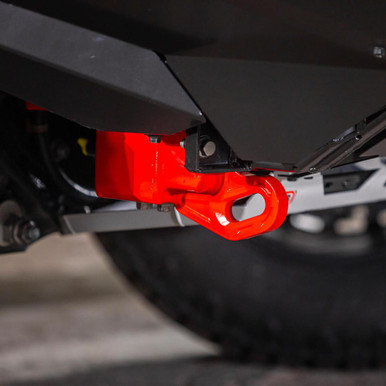
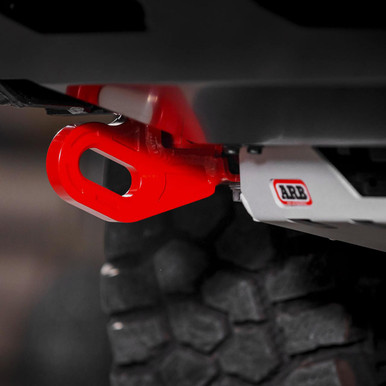
Does anyone know if the Toyota brand red front recovery points, sometimes listed as TRD recovery points, are forged, cast, aluminum, steel? They have "TOYOTA" in indented lettering on the front. They are priced for a pair at $160 MSRP or around $120 or so when on sale, sometimes more, sometimes less.
The part number is PT974-3250-03 I believe.

They are very heavy (like cast iron), but have no published information about material or pull force limits.
 
Last edited:
Does anyone know if the Toyota brand red front recovery points, sometimes listed as TRD recovery points, are forged, cast, aluminum, steel? They have "TOYOTA" in indented lettering on the front. They are priced for a pair at $160 MSRP or around $120 or so when on sale, sometimes more, sometimes less.
The part number is PT974-3250-03 I believe.

They are very heavy (like cast iron), but have no published information about material or pull force limits.
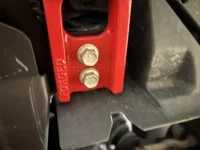
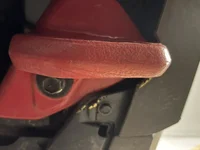
Forged. IMG_9114.webp
 
Thanks, @Blue Sky . One picture is worth a thousand words!

If forged is good, they seem to be a reasonable choice. No pull weight stated, though.
 
Thanks, @Blue Sky . One picture is worth a thousand words!

If forged is good, they seem to be a reasonable choice. No pull weight stated, though.
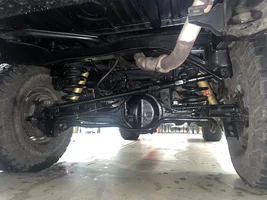
I was already under the 250 so I thought I'd snap a couple photos.
The rear trd tow doesn't have a "forged" designation that I could see.

IMG_9116.webpIMG_9115.webp
 
I doubt they are forged.
Machined maybe, cast more maybe.
Does it matter?
Toyota factory, it's a duh moment.
 
I doubt they are forged.
Machined maybe, cast more maybe.
Does it matter?
Toyota factory, it's a duh moment.
IDK, I was just trying to be helpful. But to answer your question if it matters? According to you it does.
Area 51 said:
Forged recovery points.
Superior in all ways.
 
Back
Top Bottom