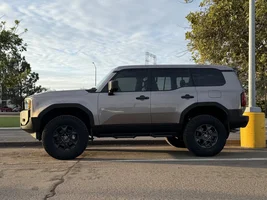
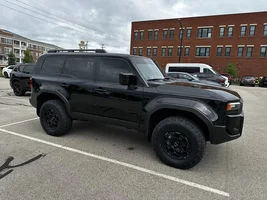
Land Cruiser MY26 changes

The small tank wasn’t Toyota’s preference—it was a direct result of regulation-driven design constraints unique to the U.S. market.
Got it! If any other US market vehicle besides a Toyota has larger fuel tanks or has a better efficiency or range, , it's because the other brands follow a different set of more favorable US regulations than Toyota's set of regulations. This is because Toyota is always the ultimate authority in automotive engineering and design (next to Alfa Romeo, of course!).
 
Last edited:
Got it! If any other US market vehicle besides a Toyota has larger fuel tanks or has a better efficiency or range, , it's because the other brands follow a different set of more favorable US regulations than Toyota's set of regulations. This is because Toyota is always the ultimate authority in automotive engineering and design.

Ah reductive sarcasm! The classic move when facts get too hard.
 
Sorry but the stated regulatory reason still does not make sense. More and more it looks like an engineering cop-out. Every 911 comes with an option of Extended Fuel talk that increases capacity to 23 Gallons, and its a tiny sport car where clever engineering not only puts a hybrid powertrain (GTS), but also fuel capacity that is extraordinary.
 
Sorry but the stated regulatory reason still does not make sense. More and more it looks like an engineering cop-out. Every 911 comes with an option of Extended Fuel talk that increases capacity to 23 Gallons, and its a tiny sport car where clever engineering not only puts a hybrid powertrain (GTS), but also fuel capacity that is extraordinary.
The 911 extended-range tank sounds like a clever counterexample, but it’s not apples to apples. That option adds about 6 gallons (~40 lbs) of fuel. On a car that weighs 3,300–3,700 lbs, that bump is small and probably keeps it in the same EPA test-weight class. Porsche can absorb the modest certification cost because the 911 sells in healthy volume with very high margins. And VW Group (Porsche’s parent) routinely buys CAFE credits to offset the impact of thirsty models in the US so they have regulatory cushion.


Now compare that to the Land Cruiser. Overseas, Toyota’s dual-tank setup adds closer to 12 gallons (~75 lbs) on a 5,200 lb SUV. That’s enough to push it into the next EPA weight class, which means higher inertia loads on the dyno, lower certified MPG, and direct CAFE compliance penalties. Toyota can’t lean on credits the way VW Group does because of their exponentially larger U.S. sales volume. Every Tacoma, Tundra, 4Runner, Sequoia, and Highlander gets counted in Toyota’s fleet average. That scale makes it vastly more expensive for Toyota to cover a penalty with purchased credits — each low-MPG vehicle drags down a huge fleet, multiplying the cost. VW Group, on the other hand, has a relatively small U.S. sales footprint, so it’s easier and cheaper for them to buy credits to offset.

There was no engineering cop out. Toyota’s engineers can package it — they already do overseas. Toyota is hardly known for weak engineering. The issue is the U.S. regulatory and economic environment: Porsche can afford to play with options and credits on a profitable sports car, while Toyota likely could not justify millions in certification costs and CAFE penalties on what was until recently a very niche model that sold in much smaller quantities than even the 911.
 
Agree.

But let’s cut through the nonsense — since when does pulling off at a trailhead a stone’s throw from the interstate count as “off-highway”?

Several members are dead set on redefining off highway use. Their bragging that their never more than a hundred miles from a gas station only proves they've never left major interstate corridors. They would probably be much happier with an X5.

What happens when you hit a real backcountry route in Utah, Wyoming, Idaho, Oregon, or Arizona where 160–200 miles without fuel is normal? Or when you’re on BLM and Forest Service roads with nothing for hundreds of miles — is your “hundred-mile rule” still worth anything then?

And Moab as an example of “remote”? Give me a break. A town of 5,000 people with 11 gas stations is practically a service hub. If that’s your definition of remote, your not describing off highway travel you’re just describing a weekend day trip.

I'm not an automotive engineer, but neither are the folks that dream up these regulations. Many folks only think about regulations only in terms of MPG ratings and tailpipe emissions, but the regulators did not stop there. It’s far more complicated.

FUEL TANK
Compliance applies to the entire fuel system—tank design, vapor control, refueling systems, and safety integrity. Toyota had to comply with EPA evaporative emissions standards (40 CFR Part 86, Subpart B), Onboard Refueling Vapor Recovery (ORVR) requirements, and , plus even stricter CARB evaporative standards. Larger or dual tanks generally increase vapor permeation surface area, change how ORVR refueling hardware works. Meeting those requirements for a relatively low-volume model like the Land Cruiser probably didn’t make sense for Toyota. Maybe designing a larger volume tank to meet those requirements would have reduced ground clearance or literally not physically be possible.

CRASH TESTING
Under FMVSS 301 (Fuel System Integrity), the U.S. rules are very strict about fuel leakage after a crash:
During the impact: fuel spillage can’t exceed 1 ounce per minute. After the impact: total spillage can’t exceed 142 grams (about 5 ounces) over the next 5 minutes, and then it must drop to no more than 1 ounce per minute for the following 25 minutes. In addition, the fuel tank, lines, and fittings must remain attached and the system has to show no continuous leaking. That’s why auxiliary tanks can problem every seam, hose, and valve is another chance to fail these limits. Basically you are doubling your potential failure points going into the most expensive and complicated crash test regimens in the world.

MPG
Most people assume the EPA’s MPG numbers come from real world driving a car and measuring fuel burned. In reality, it’s far more convoluted and grossly misinform buyers. EPA fuel economy testing is done on a chassis dynamometer in a lab, where the vehicle “drives” through scripted cycles that claim to simulate city and highway conditions. Vehicles aren’t tested at their exact curb weight—instead, they’re assigned to a test weight class, which includes curb weight plus a 300-lb allowance. The problem is that those classes are stepped in 125 pound increments. Add enough weight—say 75 pounds of extra fuel from a larger tank—and you can push a vehicle into the next higher test weight class adding. That bump matters because the dyno is then set with higher inertia and rolling resistance to simulate the vehicle actually being heavier than it actually is! One other wrinkle is that the EPA “highway” test cycle doesn’t actually look anything like real real world highway driving. People assume it’s a steady 70mph mph cruise, but it’s not. The EPA’s Highway Fuel Economy Test (HWFET) runs on a dyno over a scripted cycle that lasts about 12.5 minutes and covers 10.26 miles. Average speed is only 48 mph, the top speed is only 60 mph. There are multiple periods of braking, stopping, coasting, and acceleration. Does that sound like highway driving to you? Too bad, EPA don't care! Even though 75 pounds doesn’t sound like much and its not in the real world, in EPA math world where weight class and inertia is so important it can drag efficiency numbers down enough to hurt the official MPG label. And since every Land Cruiser sold in the U.S. counts against Toyota’s CAFE compliance, even a 1 mpg hit carries corporate fleet wide cost implications.


The small tank wasn’t Toyota’s preference—it was a direct result of regulation-driven design constraints unique to the U.S. market.
Super answer to a simple question, man. Very interesting! Good info for all the whiners complaining that "Toyota shoulda stuck with muh V8" complaints. Thanks - really appreciate it! (y)
 
Super answer to a simple question, man. Very interesting! Good info for all the whiners complaining that "Toyota shoulda stuck with muh V8" complaints. Thanks - really appreciate it! (y)
Most welcome. Some Canadians really know the importance of fuel planning! Northern Alberta and Saskatchewan, now those are some remote areas. You have the Yukon and Northern territories too. Fuel planning is life and death up there.
 
Most welcome. Some Canadians really know the importance of fuel planning! Northern Alberta and Saskatchewan, now those are some remote areas. You have the Yukon and Northern territories too. Fuel planning is life and death up there.
Yessir. I'm in Alberta, and it's not at all uncommon to be 90 minutes from the nearest gas station and -20C outside.
 
MY26 info are up on Toyota's Canadian website... no changes to the Fuel tank unless i'm mistaken .. it is still 68L 18G...
Two notable changes the black iforcemax badging and an Alarm Motion Sensor :unsure::unsure: curious if anyone have any more information on that?

Thanks
 
MY26 info are up on Toyota's Canadian website... no changes to the Fuel tank unless i'm mistaken .. it is still 68L 18G...
Two notable changes the black iforcemax badging and an Alarm Motion Sensor :unsure::unsure: curious if anyone have any more information on that?

Thanks
I believe it’s a system that detects motion inside the vehicle and will trigger the alarm. Thieves have gotten very good at quietly breaking windows with a punch tool then reaching in and grabbing stuff without opening the door or triggering a normal glass brake sensor that’s listening for the high frequency pop when you shatter tempered glass with a blunt object The Sienna minivan now has interior radar to see if child or pet was accidentally left in the car and watches for movement after the alarm is set, but I think this system is probably just the standard antitheft sensor. Unfortunately, this type of theft has become very common in some large cities.
 
The 911 extended-range tank sounds like a clever counterexample, but it’s not apples to apples. That option adds about 6 gallons (~40 lbs) of fuel. On a car that weighs 3,300–3,700 lbs, that bump is small and probably keeps it in the same EPA test-weight class. Porsche can absorb the modest certification cost because the 911 sells in healthy volume with very high margins. And VW Group (Porsche’s parent) routinely buys CAFE credits to offset the impact of thirsty models in the US so they have regulatory cushion.


Now compare that to the Land Cruiser. Overseas, Toyota’s dual-tank setup adds closer to 12 gallons (~75 lbs) on a 5,200 lb SUV. That’s enough to push it into the next EPA weight class, which means higher inertia loads on the dyno, lower certified MPG, and direct CAFE compliance penalties. Toyota can’t lean on credits the way VW Group does because of their exponentially larger U.S. sales volume. Every Tacoma, Tundra, 4Runner, Sequoia, and Highlander gets counted in Toyota’s fleet average. That scale makes it vastly more expensive for Toyota to cover a penalty with purchased credits — each low-MPG vehicle drags down a huge fleet, multiplying the cost. VW Group, on the other hand, has a relatively small U.S. sales footprint, so it’s easier and cheaper for them to buy credits to offset.

There was no engineering cop out. Toyota’s engineers can package it — they already do overseas. Toyota is hardly known for weak engineering. The issue is the U.S. regulatory and economic environment: Porsche can afford to play with options and credits on a profitable sports car, while Toyota likely could not justify millions in certification costs and CAFE penalties on what was until recently a very niche model that sold in much smaller quantities than even the 911.


Just what I always wanted...a heavier Porche he. They have already put on a thousand pounds and have become dull and sterile feeling...even the GT3-RS I taught in today I came away unimpressed with once you got past the massive cahones.
 
I believe it’s a system that detects motion inside the vehicle and will trigger the alarm. Thieves have gotten very good at quietly breaking windows with a punch tool then reaching in and grabbing stuff without opening the door or triggering a normal glass brake sensor that’s listening for the high frequency pop when you shatter tempered glass with a blunt object The Sienna minivan now has interior radar to see if child or pet was accidentally left in the car and watches for movement after the alarm is set, but I think this system is probably just the standard antitheft sensor. Unfortunately, this type of theft has become very common in some large cities.
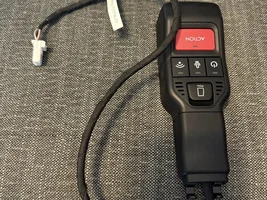
Just an update on that sensor - it has an on off switch on the front windshield !! Next to the mirror…

Edit - I couldn’t find any info on that thing in the 2026 Manual !! Anyone else have the same on their vehicle ? Or where to find info on its operation in the manual?

Thanks
 

Attachments

  • IMG_4869.webp
    IMG_4869.webp
    69.6 KB · Views: 134
Last edited:
Just an update on that sensor - it has an on off switch on the front windshield !! Next to the mirror…

Edit - I couldn’t find any info on that thing in the 2026 Manual !! Anyone else have the same on their vehicle ? Or where to find info on its operation in the manual?

Thanks
I also went through the 2026 manual and found no mention of this sensor or its operation.
Very strange that they would include an ON/OFF switch.:unsure:
 
I also went through the 2026 manual and found no mention of this sensor or its operation.
Very strange that they would include an ON/OFF switch.:unsure:
It makes sense to me for people that want to lock the doors but camp out inside their vehicle.
 
A part number for the new sensor would be handy if someone is able to get eyes on one, to see if it can be retrofitted to '24 and '25 model years.
 
A part number for the new sensor would be handy if someone is able to get eyes on one, to see if it can be retrofitted to '24 and '25 model years.
Yes . But it’s really strange as it’s not even mentioned or illustrated in the 2026 manual… waiting to get my hans on the printed manual maybe it’s different than the 2026 online manual ..

I know the dealer didn’t have a lot of information about it — all I was told is that there are few changes improvements done to MY26 ( yes a vague statement! No details )— but I can attest the 2026 drives way much smoother than the 2024 I’ve tested especially when the Trans changes gears ..

Hope to get more info on that alarm device definitely it takes some space next to the mirror and Toyota Safety sense cam base

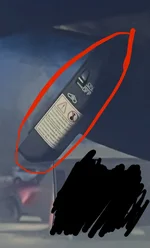
Also motion alarm sensor decals added on the side windows :)
 
So an update on the new motion sensor - it has its own separate manual. just a couple of pages nothing fancy or detailed other than instructions on turning the switch on and off - and use cases where the alarm can be triggered etc.. i'll try to post when i get the chance to scan it -

It definitely an afterthought by Toyoto.. adds clutter to the windshield and limits the ability to add a dashcam closer to the driver side !! and here in Ontario with the 407 transponder and a dashcam on the passenger side.. looks like an autonomous LC for someone looking at the windshield from outside..
 
Supporting Vendors View all →
Back
Top Bottom