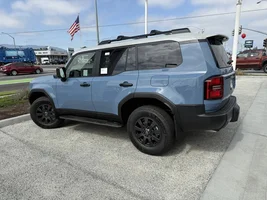
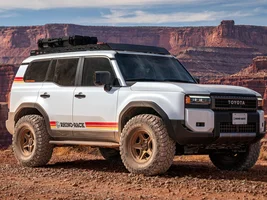
Are these TOO big?

There are a number of Land Cruiser owners in the wild or on this forum running larger tires than can be shoehorned into the stock spare tire location, so there are many who will want to consider the "what ifs" of having a flat in someplace away from the pavement.

With my Jeep I knew I had an identical spare for what I was running hanging off the tailgate (a non-issue). For those running larger tires than could fit on the tire carrier there were plenty of aftermarket solutions. There are a few for the Land Cruiser 250 already, but it will take some maturing in the aftermarket before I see one I'd actually want to install.
I am one of them who is running larger tires than I can carry as a spare. 285/75/18 on 4 corners and 265/70/18 underneath as spare. I just don't want to add the weight of these aftermarket bumpers/tire carriers to fit 35" spare.
I was under impression (perhaps incorrectly) that as long as I do not lock differentials I could drive with smaller diameter tire a short distance without damaging anything. Is this not correct?
The bigger issue could be my lack of a jack other than stock OEM to get these 35" tires off??
The mismatched tire diameter is something you want to avoid for sure, but yes not having a jack that can lift each tire off the ground will leave you stranded.
 
Beginning to address the jack issue- good base(s) and a jack are in scope. First thing I notice is "everybody" seems to favor a farm or handyman jack. I have had a Harbor Freight version for years for utility purposes in building/rebuilding fences and structures but I have never even tried to lift a vehicle with it because I have seen zero lifting points that are compatible with the prong on the jack that does the lifting. Anybody have ready solutions for a high-lift jack and lifting points?
 
Beginning to address the jack issue- good base(s) and a jack are in scope. First thing I notice is "everybody" seems to favor a farm or handyman jack. I have had a Harbor Freight version for years for utility purposes in building/rebuilding fences and structures but I have never even tried to lift a vehicle with it because I have seen zero lifting points that are compatible with the prong on the jack that does the lifting. Anybody have ready solutions for a high-lift jack and lifting points?
I use my sliders as the lift point. If you donโ€™t have rock sliders or steel bumpers, a farm jack will be quite tough to use.
 
I am one of them who is running larger tires than I can carry as a spare. 285/75/18 on 4 corners and 265/70/18 underneath as spare. I just don't want to add the weight of these aftermarket bumpers/tire carriers to fit 35" spare.
I was under impression (perhaps incorrectly) that as long as I do not lock differentials I could drive with smaller diameter tire a short distance without damaging anything. Is this not correct?
The bigger issue could be my lack of a jack other than stock OEM to get these 35" tires off??


You do what you have to do to avoid an expensive recovery away from the pavement. If that means a field tire repair, or using caution to get back to where a tire can be repaired properly so be it. Tire plugs aren't seen as a proper repair, but they might just get you home (unless the sidewall is perforated).

I wouldn't throw on a mismatched spare on and carry on wheeling in challenging terrain or drive at highway speeds with dissimilar diameter tires, but I would certainly limp it back to civilization if it meant not calling for expensive assistance off road. On most of today's 4wd and AWD vehicles, you are better off replacing tires as a set to avoid those variances in diameter when the other three tires are more worn than the damaged one.
 
I was under impression (perhaps incorrectly) that as long as I do not lock differentials I could drive with smaller diameter tire a short distance without damaging anything. Is this not correct?
The bigger issue could be my lack of a jack other than stock OEM to get these 35" tires off??
An open differential like the LC's Torsen is able to account for differences in tire diameters and rotational speeds as they go through turns at low or high speeds.
 
Clearly if there's a significant equipment failure such as losing a primary tire (assuming unmatched spare), the question does become which is the shortest way to a robust vehicle. And I haven't had a tire go flat under me while off roading so far but I've also not manipulated tire pressures either (and it's increased risk of sidewall damage?). I do keep my vehicles up, especially the ones that leave support services in the distance and especially tires (they'll be in good shape or they won't be there). Patching & plugging are suddenly much more of interest as they seem to be one of the few alternatives to sliders and a farm jack (disinclined to steel bumpers and the compressor is already there). Although I'm not sure that even if I were a plugging & patching guru that it negates the need for the jack and associated sliders. The factory jack, or a bottle jack, seem too sketchy with respect to both stability and placement to count on. Time to learn about plugging and patching...

Thanks again for the sounding board! You guys are an awesome resource
 
IMO if there's one issue with your dealer supplied wheel/tire setup, it's that the tires are LT. If you're strictly using them for off-roading, that's a benefit. They are not, IMO, too big--you can really fit a full 35 on a stock 250 with the right offset so this is a nice happy medium but LT tires are both stiff and heavy.
 
Clearly if there's a significant equipment failure such as losing a primary tire (assuming unmatched spare), the question does become which is the shortest way to a robust vehicle. And I haven't had a tire go flat under me while off roading so far but I've also not manipulated tire pressures either (and it's increased risk of sidewall damage?). I do keep my vehicles up, especially the ones that leave support services in the distance and especially tires (they'll be in good shape or they won't be there). Patching & plugging are suddenly much more of interest as they seem to be one of the few alternatives to sliders and a farm jack (disinclined to steel bumpers and the compressor is already there). Although I'm not sure that even if I were a plugging & patching guru that it negates the need for the jack and associated sliders. The factory jack, or a bottle jack, seem too sketchy with respect to both stability and placement to count on. Time to learn about plugging and patching...

Thanks again for the sounding board! You guys are an awesome resource
I would strongly suggest you reconsider ever off-roading without the ability to change one of your tires. I would solve the issue of not being able to jack - you donโ€™t need a farm jack, there are plenty of bottle jacks with enough reach, potentially including your OEM jack (have you tried it?).
 
IMO if there's one issue with your dealer supplied wheel/tire setup, it's that the tires are LT. If you're strictly using them for off-roading, that's a benefit. They are not, IMO, too big--you can really fit a full 35 on a stock 250 with the right offset so this is a nice happy medium but LT tires are both stiff and heavy.
Same thing I decided about the tires around operating economy. Got a good deal on a removal set of 20" out of Portland early after purchase and figured my payback on extending tread life of Toyo's / not needing to buy more expensive AT tires sooner. The big jump in operating economy certainly speeds the payback.

I would strongly suggest you reconsider ever off-roading without the ability to change one of your tires. I would solve the issue of not being able to jack - you donโ€™t need a farm jack, there are plenty of bottle jacks with enough reach, potentially including your OEM jack (have you tried it?).
Chose a phrase poorly in there- "negate the need". My factory jack always is in the vehicle (bottle jacks are on the bulky side for me) and is the go to device until I have something better that will always go (or some combination). I have had tires fail in mundane places many times and answering that requirement is there any time the rig leaves the garage. Somewhere up above I stated the factory jack barely lifts the vehicle high enough to change out the larger tires on a concrete floor (but you can change it)

Right now, I'm thinking to-
  • learn about and acquire a plug kit and some side wall patches
  • Identify and acquire stackable supports for factory jack (something like they use with RVs?)
 
The mismatched tire diameter is something you want to avoid for sure, but yes not having a jack that can lift each tire off the ground will leave you stranded.
I am basically screwed in 2 ways. Nice. Thank you๐Ÿ˜‚
 
I am basically screwed in 2 ways. Nice. Thank you๐Ÿ˜‚
There are air jacks (for example) that are more stable than farm jacks in unstable ground. The bigger problem imo is once you swap out a big tire for a spare, you'll have to throw it in the back or on the roof.
 
Beginning to address the jack issue- good base(s) and a jack are in scope. First thing I notice is "everybody" seems to favor a farm or handyman jack. I have had a Harbor Freight version for years for utility purposes in building/rebuilding fences and structures but I have never even tried to lift a vehicle with it because I have seen zero lifting points that are compatible with the prong on the jack that does the lifting. Anybody have ready solutions for a high-lift jack and lifting points?

Yes, you can certainly use a Hi-Lift jack on the rear receiver hitch, but I wouldn't for a multitude of reasons. Weight, safety, and carrying a Hi-Lift around.

Extended bottle jack and MaxTrax base. I use one of these with my RAM Power Wagon.

 
There are air jacks (for example) that are more stable than farm jacks in unstable ground. The bigger problem imo is once you swap out a big tire for a spare, you'll have to throw it in the back or on the roof.

That is exactly why I went with five tires/wheels when I swapped down to 18".
 
I would strongly suggest you reconsider ever off-roading without the ability to change one of your tires. I would solve the issue of not being able to jack - you donโ€™t need a farm jack, there are plenty of bottle jacks with enough reach, potentially including your OEM jack (have you tried it?).

I am guilty of not even looking at the factory jack so far. I am accustomed to using my floor jack at home. One of these days I am going to have to RTFM ๐Ÿฅบ
 
Yes, you can certainly use a Hi-Lift jack on the rear receiver hitch, but I wouldn't for a multitude of reasons. Weight, safety, and carrying a Hi-Lift around.

Extended bottle jack and MaxTrax base. I use one of these with my RAM Power Wagon.

I do appreciate multi use gear especially when the dirtiest stuff can stay outside. Discovered a couple things while changing wheels today. First off, my floor jack has seen its last so the lifting was done with the factory jack. Below are the factory jack at yellow-line extension limit, a bottle jack from the shop and a tape measure against first the 20" rim and then against the oversized 18" rim and tire.
IMG_0179.webp


IMG_0180.webp


In both cases it appears either jack can work. For the random bottle jack, not enough lift to displace the factory jack and I don't need the force. Another factory jack advantage is that lift is continuous from retracted to extended where a bottle jack has a shorter, moveable lift range. The trick comes in on the front wheels- you barely get the oversized wheels onto the hubs because suspension travel sucks up the lift before the tire clears "the support surface".
IMG_0186.webp

IMG_0187.webp

IMG_0188.webp

Not sure at all about how X-Bull traction boards will take to being used as a jack support. In the old days I hauled 2x6s and 2x8s, looking for a good jack-support solution.
IMG_0189.webp
 
This j
There are air jacks (for example) that are more stable than farm jacks in unstable ground. The bigger problem imo is once you swap out a big tire for a spare, you'll have to throw it in the back or on the roof.
This just sunk in and you're right. Storage of the failed wheel is an issue
 
I do appreciate multi use gear especially when the dirtiest stuff can stay outside. Discovered a couple things while changing wheels today. First off, my floor jack has seen its last so the lifting was done with the factory jack. Below are the factory jack at yellow-line extension limit, a bottle jack from the shop and a tape measure against first the 20" rim and then against the oversized 18" rim and tire.View attachment 68524


View attachment 68525

In both cases it appears either jack can work. For the random bottle jack, not enough lift to displace the factory jack and I don't need the force. Another factory jack advantage is that lift is continuous from retracted to extended where a bottle jack has a shorter, moveable lift range. The trick comes in on the front wheels- you barely get the oversized wheels onto the hubs because suspension travel sucks up the lift before the tire clears "the support surface".
View attachment 68526
View attachment 68527
View attachment 68528
Not sure at all about how X-Bull traction boards will take to being used as a jack support. In the old days I hauled 2x6s and 2x8s, looking for a good jack-support solution.
View attachment 68535

Great info here, I've used my factory jack once to assist me with installing my bull bar solo. I trust the quality of the OEM jack far more than most bottle jacks available today, outside of the one linked.

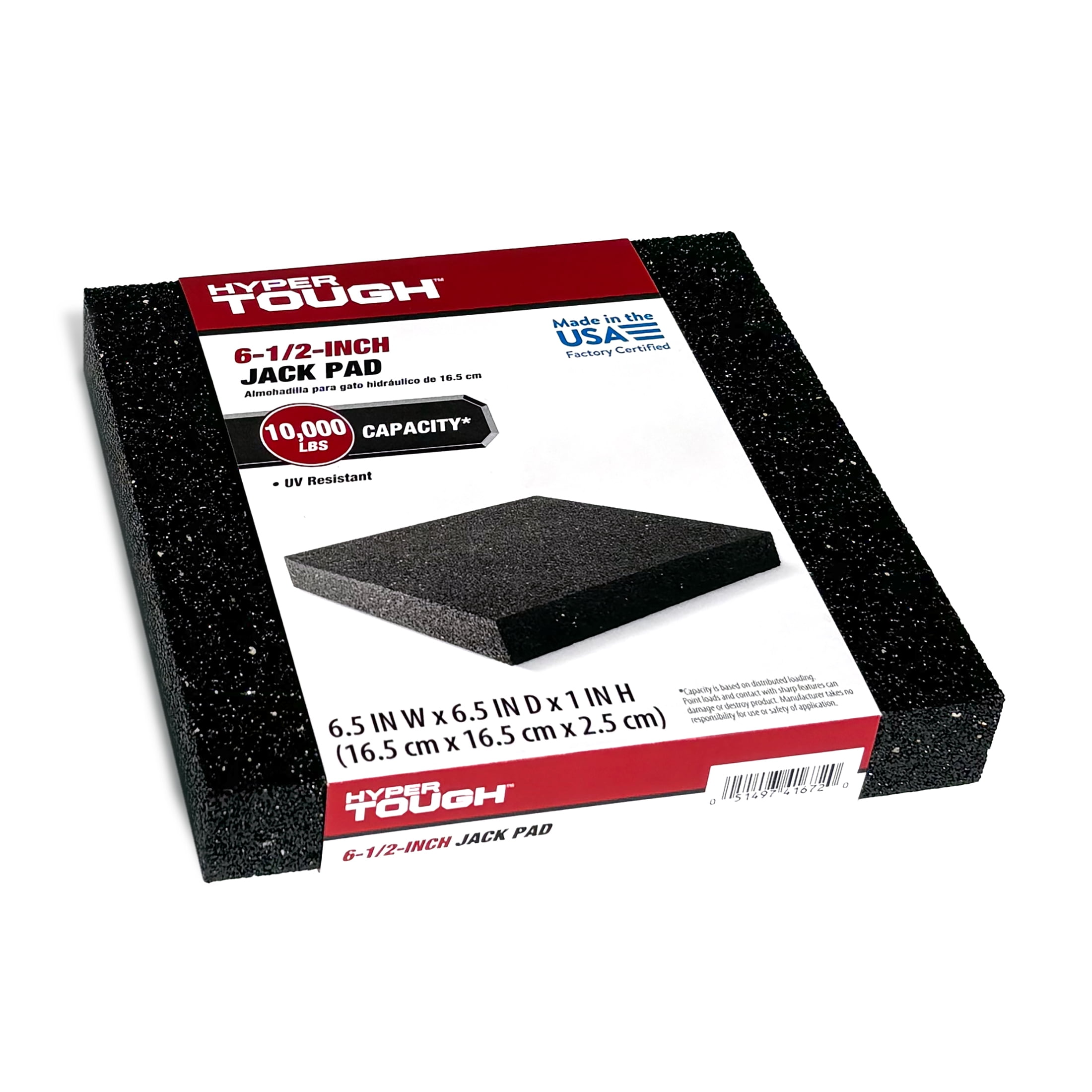
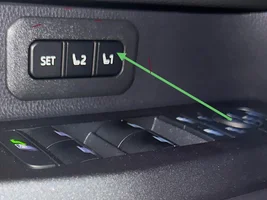
Oh, and here's a $7 solution ๐Ÿ˜Š 1.5-lbs.
 
Last edited:
I didnโ€™t know the factory jack went that high. Thatโ€™s really nice.
I have another bottle jack and the standard floor jack I use in the garage and have been thinking I need to check out how high the factory jack goes for any off-road needs.

For the front, Iโ€™ve used my other garage bottle jack (an old OEM jack from an 80s mini truck) on the lower control arms to lift tires enough to change them instead of lifting the whole truck by the frame.

I have stock wheels and it works, so it would be even easier with lower offset wheels.

Another advantage of the factory jacks is I think itโ€™s easier and quicker to turn the crank than to move the handle up and down. More controlled lowering too.
 
Most of us have lifted with the lower control arm at some point because it's a quick short cut. But that compressed spring is a lot of potential energy looking for a way out. Given that half of what I do is solo, I can't afford an accident. Eliminating stored energy is the way to make things safer.

Of course, an elevated multi thousand pound vehicle is even more stored energy looking for a way out too!
 
Back
Top Bottom